Co Loa Citadel
Co Loa Citadel
Located 17 km north of Hanoi, the Co Loa citadel preserves three earthen ramparts, a temple to My Chau and the memory of a kingdom over 2,000 years old.
About twenty kilometers north of central Hanoi, the Co Loa citadel stands as one of Vietnam's most ancient archaeological sites. Its three earthen enclosures, stretching nearly 16 km, bear witness to structured political power as far back as the late 3rd century BCE. The site blends military remains, temples and communal houses that continue to thrive within a rural village setting.
Why visit the Co Loa citadel
Co Loa appeals both to lovers of ancient history and travellers seeking a more rural Hanoi, away from the tourist bustle of the city centre. The site offers several compelling reasons:
- an earthen fortification considered the oldest in Southeast Asia still legible in the landscape;
- a collection of temples and pagodas honouring the nation's founding figures, still actively visited by locals;
- a village atmosphere that contrasts sharply with the intensity of the capital's core;
- a brief visit (1.5 to 2.5 hours) easily fitted into a half-day excursion.
Weekday crowds remain moderate, making a leisurely walk between ramparts and sanctuaries particularly pleasant.
History of Co Loa
Co Loa served as capital twice during Vietnamese history. First, in the late 3rd and early 2nd century BCE, under King An Duong Vuong, founder of the Au Lac kingdom. He is credited with building the concentric enclosures visible today, a rare defensive arrangement for its era.
The city regained political prominence in the mid-10th century, when Ngo Vuong Quyen established his capital here following his victory against Chinese forces on the Bach Dang river in 938. This period marked the return to lasting political independence after centuries of northern domination.
Beyond historical fact, Co Loa nourishes the Vietnamese imagination through the legend of Princess My Chau and her husband Trong Thuy—a tale of romantic betrayal that supposedly led to Au Lac's downfall. The site is thus revered as a place of national memory.
What to see on site
The three ramparts
The fortified complex comprises three earthen enclosures, partially preserved: an outer rampart, a middle rampart and an inner rampart, the latter rectangular in shape. Some sections still rise several metres high and are today covered in vegetation, giving them the appearance of long dikes. Explanatory panels punctuate the route.
The My Chau temple
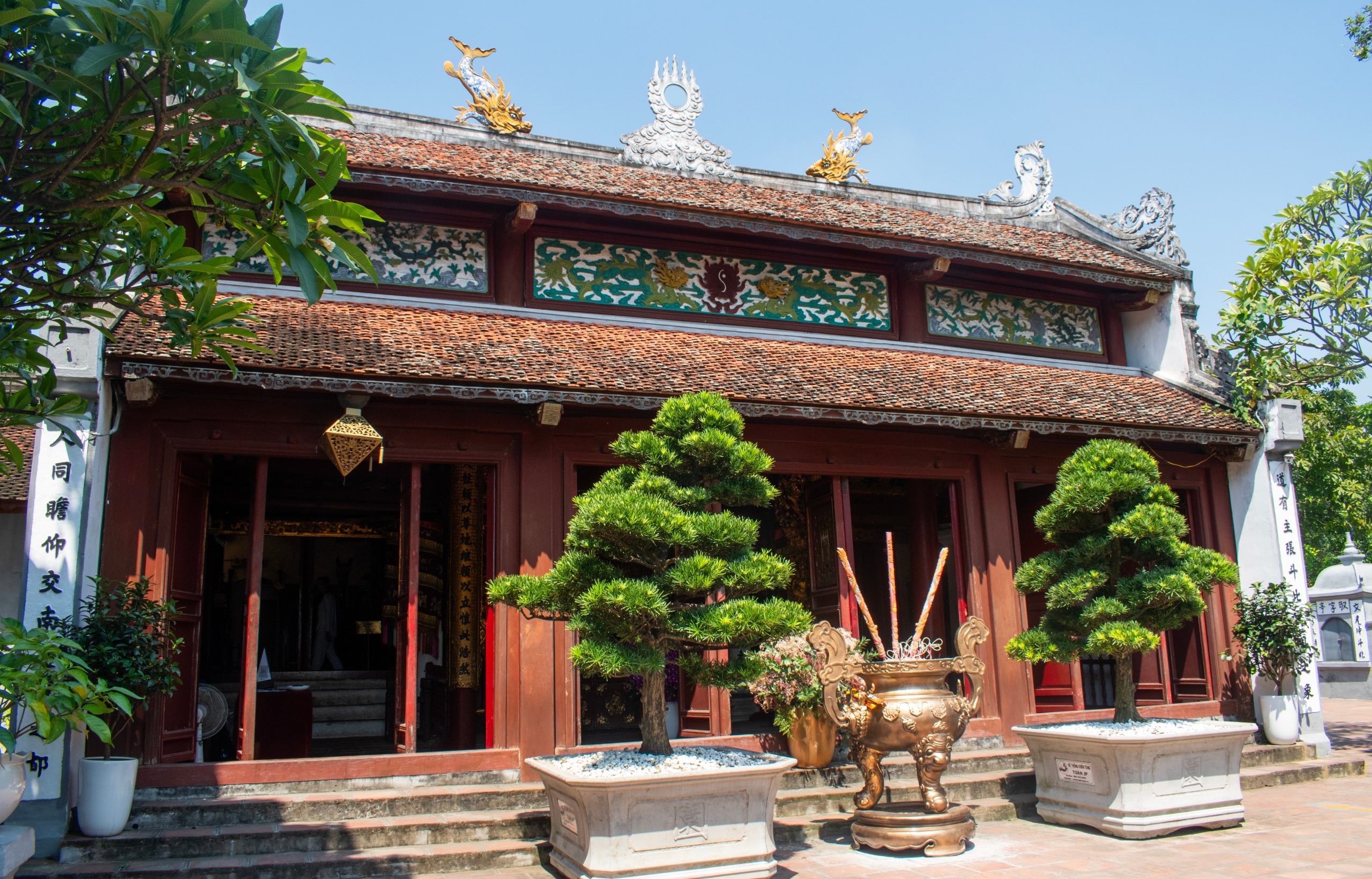
Dedicated to Princess My Chau, this small sanctuary houses an acephalous stone statue, a symbolic representation of the legend's tragic heroine. Locals frequently leave offerings here.
The Ngu Trieu Di Qui communal house
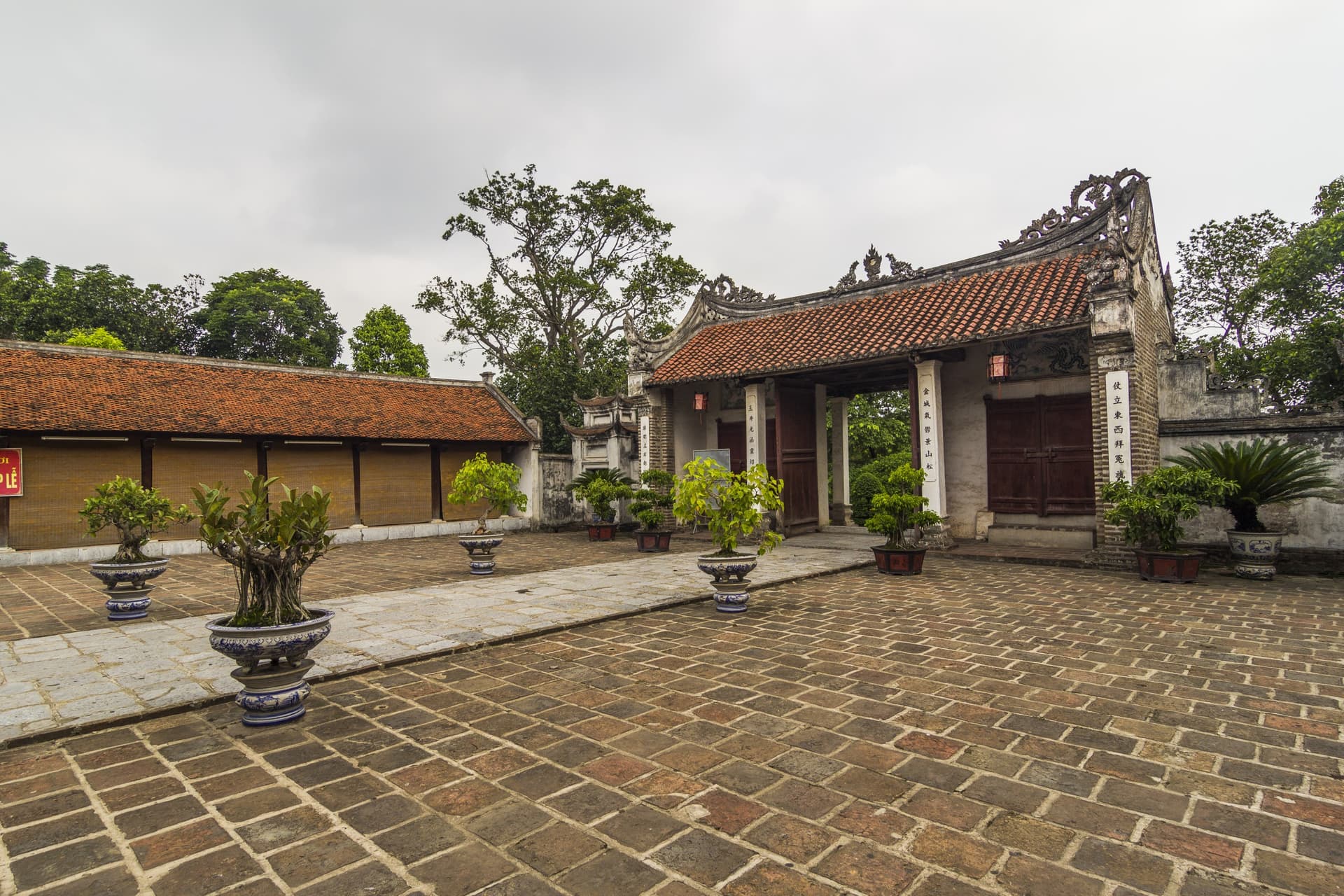
The communal house (đình) of Ngu Trieu Di Qui serves as the village's ceremonial building. It preserves elements of carved timber framing and hosts annual rites honouring An Duong Vuong, centred around the sixth day of the first lunar month.
Bao Son pagoda
The Bao Son pagoda, more modest in scale, completes the circuit. It illustrates the syncretic tradition common in Vietnam, where Buddhist worship and reverence for national heroes coexist within the same sacred space.
Practical information
- Visit duration: allow 1.5 to 2.5 hours to tour the main buildings and walk along a section of the ramparts.
- Admission: modest entry fee, payable on-site; bring Vietnamese dong in cash.
- Best season: the dry season, October through April, offers the best conditions. Temple festivities occur in early lunar year (often February).
- Dress code: temples and pagodas are places of worship; wear clothing covering shoulders and knees.
- On-site: few tourist facilities; bring water and a hat, especially in summer.
How to reach Co Loa
Co Loa lies in Dong Anh district, approximately 17 km north of Hanoi's Old Quarter. Several options are available:
- Taxi or ride-hailing: the simplest choice; expect 30 to 45 minutes depending on traffic.
- Public bus: line 46 connects My Dinh bus station to Co Loa at very low cost, though journey times are longer.
- Motorbike: favoured by independent travellers, via the Nhat Tan or Thang Long bridges.
- Organized tour: some itineraries combine Co Loa with other historic sites on Hanoi's periphery.
Nearby attractions
A visit to Co Loa can form part of a broader exploration of the capital and Vietnam:
- Hanoi's historic centre, with Hoan Kiem lake and the Old Quarter;
- the botanical garden and zoo, a green space beloved by families;
- Cat Ba bay and its biosphere preservation project, best paired with Halong bay;
- further south, the Cai Rang floating market in the Mekong delta.
Frequently asked questions
A comfortable visit takes between 1.5 and 2.5 hours, allowing time to see An Duong Vuong's temple, My Chau's temple, the communal house, Bao Son pagoda and a section of the ramparts.
Yes, for travellers interested in Vietnam's ancient history or wanting to experience a rural face of Hanoi's periphery. The site is less dramatic than the capital's major monuments, but its historical significance is considerable.
The dry season, between October and April, is most pleasant. To witness the traditional festival honouring An Duong Vuong, aim for early in the first lunar month, typically February.
Planning a stay in the region? Discover our bespoke itineraries on /voyage-vietnam to combine Hanoi, Co Loa and the great sites of the North.

Nearby


Interested in this visit?
We can include it in your personalised itinerary.