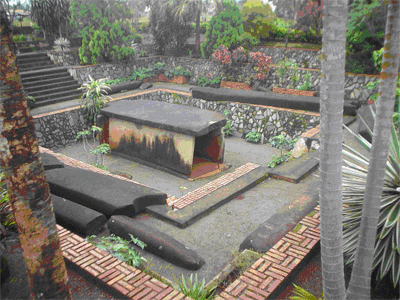
Dinh Bang Communal House
Dinh Bang Communal House
Some 18 km from Hanoi, the Dinh Bang communal house (1700–1736) exemplifies Vietnamese dinh architecture: ironwood framing, sculptures and the protective trinity.
Some twenty kilometres northeast of Hanoi, in the village of Dinh Bang (Tu Son district, Bac Ninh province), stands one of Vietnam's most representative communal houses in wooden architecture. The dinh, the Vietnamese equivalent of a village sanctuary, serves both as a place of worship for protective spirits and as a gathering space for the community. The Dinh Bang dinh, completed in 1736, illustrates the pinnacle of this art form in the 18th century.
Why visit Dinh Bang communal house
The Dinh Bang dinh ranks among the three most celebrated communal houses in northern Vietnam, alongside those of Tay Dang and Chu Quyen. Its carved framework, monumental dimensions and age make it a precious testament to Vietnamese village culture under the Later Lê dynasty. For those interested in Buddhist and Confucian art, traditional woodworking or simply a preserved rural Vietnam, the visit offers a worthwhile complement to a Hanoi stay.
- Remarkably well-preserved precious wooden architecture
- Sculptures on beams depicting mythological scenes and rural life
- Living atmosphere: the site remains an active sanctuary
- Half-day excursion from Hanoi, away from crowded circuits
History of the dinh
Construction of the sanctuary began in 1700 and stretched over thirty-six years, until 1736. This duration stems from the complexity of the project, carried out by specialist carpenter-artisans and funded by village notables. The dinh is dedicated to three protective spirits:
- Cao Son Dai Vuong, spirit of the earth
- Thuy Ba Dai Vuong, spirit of water
- Bach Le Dai Vuong, spirit of harvests
This triad reflects the preoccupations of an agricultural community: soil fertility, water control, harvest abundance. The village of Dinh Bang holds a particular place in Vietnamese history, as it is considered the birthplace of the Lý dynasty, which founded Hanoi in the 11th century. The dinh thus stands in a territory laden with dynastic memory.
What to see on site
Exterior architecture
The main building adopts a rectangular plan divided into seven bays. Its roof, gently curved at the ends according to Vietnamese tradition, rests on a massive ironwood (lim) frame, a dense and rot-resistant timber used for lasting structures. The scalloped tiles and roof ornaments complete a silhouette characteristic of dinhs in the Red River delta.
Wooden sculptures
The interior constitutes the site's true interest. The beams, joists and brackets are entirely sculpted with motifs: dragons, phoenixes, unicorns, hunting scenes, combat or music. These bas-reliefs, realised in the 18th century, blend royal iconography with popular scenes, making them both an ethnographic document and a work of art.
The altar and ceremonial space
At the back of the sanctuary, the main altar houses the tablets of the three spirits. During village festivals, particularly in spring, traditional ceremonies still take place there: processions, offerings, ritual chants.
Practical information
- Visit duration: allow 45 minutes to 1 hour to explore the sanctuary and its sculptures
- Admission: modest entrance fee, sometimes free; a donation to the keeper is appreciated
- Dress code: shoulders and knees covered, shoes to be removed before entering the sanctuary
- Photography: generally tolerated outside, ask permission inside
- Best time to visit: autumn and spring, milder than humid summer or grey northern winter
How to get there
Dinh Bang is located approximately 18 km northeast of Hanoi, on National Route 1A heading toward Bac Ninh. Several options are available:
- Private car with driver: 30 to 45 minutes depending on traffic, the simplest option for a half-day
- Taxi or ride-hailing service from central Hanoi, return trip to be negotiated
- Public bus: services to Bac Ninh from Long Bien or Gia Lam bus stations, then local transport to the village
- By motorbike for independent travellers accustomed to Vietnamese traffic
What to combine in the region
Bac Ninh province, considered the home of quan ho singing, UNESCO-listed, contains several other village sites: But Thap pagoda, Dau pagoda (one of Vietnam's oldest) or the woodblock printing workshops of Dong Ho. A full day allows you to string together two or three stops. To further explore Vietnamese heritage in other regions, you can consult the Cham sculpture museum in Da Nang or Cat Ba island in Halong Bay.
Preparing your journey
Dinh Bang communal house fits naturally into a stay around Hanoi and the Red River delta. To build a bespoke itinerary blending heritage, landscapes and encounters, consult our Vietnam trips designed with our English-speaking local teams.
Interested in this visit?
We can include it in your personalised itinerary.