Ba Vi National Park
Ba Vi National Park
Located 60 km from Hanoi, Ba Vi National Park combines protected forest, high-altitude temples and remnants of a French colonial hill station around a summit reaching 1,281 meters.
About sixty kilometers west of Hanoi, Ba Vi National Park unfolds its 5,000 hectares of tropical forests around a three-peaked massif. This dramatic topography, which reaches 1,281 meters at its highest point, creates a striking contrast with the Red River Delta plains and offers an accessible nature escape just a day trip from Vietnam's capital.
Why visit Ba Vi National Park
Ba Vi brings together multiple attractions that make it a compelling excursion from Hanoi. The park protects a rich tropical forest ecosystem abundant in plant species and is home to diverse wildlife including primates, birds and reptiles. The altitude provides welcome coolness, particularly during the hot season when the lowlands become stifling.
Beyond its natural appeal, the site holds significant heritage value with remnants of a French colonial hill station, as well as spiritual importance marked by several Buddhist and Taoist temples perched on the summits. This layering of elements—nature, colonial history, folk religion—gives the place a depth that simple protected areas often lack.
History and legends of the massif
Ba Vi mountain occupies a special place in Vietnamese mythology. Legend identifies it as one of the country's oldest mountains, the dwelling of deities, and the stage for a battle between Sơn Tinh, the mountain spirit, and Thủy Tinh, the water spirit. This foundational tale is still taught in schools and explains the presence of several sanctuaries on the heights.
From the 1930s onward, the French colonial administration developed Ba Vi as a hill station to escape Hanoi's heat. Nearly two hundred villas were constructed there, along with infrastructure, a chapel and a medical dispensary. After the French departure, the site fell largely into disuse and vegetation reclaimed it. The ruins, now partially overgrown with roots and moss, rank among the park's most photographed attractions. The artificial lake, created in 1958, adds to this legacy of 20th-century development.
The designation as a national park was formalized in 1991, extending protection across the entire massif and its surroundings.
What to see and do at Ba Vi
The summit temples
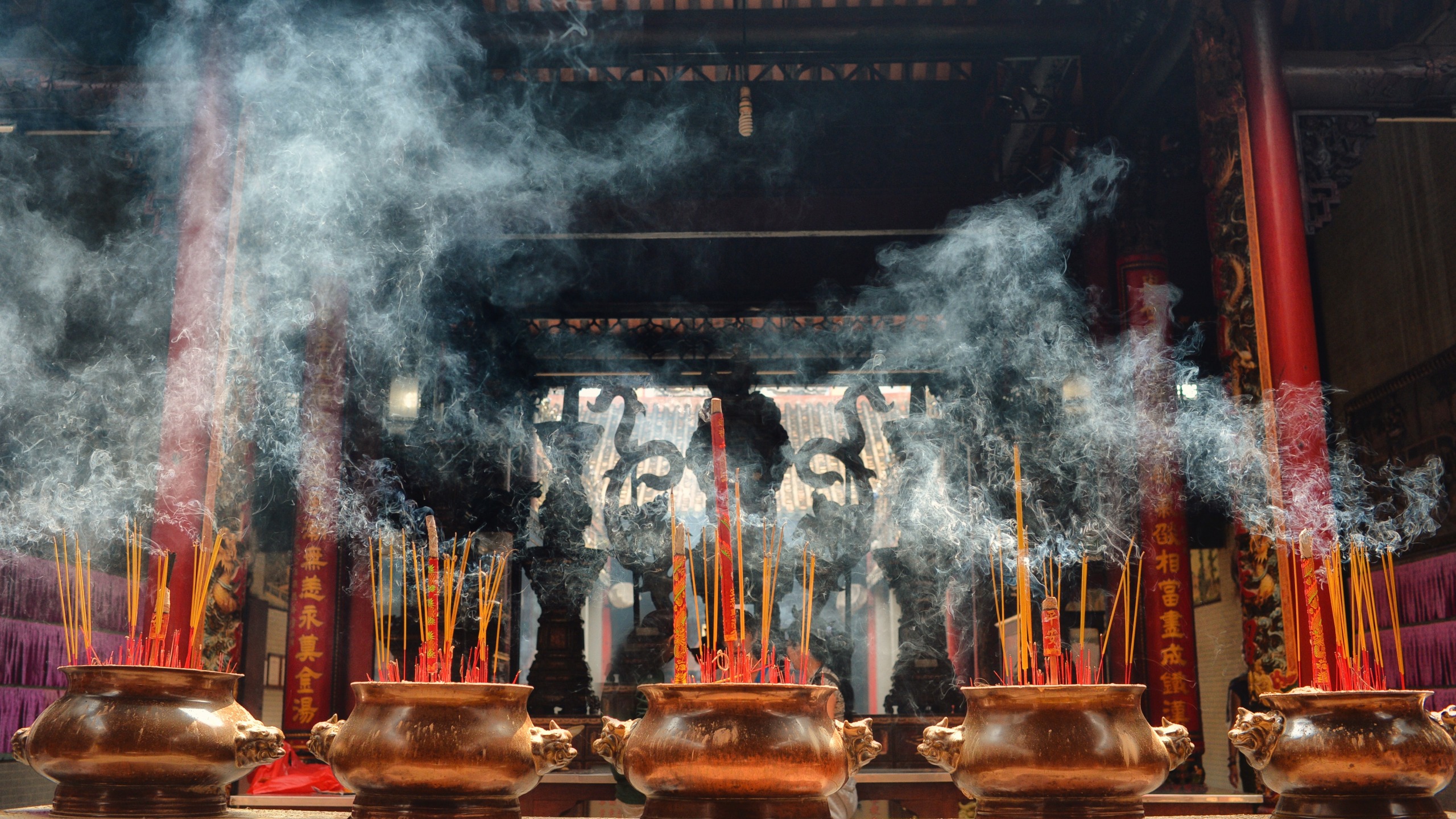
The Tản Viên summit (sometimes called King's Peak) hosts the Thượng temple, dedicated to Sơn Tinh. Another summit accommodates the Hồ Chí Minh temple, erected in tribute to the president. Access is via stone staircases cutting through the forest—the final ascent demands moderate effort but remains manageable for anyone in decent physical condition.
Ruined colonial villas
Scattered at various altitudes, the old French villas form a singular photographic circuit. Some structures have been almost entirely reclaimed by vegetation, others retain their walls and chimneys. The ensemble evokes the atmosphere of an abandoned spa town.
Forest and wildlife
Several marked trails allow exploration of primary and secondary forest. The park counts over 1,200 recorded plant species and is home to macaques, civets and numerous bird species. Botany enthusiasts will appreciate the cactus garden and orchid collection near the main entrance.
The lake and recreation
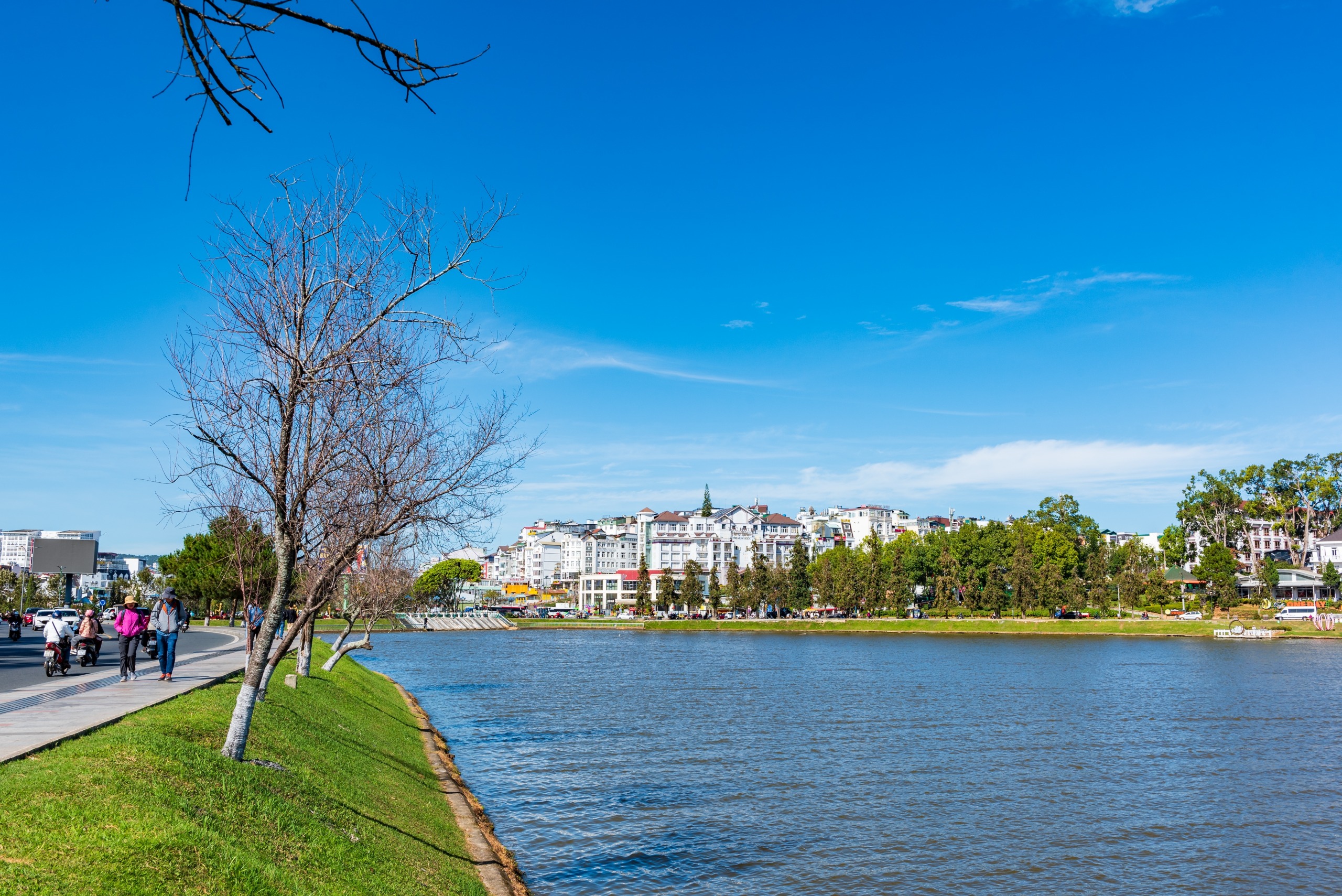
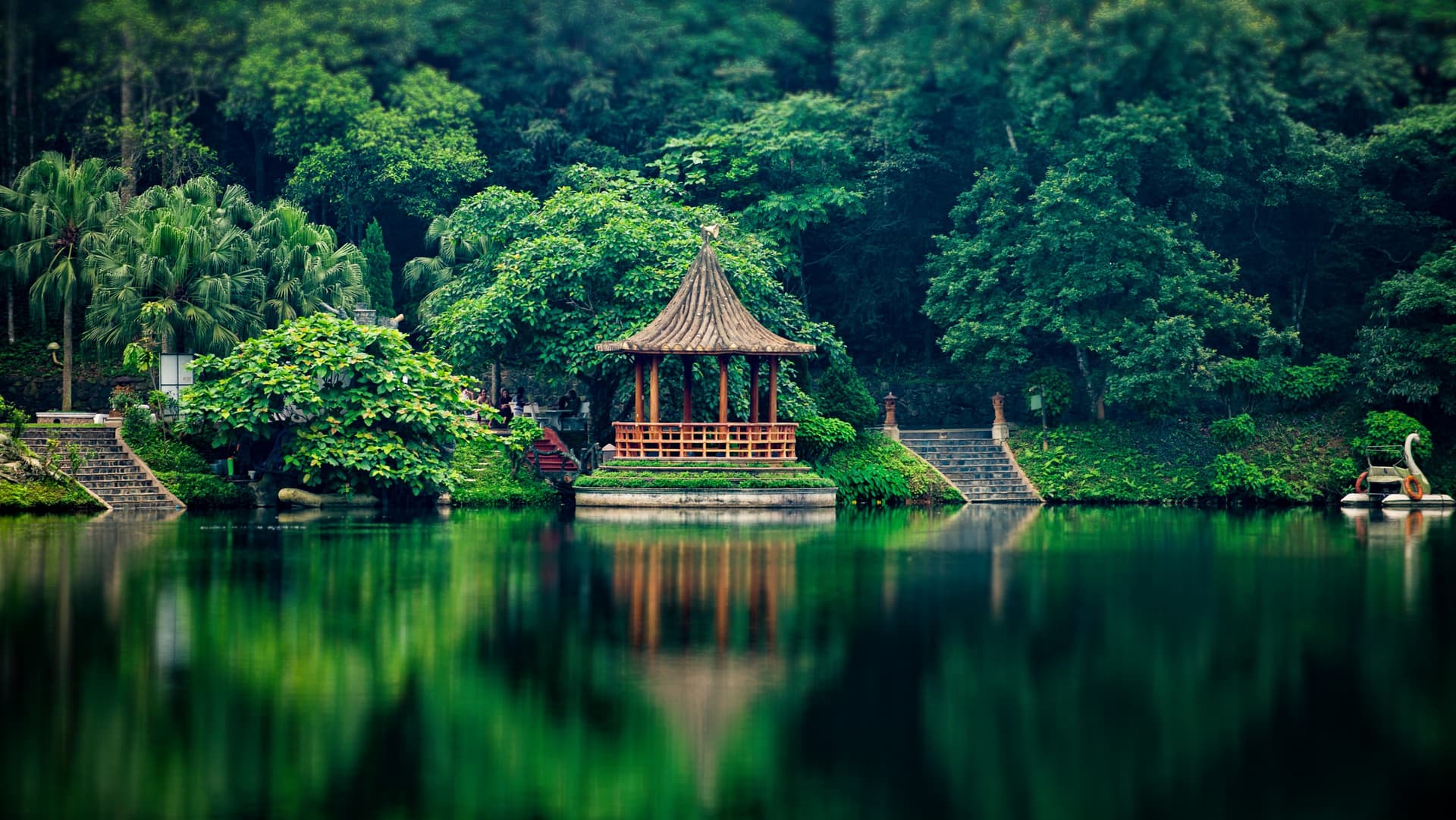
The artificial lake and its surroundings offer water-based activities during the warm season. Several nearby hotel complexes include pools, thermal springs and tree-canopy courses for families.
When to visit Ba Vi
The park welcomes visitors year-round, though each season offers a different experience:
- March to May: mild temperatures, wildflower blooms and generally clear skies. Ideal for hiking.
- June to August: the altitude coolness (often 5 to 7°C cooler than Hanoi) offsets the heat, though showers are frequent and summits often shrouded in mist.
- September to November: highly favorable conditions, clear light; this is also wildflower season (dã quỳ) when yellow blooms color the slopes.
- December to February: it can be cold at altitude (sometimes below 10°C) and mist frequently blankets the summits, creating a distinctive atmosphere but limiting panoramic views.
Practical information
- Location: Ba Vi district, western part of Hanoi municipality (the former Ha Tay province was incorporated into Hanoi in 2008).
- Area: approximately 5,000 hectares.
- Altitude: main summit at 1,281 meters.
- Admission: low-cost entry, possible surcharge for vehicles.
- Duration: allow a minimum of half a day; a full day to combine temples, ruins and trails.
- Equipment: hiking shoes, water, warm or waterproof clothing depending on season.
How to reach Ba Vi from Hanoi
Several options are available:
- Private car with driver: the most comfortable option, roughly 1.5 to 2 hours from central Hanoi depending on traffic. Recommended for those wanting to reach the summits, as the park's internal road is steep with switchbacks.
- Motorbike: popular among independent travelers, offers great flexibility but requires experience for the winding final section.
- Public bus: buses connect Hanoi to Son Tay (from My Dinh or Yen Nghia bus stations), from where you'll need a taxi or motorbike taxi to reach the park entrance.
- Organized tour: many Hanoi agencies offer day trips to Ba Vi, sometimes combined with a Dao ethnic village on the park's periphery.
Combining with nearby sites
Ba Vi works well as a one or two-day excursion from the capital. You can extend exploration of the region by visiting Hanoi and its historic center, or compare with other protected natural areas such as Cát Bà island in Halong Bay. For those drawn to sacred peaks, Ba Đen mountain in southern Vietnam offers an interesting comparison, as does Buu Long mountain.
Frequently asked questions
Half a day suffices for a quick overview (lake, botanical garden, one colonial villa). Plan a full day to reach the summit temples and explore several trails.
Partially: buses connect Hanoi to Son Tay, the nearest town, but you'll need a taxi or motorbike taxi to reach the park entrance and move around inside. A private car or organized tour remains more convenient.
Yes, several hotels and resorts are located within the park or immediately nearby, with pools and thermal springs at some properties. This allows you to avoid back-and-forth travel and enjoy the cool evening air.
Spring (March-May) and autumn (September-November) offer the most pleasant conditions, with clear skies and moderate temperatures. Autumn adds the bonus of wildflower blooms.
Plan your Vietnam journey
Ba Vi fits naturally into an itinerary encompassing Hanoi, Halong Bay and the northern mountain ranges. To craft a coherent trip combining nature, colonial heritage and Vietnamese culture, explore our suggestions for customized Vietnam journeys.

Interested in this visit?
We can include it in your personalised itinerary.