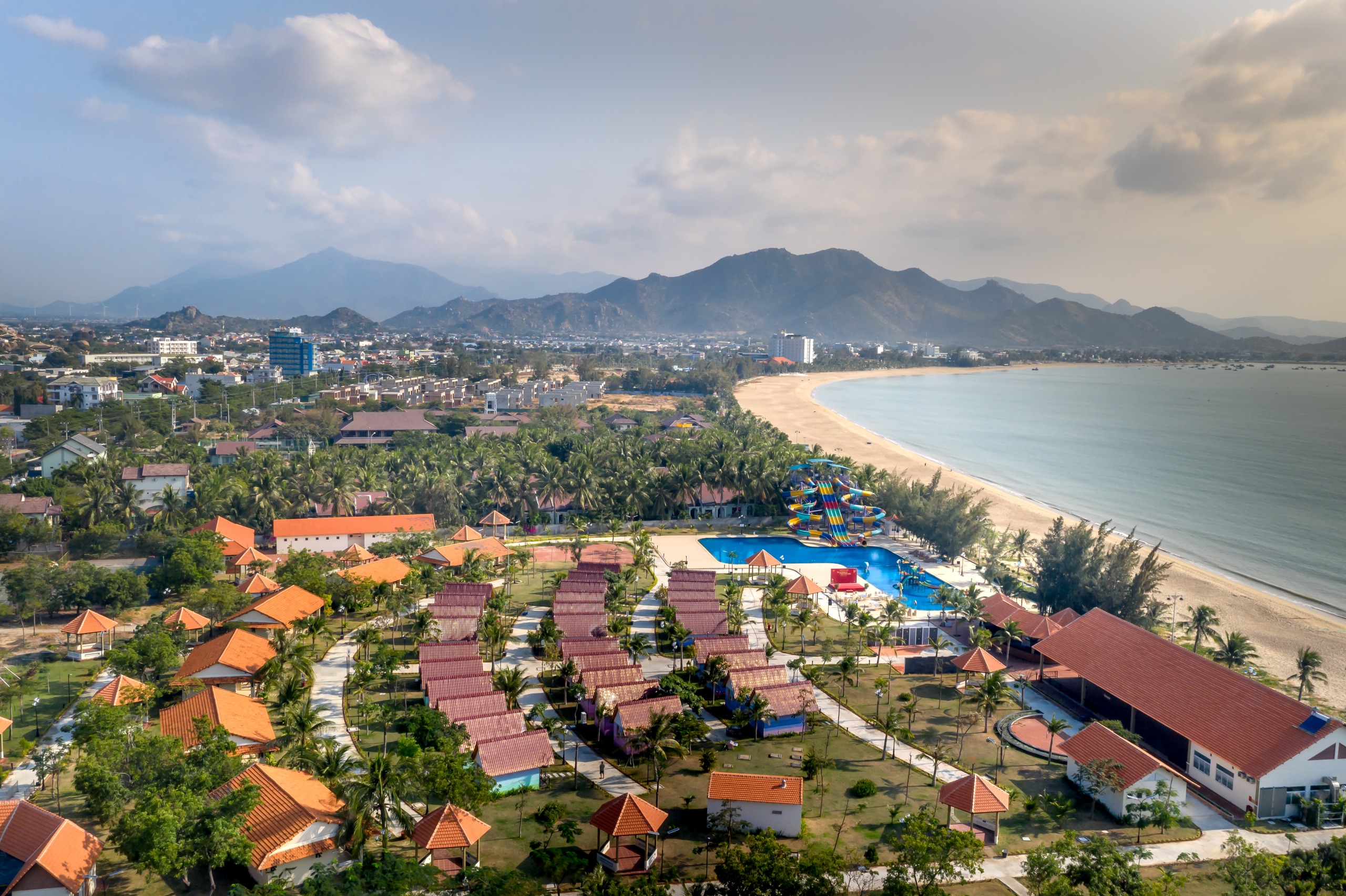
Dai Lanh Beach
Dai Lanh Beach
Some 30 km from Tuy Hoa, Dai Lanh Beach stretches two kilometers of sand fringed with casuarina trees, enshrined in the Nguyen imperial heritage since 1836.
Dai Lanh Beach extends for two kilometers of fine sand along Vietnam's central coast, roughly thirty kilometers south of Tuy Hoa and 80 km north of Nha Trang. Bordered by casuarina trees and backed by hills, it remains one of the least developed bays on this stretch of coastline, long cited among the country's ten most beautiful beaches.
Why Visit Dai Lanh
Dai Lanh draws visitors for three concrete reasons. First, its heritage: the beach has ranked among Vietnam's emblematic imperial landscapes since the 19th century. Second, its still-preserved setting, away from major seaside destinations like Nha Trang or Mui Ne, without high-rise hotels or concrete seafronts. Finally, its strategic position: it forms a natural stop along the coastal road between Nha Trang and Quy Nhon, near Dai Lanh Cape, the easternmost point of mainland Vietnam's peninsula.
A Beach Inscribed in Imperial Memory
Dai Lanh's history is closely tied to the Nguyen dynasty. In 1836, King Minh Mang had the Dai Lanh landscape engraved on one of the nine bronze incense burners (Cuu Dinh) at the The Mieu court in the imperial citadel of Hue. These ritual vessels represent the landscapes, rivers and mountains considered most significant to the kingdom. In 1853, under Tu Duc's reign, the beach was officially inscribed in the national dictionary, a recognition accompanied by funds for its development. In the 19th century, Dai Lanh already ranked among Vietnam's ten most beautiful beaches.
The site also preserves a trace of the colonial period: Dai Lanh Lighthouse, built by the French in 1890, stands over 25 meters tall and remains operational. It perches on Dai Lanh Cape, at the southern tip of the bay.
What to See and Do
The Beach and Its Surroundings
The sand is fine, the slope gentle, and the water generally calm within the bay. Visitor numbers remain modest, especially on weekdays. The casuarina trees lining the shore offer shade and allow for picnicking without special setup.
Dai Lanh Lighthouse and Cape
Dai Lanh Cape is considered the first point on continental Vietnam to see the sunrise. The ascent to the lighthouse is on foot, via a marked trail from the parking area. The panorama encompasses the bay, neighboring islands, and on clear days, the coastline as far as Vung Ro. Bring water and start early: the trail is exposed to sun.
Khai Luong Fishing Village
At the northern tip of the bay, Khai Luong hamlet is accessible only by boat from the local dock. You can observe traditional fishing activity and purchase seafood directly from fishermen. A few families offer simple meals on-site.
Practical Information
Dai Lanh is best visited as a day trip from Tuy Hoa or Nha Trang, or as an overnight stop along the coastal route. Accommodation options are limited: a few guesthouses and small family-run hotels at the southern end of the beach, with rates significantly lower than Nha Trang. Allow two to three hours for the beach alone, half a day if you visit the lighthouse.
No structured tourist services operate on-site: bring cash, water and snacks before arriving.
When to Go
Dai Lanh's climate follows that of Khanh Hoa Province and southern Phu Yen. The dry season spans roughly February to August, with warm temperatures and strong sunshine: this is the best period for swimming and hiking to the lighthouse. The rainy season concentrates from September to December, with sometimes intense showers and rougher seas. March through June offers the best balance of manageable heat, clear water and low crowds.
How to Get There
- From Tuy Hoa (≈30 km north): about 45 minutes by car via the coastal road QL1A. Tuy Hoa Airport nearby, served from Hanoi and Ho Chi Minh City.
- From Nha Trang (≈80 km south): 1.5 to 2 hours by car, a scenic route passing through Co Ma Pass. Cam Ranh International Airport 2.5 hours away.
- By bus: buses linking Nha Trang to Tuy Hoa can drop passengers at Co Ma Pass; you'll then need to walk roughly 3 km or hitchhike to reach the beach.
- By motorbike: the Ca and Co Ma passes offer one of the finest coastal stretches in central Vietnam, accessible to experienced riders.
- By train: Dai Lanh railway station is rarely served; better to get off at Tuy Hoa or Nha Trang.
The opening of new road tunnels in 2017 significantly improved access and shortened travel times along the coast.
What to Combine in the Region
Dai Lanh fits naturally into a rich coastal itinerary. The city of Tuy Hoa, capital of Phu Yen Province, serves as a practical base to the north. Further along the coast, other seaside sites merit a stop, such as Cat Ba Island in the country's north. To extend the cultural dimension opened by the Nguyen incense burners, the Cham Sculpture Museum in Da Nang complements your visit perfectly.
Frequently Asked Questions
Frequently asked questions
Yes, the slope is gentle and the sea generally calm within the bay. Avoid the rainy season (September to December) however, when swells can be strong.
Plan two to three hours to enjoy the beach, and half a day if you include climbing to Dai Lanh Lighthouse or a boat excursion to Khai Luong village.
It's not essential. Many travelers visit Dai Lanh as a day trip from Tuy Hoa or Nha Trang. One night on-site does allow you to enjoy the sunrise at the cape, considered the first sunlit point on continental Vietnam.
Options remain limited to a few stalls and small guesthouses at the southern end. It's best to bring water, snacks and cash before you arrive.
Local buses between Nha Trang and Tuy Hoa stop at Co Ma Pass, roughly 3 km from the beach. For more flexibility, renting a motorbike in Tuy Hoa remains the most practical option.
Planning Your Trip
Dai Lanh fits naturally into a coastal circuit between Nha Trang, Tuy Hoa and Quy Nhon. To build a tailor-made itinerary including the central coast, consult our Vietnam travel suggestions.
Interested in this visit?
We can include it in your personalised itinerary.