Quang Ngai My Lai
Quang Ngai My Lai
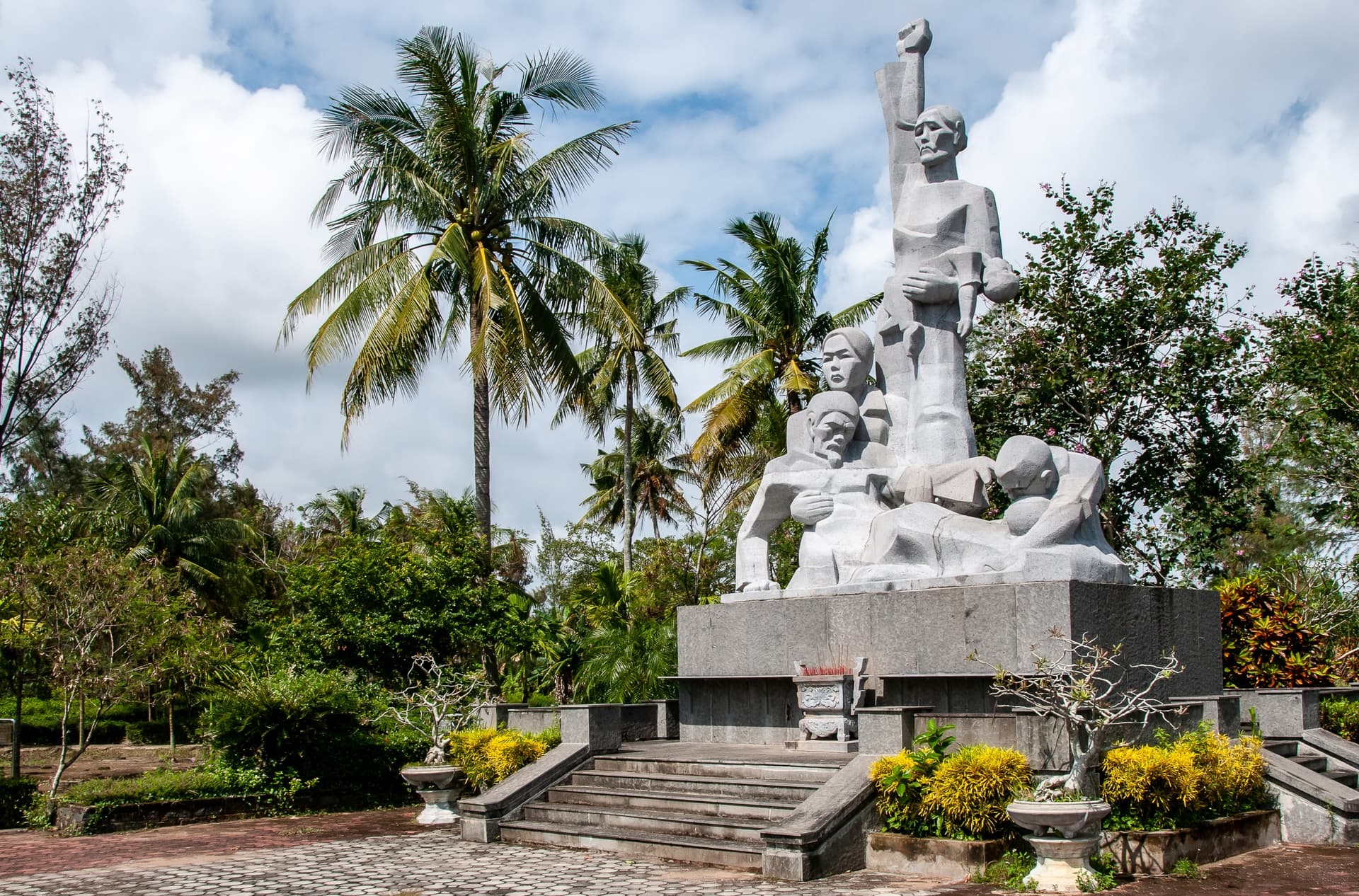
The My Lai Memorial, in Quảng Ngãi Province, preserves the memory of 504 civilians killed on March 16, 1968: museum, commemorative wall and village remains.
The My Lai Memorial, located in Quảng Ngãi Province in central Vietnam, preserves the memory of the March 16, 1968 massacre, one of the most thoroughly documented episodes of the Vietnam War. The site brings together a commemorative wall, a museum, house remains and a sanctuary, on the very territory of Sơn Mỹ village where the events took place.
Why visit the My Lai Memorial
The site holds a singular place in 20th-century history. It documents a specific event, identified through American military investigations, and makes it accessible to the public through restrained museography. The visit appeals to three types of travelers: those seeking to understand the Vietnam War beyond the major narratives of Saigon or Hanoi, contemporary history enthusiasts, and visitors traveling along the central coast between Hoi An and Quy Nhơn who wish to make a meaningful detour.
The site draws a continuous stream of visitors, notably Vietnamese school groups and international visitors, including American veterans and their descendants. The tone of the visit is documentary rather than didactic: the power of the facts takes precedence over commentary.
History of the My Lai massacre
On March 16, 1968, soldiers from the "Charlie Company" of the American Army entered the hamlet of Sơn Mỹ as part of an operation intended to dislodge fighters of the National Liberation Front. The unit encountered no armed resistance but killed 504 Vietnamese civilians, among them 182 women, 172 children and 60 elderly people. The troops destroyed homes and crops; sexual violence was perpetrated.
The facts remained suppressed for over a year. It was soldier Ronald Ridenhour who, in 1969, alerted American authorities after gathering testimonies from fellow soldiers. The military investigation that followed resulted in several indictments, but only Lieutenant William Calley was ultimately convicted. The public revelation of the massacre, accompanied by photographs taken on-site, helped transform American public opinion on the war.
What to see on the site
The wall of 504 victims
The commemorative wall inscribes the names of the 504 people killed, arranged by family and age. This nominative list, where one reads the actual ages of the youngest victims, forms the central focal point of the visit.
The pathways and engraved footprints
Concrete walkways wind through the former village. Footprints are engraved into them: bare feet of villagers fleeing, and booted feet of American soldiers. The installation materializes movements documented by the investigations.
The foundations of destroyed houses
The stone bases of the burned homes have been preserved as they were. Each site bears a plaque indicating the name of the family who lived there and the number of people killed on the spot.
The museum
The building displays photographs, recovered personal items, American military investigation documents and newspaper clippings from the period. Captions are in Vietnamese and English. Several of the photographs on display come from Army photographer Ronald Haeberle, whose images helped bring the case to public attention.
The sanctuary
At the back of the site, a small sanctuary allows visitors and families to light incense sticks in tribute to the victims. It is a space for contemplation, visited daily by residents of the village reconstructed nearby.
Practical information
The memorial is open daily during daylight hours. Entry is generally modestly priced, sometimes free depending on the season; it is wise to bring some cash. Allow 1.5 to 2.5 hours to tour the entire site (wall, pathways, remains, museum, sanctuary).
- Dress code: clothing covering shoulders and knees recommended, out of respect for the memorial character of the place.
- Photography: permitted in most of the site and in the museum, except in certain designated areas.
- Guided tours: available in Vietnamese and English, to be arranged at the entrance for a small additional fee.
- Best time: early morning, for better light and fewer visitors. The dry season (February to August) facilitates outdoor exploration.
How to reach the My Lai Memorial
The site is located approximately 13 km northeast of Quảng Ngãi city, in Sơn Mỹ commune.
- From Ho Chi Minh City: flight to Chu Lai Airport (the nearest), then approximately one hour by road. An overnight bus option to Quảng Ngãi also exists but requires a full day of travel.
- From Da Nang: approximately 100 km south via National Highway 1A, two to three hours by car. Day excursions are offered by several agencies.
- From Hoi An: approximately 80 km, accessible as a day excursion with driver or via an organized guided tour.
- From Quảng Ngãi: taxi or motorcycle taxi (xe ôm) for the final kilometers.
What to see in the region
Central Vietnam's coast holds several sites that complement a visit to My Lai:
- The Cham sculpture museum in Da Nang, to understand the region's earlier civilization.
- Cát Bà and its biosphere reserve, further north, for a contrasting landscape.
- Mỹ Khê beaches, just kilometers from the memorial, for a seaside break.
Frequently asked questions
Frequently asked questions
Allow 1.5 to 2.5 hours to tour the commemorative wall, pathways, house remains, museum and sanctuary at a thoughtful pace.
Some museum photographs are explicit. The site is better suited to adolescents and adults; for younger children, prior preparation is recommended.
Photography is permitted in most outdoor areas and in the museum, except in designated zones. A discreet approach is expected, particularly near the sanctuary.
No strict code, but clothing covering shoulders and knees is recommended out of respect for the memorial character of the place.
The museum offers bilingual Vietnamese-English captions. An English-speaking guide enriches the visit, however, particularly for historical and military context.
Preparing your visit
The My Lai Memorial fits naturally into an itinerary of the central coast, between Hoi An, Quảng Ngãi and Quy Nhơn. To integrate this step of remembrance into a broader Vietnam circuit, consult our custom Vietnam journeys.
Interested in this visit?
We can include it in your personalised itinerary.