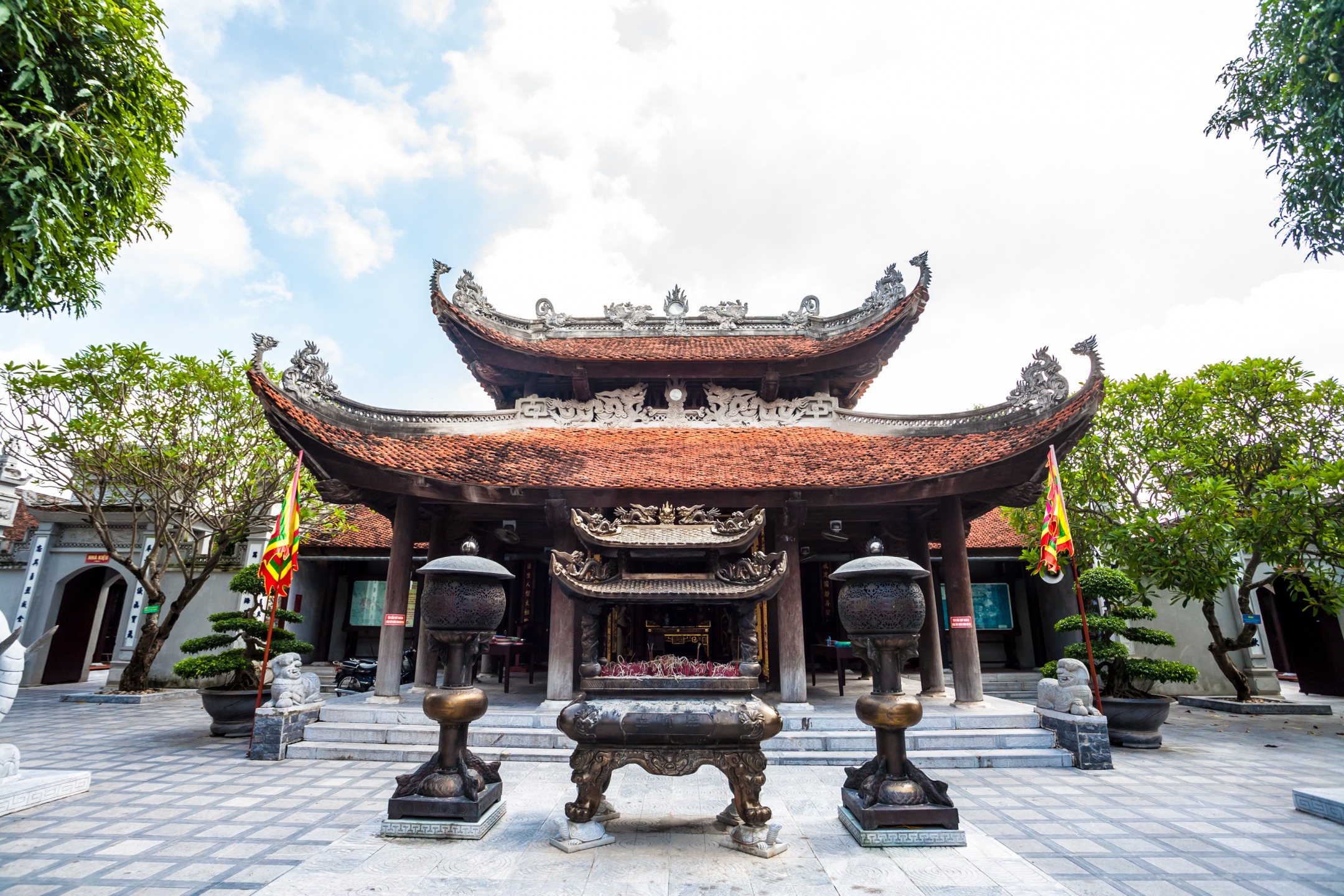
Son Tay Citadel
Son Tay Citadel
Built in 1822 under the Nguyen dynasty some 45 km from Hanoi, Son Tay Citadel bears witness to Vietnamese military architecture and the French siege of 1883.
Son Tay Citadel is a military fortification erected in 1822 under the Nguyen dynasty, about sixty kilometers west of Hanoi. Built according to Vauban architectural principles adapted to the Vietnamese context, it stands as one of the few surviving examples of a 19th-century provincial citadel in the Red River Delta.
Why visit Son Tay Citadel
The site holds a dual significance. On one hand, it documents the Nguyen defensive strategy against internal and external threats of the 19th century. On the other, it bears witness to a defining chapter of France's conquest of Tonkin, when the fortress fell in 1883 after a siege led by Admiral Courbet.
Unlike the citadels of Huế or Hanoi, Son Tay rarely features in standard tour circuits. You will find few visitors here, allowing for a contemplative exploration of the structures that remain. The site particularly appeals to travelers with an interest in military history, defensive architecture, and the colonial period.
History of the Citadel
The citadel was constructed in 1822 during the reign of Emperor Minh Mang, the second sovereign of the Nguyen dynasty. It served as the military and administrative center for the northwestern region of Tonkin, controlling routes to the highlands and the Red River.
Its layout follows the codes of European bastion fortification, introduced to Vietnam in the late 18th century by French engineers in the service of the Nguyens. The plan adopts a regular geometric form, with four faces and four monumental gates oriented toward the cardinal directions.
In December 1883, the fortress was besieged and captured by French forces during the conquest of Tonkin. The combat pitted the Vietnamese garrison, supported by Chinese troops and Black Flag volunteers, against an expeditionary corps commanded by Admiral Amédée Courbet. The fall of Son Tay marked a turning point in the establishment of French protectorate over northern Vietnam.
Damaged by successive conflicts and the passage of time, the citadel has undergone partial restoration campaigns. Several wall sections and internal structures remain in their original state.
What to see on site
The fortified enclosure
The citadel comprises four gates, one on each face, along with a watchtower that served as an observation post. The walls are protected by trenches 3 meters deep and 20 meters wide, reinforced by four cannons positioned at strategic points. The monumental stone gates, topped by wooden pavilions, remain the most photogenic elements of the site.
Kinh Thien Palace
At the center of the enclosure stands Kinh Thien Palace, where the king would rest during his travels through the region. This official building marks the dual military and imperial function of the place.
Service buildings
The inner perimeter preserves the former administrative offices, storage rooms, and barracks of the garrison troops. Though partially rebuilt, these structures provide clear insight into the daily life of a Nguyen provincial garrison.
Practical information
- Allow 1 to 1.5 hours to explore the entire site at a leisurely pace.
- Admission is charged but remains moderate.
- The site is open all day; the morning is best for light and cool temperatures.
- Bring a hat and water, as shade is scarce within the enclosure.
- On-site explanations are mainly in Vietnamese; an English-speaking guide is useful for historical context.
How to get there
Son Tay lies approximately 45 km west of downtown Hanoi, in a district now part of Hanoi municipality (the former Ha Tay province was integrated into the capital in 2008). Several options are available:
- Private car with driver: the most comfortable option, expect 1 to 1.5 hours depending on traffic.
- Public bus from My Dinh bus station: longer journey but economical.
- Scooter for experienced riders, via National Route 32.
What to combine in the region
A visit to Son Tay works well as a day trip from Hanoi, combining other sites in the western suburbs such as the Perfume Pagoda, the ancient village of Duong Lam, or Ba Vi Mountain. To further explore Vietnamese heritage, you can also consult our guide to the Cham Sculpture Museum in Da Nang or Cat Ba Island.
Planning your trip
Son Tay Citadel fits naturally into an itinerary around Hanoi and the Red River Delta. To craft a bespoke itinerary including this site and other less-visited locations in the north, consult our suggestions for travel to Vietnam.



Interested in this visit?
We can include it in your personalised itinerary.