Tam Ky
Tam Ky
Capital of Quảng Nam province, Tam Ky captivates with its war tunnels, Tam Thanh beach, local crafts and regional cuisine, away from Hoi An's crowds.
Tam Ky, capital of Quảng Nam province, sits midway between Hoi An and Quang Ngai on Vietnam's central coast. Less visited than its neighbors, the city often serves as a stopover to explore the Ky Anh tunnels, the Thạch Tân weaving village and Tam Thanh beach. A worthwhile destination for those wanting to escape Quảng Nam's beaten paths.
Why Visit Tam Ky
Tam Ky's appeal lies in its location and provincial character. Here, no tourist masses: the city moves to the rhythm of its administration, markets and renowned regional cuisine (cơm gà, mì Quảng). Travelers come mainly for three reasons: exploring a little-known historical site from the Vietnam War (the Ky Anh tunnels), enjoying an underdeveloped beach (Tam Thanh) and witnessing living craftsmanship in Thạch Tân. It's an interesting complementary stop after Hoi An, provided you dedicate a full day to a day and a half.
History of Tam Ky
Tam Ky was founded in 1906 under the Nguyễn dynasty, to which it was administratively subordinate. The city played a strategic role during the Vietnam War, as evidenced by the Ky Anh tunnels dug by residents to resist military operations. The underground network stretched approximately 32 kilometers and connected several hamlets.
After reunification, Tam Ky was annexed to Quảng Nam-Đà Nẵng province. It officially became the capital of Quảng Nam province in 1997, when Đà Nẵng was elevated to separate municipal status. Since then, the city has developed as a regional administrative and economic center, without losing its provincial atmosphere.
What to See and Do in Tam Ky
Historical and Cultural Sites
- Ky Anh Tunnels: this underground network of approximately 32 km, dug by villagers during the Vietnam War, is one of the country's least visited memorial sites. A section is accessible to visitors and recounts daily life below ground.
- Van Thanh Temple: dedicated to Confucius, it bears witness to the importance of scholars in Vietnamese culture. Traditional architecture, bas-reliefs and interior courtyard lend themselves to a brief yet enlightening visit.
Nature and Surroundings
- Dam River (Sông Đầm): during the lotus season (May to July approximately), a sunrise sampan excursion allows you to cross a body of water covered in pink flowers, frequented by local fishermen.
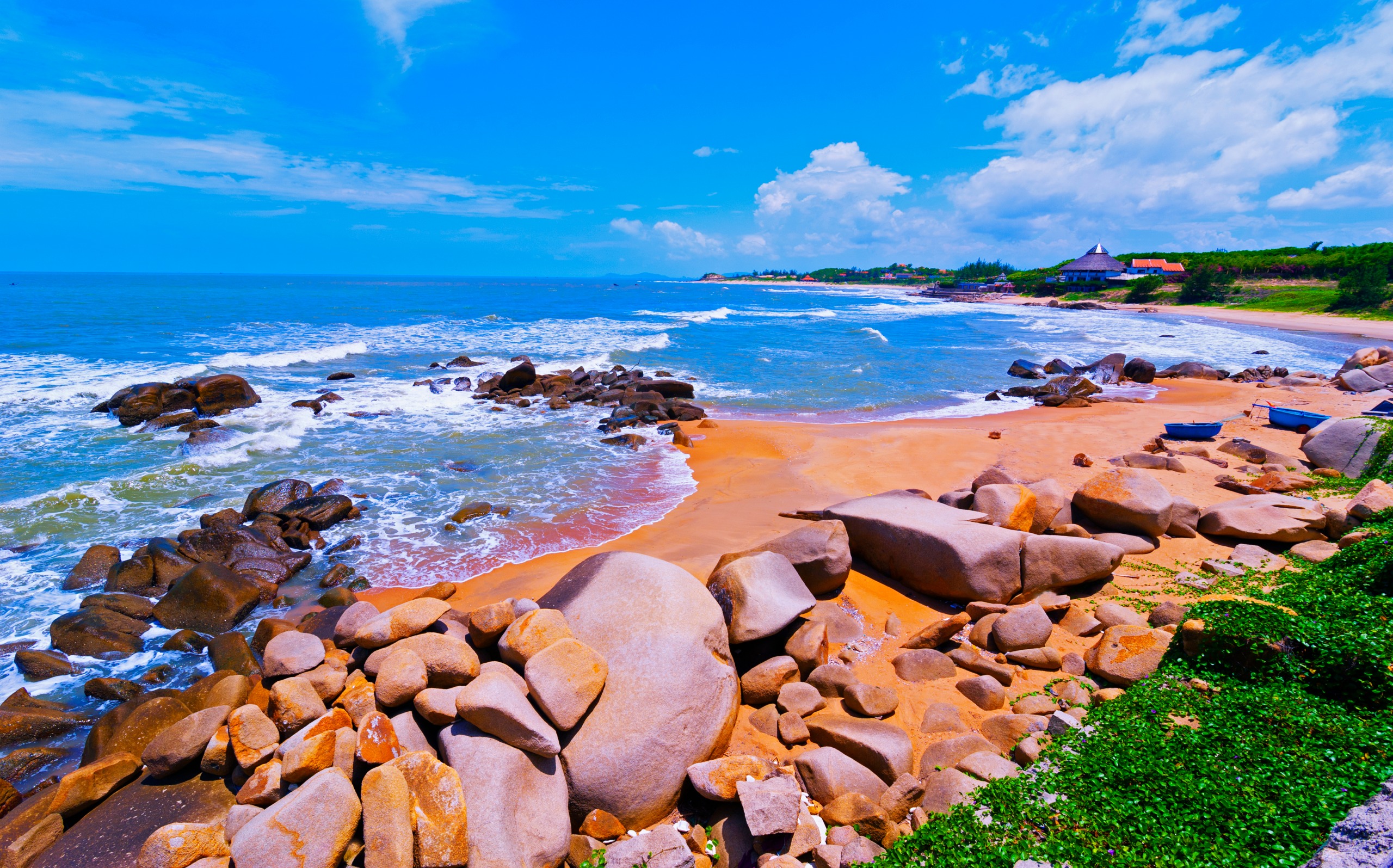
- Tam Thanh Beach: an undeveloped stretch of sand, also known for its mural art village created as part of a South Korean artistic project. Ideal for a peaceful half-day.
Local Crafts
- Thạch Tân Weaving Village: the production of rush mats has been passed down through generations here. You can watch artisans at work and, depending on the workshop, try your hand at weaving.
Culinary Specialties
- Cơm gà Tam Kỳ: turmeric-infused chicken rice, served with fresh herbs and nuoc mam sauce. It's the city's emblematic specialty.
- Mì Quảng: flat yellow noodles accompanied by pork, shrimp, peanuts and rice cracker, a typical dish of Quảng Nam province.
Practical Information
- Recommended visit duration: a full day is enough for the main sites, two days if you combine beach, tunnels and crafts.
- Budget: moderate. Accommodation, meals and local transport remain inexpensive compared to Hoi An or Da Nang.
- Getting around: taxis and motorcycle taxis are the most practical options, distances between sites being too long to walk.
When to Visit
The climate follows two seasons:
- Dry season (November to April): most favorable period, with milder temperatures and little rain. December to March offers the best conditions for combining cultural visits and beach time.
- Rainy season (May to October): high heat and frequent showers, especially between September and November when typhoons can hit the central coast. The lotus season, May to July, remains a good reason to visit despite the rain.
How to Get There
- By air: Da Nang International Airport, approximately 70 km to the north (not 30 as sometimes reported), is the most convenient. Allow about 1.5 hours by taxi or private transfer.
- By train: the north-south line (Reunification Express) serves Tam Kỳ station from Hanoi and Ho Chi Minh City. The journey is long (more than 15 hours from each end); soft sleepers are recommended.
- By bus: direct connections exist from major cities, but travel times are significant.
- From Hoi An or Da Nang: taxi or private car with driver, the most flexible solution for a day trip.
What to See Nearby
Tam Ky fits naturally into a central coast itinerary. To the north, the Hai Van Pass offers one of the country's finest viewpoints between Da Nang and Huế, while Bach Ma national park attracts trekking enthusiasts at altitude. Further north, Đông Hà allows exploration of demilitarized zone sites. To the south, Song Cau and Phan Rang-Tháp Chàm extend discovery of the coastline and Cham culture.
Frequently Asked Questions
Frequently asked questions
Planning Your Trip
Tam Ky fits easily into a central coast Vietnam itinerary, between Huế, Hoi An and My Son sanctuary. To build a customized itinerary, explore our Vietnam trips and adjust duration according to your interests.
Interested in this visit?
We can include it in your personalised itinerary.