Nha Trang
Nha Trang
Golden beaches, tropical islands, thousand-year-old Cham temples: Nha Trang brings together the best of seaside charm and heritage on Vietnam's coast.
315,200 inhabitants
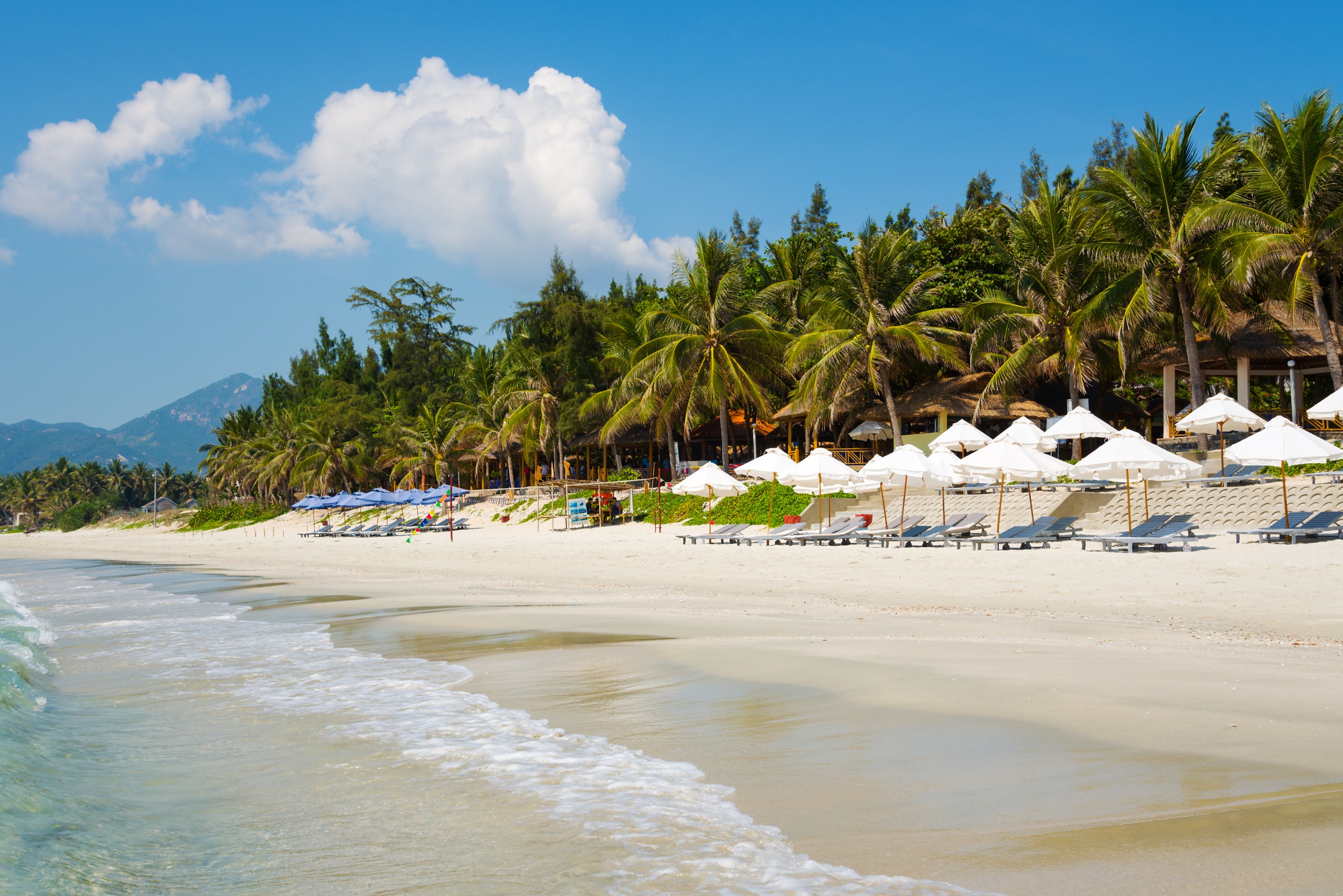
The city of Nha Trang nestles within a truly spectacular bay, ranked among the world's 30 most beautiful. The city offers all the hallmarks of a premier beach resort: turquoise waters and warm temperatures year-round, a wealth of water activities, festivals and vibrant nightlife. With such abundant attractions, it has established itself over the years as Vietnam's leading beach destination.
The Cham Towers of Po Nagar
Erected between the 7th and 12th centuries on an ancient Hindu sacred site, Po Nagar is dedicated to Yang Ino Po Nagar, goddess of the Dua clan who ruled the southern Cham kingdom. Originally constructed in wood, the original structure was destroyed in 774 during a Javanese invasion, before a stone and brick temple was built in its place in 784. Of the seven or eight towers that once stood here, four have survived in magnificent condition, crowning an impressive stone staircase. The Northern Tower, Thap Chinh, with its pyramidal roof, interior vault and vestibule, stands as a masterpiece of Cham architecture. It was built on the orders of Pangro, minister to King Harivarman I, following a fire caused by raiders. The current stone sculpture of Uma, or Shakti, the feminine representation of Shiva, was installed here in 965 by King Jaya Indravarman III. Carved from dark stone, the ten-armed goddess Uma sits upon a monstrous beast. The Central Tower, Thap Nam, was constructed in the 12th century using materials salvaged from a 7th-century structure. The Southern Tower (Mieu Dong Nam) was dedicated to Sandhaka (Shiva). Both contain a lingam. The Northwest Tower (Thap Tay Bac) was consecrated to Ganesh.
Pasteur Institute
The Pasteur Institute of Nha Trang was founded in 1895 by biologist Alexandre Yersin (1863–1943). After working alongside Louis Pasteur in his Paris laboratory, Dr. Yersin arrived in Vietnam in 1889 and spent four years traveling through the Central Highlands, where he discovered the site of present-day Dalat. In 1894, in Hong Kong, he made the discovery of the microbe responsible for bubonic plague. On the second floor of the Institute, a small museum has been created within Alexandre Yersin's library and office. Among other items, you can see laboratory equipment, personal belongings, and his portrait. According to his wishes, Alexandre Yersin, whose memory is deeply honored in Vietnam, is buried near Nha Trang.
The Long Son Pagoda was built in the late 19th century and has been restored several times. In the majestically decorated main sanctuary, multicolored dragons coil around the pillars on either side of the altar. Dominating the city from atop a small hill, a gigantic white Buddha (Kim Than Phat To) sits serenely on a lotus flower. Built between 1928 and 1933 in neo-gothic style, the cathedral stands near the current railway station. Funeral urns rest within the wall of the ramp leading to the cathedral.
The Oceanographic Institute (Vien Nghien Cuu Bien) has occupied since 1923 a vast building constructed by the French in the port district of Cau Da. The aquarium features more than twenty tanks housing countless marine species. Around sixty thousand taxidermied specimens, mostly from the local marine environment, are also on display.
Bao Dai, the last emperor of Vietnam, would retreat to these five villas built across three hillsides south of the city during the 1920s, overlooking the South China Sea, Nha Trang Bay, and Cau Da port. The furnishings are original and the park pathways are lined with tropical vegetation.
Thap Ba Hot Springs Center
The Thap Ba Center is a leisure park on the northern outskirts of Nha Trang, featuring among other amenities a butterfly garden and a waterfall.
Want to discover this destination?
Our local advisors design your tailor-made trip.