Dalat University
Dalat University
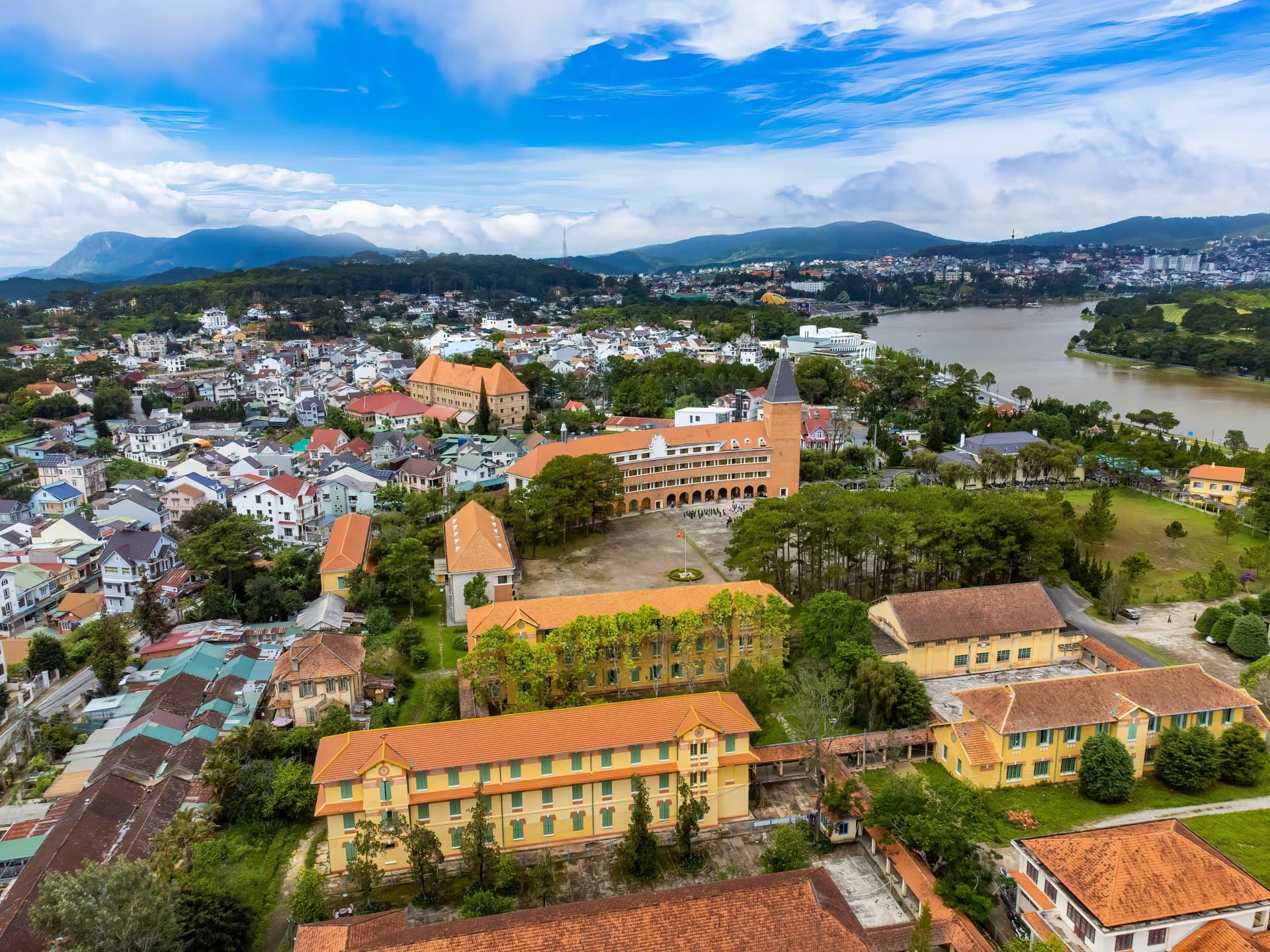
A 40-hectare campus founded in 1957 on a former colonial military site: red brick buildings, a Swiss-inspired tower and views over Dalat from the Lâm Viên plateau.
Dalat University occupies a 40-hectare campus on the Lâm Viên plateau, north of the city. Founded in 1957 under the Catholic Council of South Vietnam, it stands as one of the rare Vietnamese university complexes combining colonial red-brick architecture, Swiss-inspired tower design and French military heritage. Its tree-lined gardens make it an unusual detour for those interested in Dalat's urban history.
Why Visit Dalat University
The site brings together three rarely combined layers in Vietnam: a colonial military compound, a post-war Catholic university foundation and an active public campus. For the traveller, this translates into an architectural walk through a highland park, away from Dalat's mainstream circuits. The complex offers sweeping views over the city and its pine forests, and opens a window onto a lesser-known chapter of contemporary Vietnamese history, spanning French influence, a Catholic period and the transition to public education after 1975.
Campus History
The urban master plan for Dalat drawn up by architect Ernest Hébrard in 1923 envisioned a military zone north of the city. In the 1930s, Camp Cam Courbet sprawled across 38 hectares near Cu Hill, now occupied by a golf course. In 1939, the site was converted into the École des Enfants de Troupe, a school for military families' sons.
The university itself was established in 1957, at the initiative of the Catholic Council of South Vietnam. Its creation benefited from the support of Archbishop Pierre Martin Ngô Đình Thục and the Council of Vietnamese Catholic Bishops. Originally a private Catholic institution, it changed status after the country's reunification in 1975 and became a public university in 1976. Since then, it has trained leaders for Central and Highlands Vietnam.
An Active University Today
The university welcomes over 12,000 students and maintains 81 international partnerships, including the Boston Global Forum and Hanyang University. Its academic journal was integrated into the Asian Citation Index (ACI) in 2017. The academic offering covers 33 undergraduate programmes and 14 graduate programmes, including 8 master's degrees and 6 doctorates, spread across seven faculties: Natural Sciences, Social Sciences and Humanities, Economics and Management, Education, Information Technology, Law, and Agriculture and Forestry. Several construction waves have densified the campus: block A27 (1990), block A8 (1992), block A30 (1996), followed by an electronic library and multipurpose sports centre opened between 2003 and 2004.
What to See
- Mixed architecture: red-brick buildings, European lines and Vietnamese touches, including a Swiss-inspired tower characteristic of the campus.
- Views over Dalat: from the heights of the Lâm Viên plateau, the campus overlooks the city and its pine forests.
- The university park: 40 planted hectares, shaded walkways and spaced buildings invite a peaceful stroll, away from the city centre's bustle.
- Traces of Camp Cam Courbet: the grid of the 1930s military compound and the École des Enfants de Troupe remains visible in the layout of buildings.
Practical Information
The campus is an active university: visits should be discreet, outside teaching buildings. Weekends or university holiday periods are best for moving around without disrupting classes. Respectful dress is expected. Allow 1 to 1.5 hours for an architectural walk. Campus access is generally free for an exterior visit; certain areas (library, academic blocks) remain reserved for students and staff.
How to Get There
The university sits north of Dalat, a few kilometres from the city centre. From Liên Khuong Airport, several options are available:
- Taxi: the most direct solution, with moderate fares for the roughly thirty kilometres to Dalat.
- Private transfer booked online, more comfortable and at a fixed price.
- Local bus: National Highway 20 passes about 1.2 km from the airport and serves Dalat at budget-friendly rates.
Once in town, taxi, motorbike taxi or Grab will get you to the campus within minutes.
What Else to See Nearby
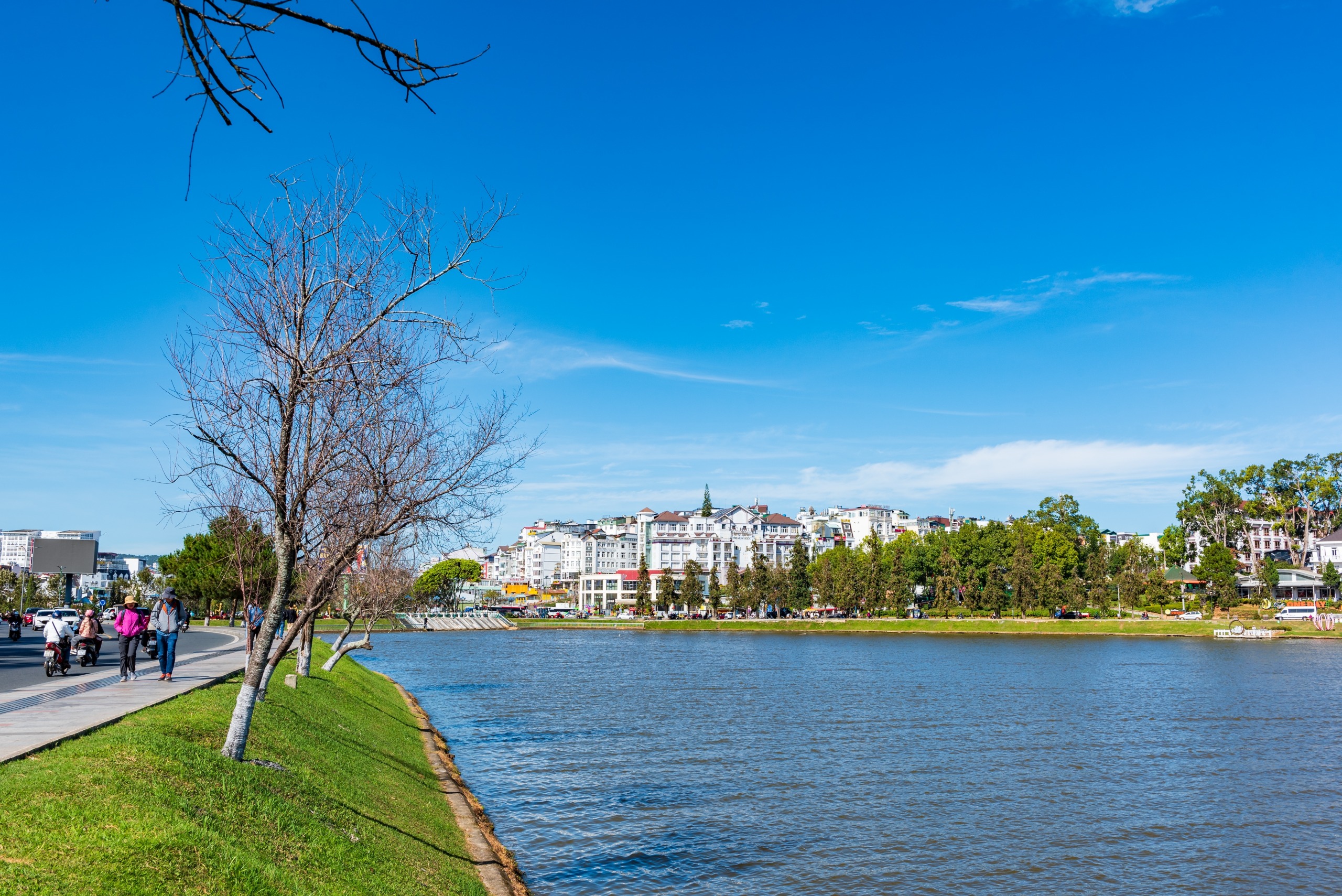
The university fits into a broader exploration of the city. To extend your visit, several Dalat sites merit a detour: Xuan Huong Lake at the centre, the Art Deco railway station, colonial villas in the French Quarter and the Crazy House, an architectural creation by architect Đặng Việt Nga. Urban history enthusiasts can compare this campus with other colonial sites in the country, such as the Cham Sculpture Museum in Da Nang.
Frequently Asked Questions
Frequently asked questions
To integrate this visit into a wider journey across the country, explore our bespoke Vietnam trips.
Nearby
Interested in this visit?
We can include it in your personalised itinerary.