Other Cham Sites in the Area
Other Cham Sites in the Area
Tra Kieu and Dong Duong, former capitals of the Champa kingdom near Danang: two archaeological sites to extend your discovery of Cham culture.
Tra Kieu and Dong Duong: Tracing the Champa Kingdom
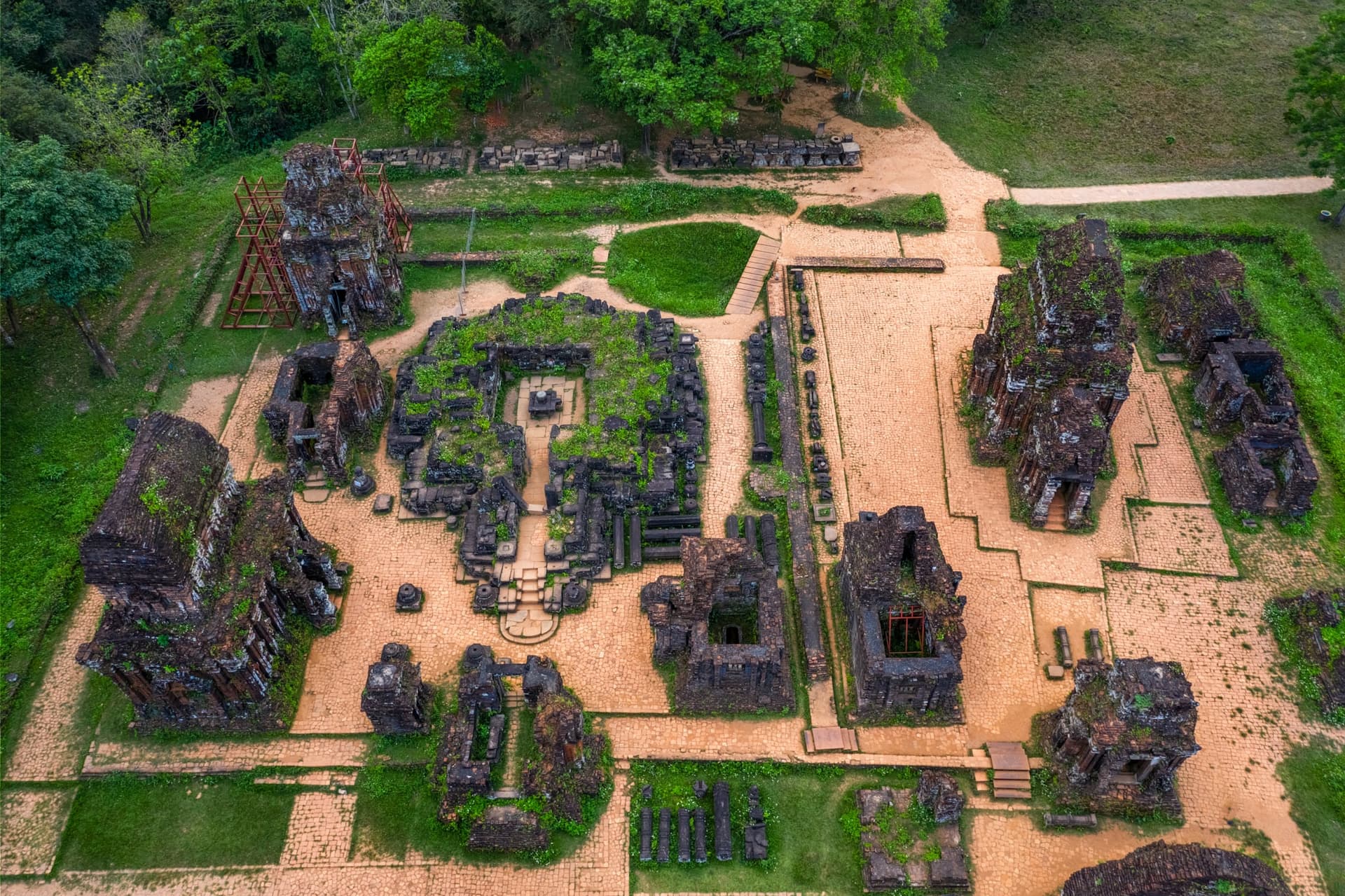
Beyond the celebrated My Son sanctuary, the region around Danang and Hoi An preserves other vestiges of the Champa kingdom, a Hinduized then Buddhist civilization that dominated central Vietnam for over a millennium. Tra Kieu and Dong Duong, two former capitals now nearly erased from the landscape, bear witness to this history for those wishing to deepen their discovery of Cham culture.
Why Visit These Sites?
These two places are not for the hurried visitor: almost nothing remains to see on-site. However, they usefully complement a visit to My Son and the Cham Sculpture Museum in Danang, where most of the artifacts found at these sites are displayed. Tra Kieu and Dong Duong appeal mainly to travelers passionate about history or archaeology, who wish to mentally reconstruct the political and religious geography of Champa.
A Brief History of the Champa Kingdom
Champa was a collection of Indianized principalities that controlled central and southern present-day Vietnam from the 2nd to the 19th century or so, with its peak between the 7th and 10th centuries. Its capital relocated several times, following shifts in power with neighboring kingdoms, notably Đại Việt to the north and the Khmer empire to the west. Tra Kieu, then Dong Duong, rank among these successive capitals, before the center of power migrated further south, toward Cha Ban (near Qui Nhon).
Tra Kieu (Simhapura)
Once named Simhapura, the Citadel of the Lion, Tra Kieu was the political capital of the Cham kingdom roughly from the 4th to the 8th century. Few vestiges remain on the site today, save for the rectangular ramparts that outlined the city's enclosure. Many sculptures were found there during excavations conducted by French archaeologists in the early 20th century; they are now displayed in the Danang museum, where one can notably admire the famous Tra Kieu pedestal, adorned with scenes of dance and episodes from the Ramayana.
Dong Duong (Indrapura)
This former religious center of Champa, once called Indrapura, was the site of an important Mahayana monastery, Lakshmindra-Lokeshvara, founded in 875. The Cham kingdom established its capital there from around 860 to 986, before transferring it to Cha Ban. Dong Duong is one of the rare large Mahayana Buddhist monastic complexes of Champa, at a time when the majority of Cham sanctuaries were dedicated to Shiva. The site was particularly damaged by the Indochina and Vietnam wars; today only part of its access gateway remains, isolated in the middle of rice paddies.
What to See Today on Site?
- At Tra Kieu: the outline of the old ramparts, a hill (Buu Chau) offering panoramic views over the plain, and a Catholic church built atop a former Cham hilltop.
- At Dong Duong: the famous partially standing gate-tower, a few wall fragments and barely visible foundations in the vegetation.
- At the Danang Museum: this is where the true interest of the visit is concentrated, with sculptures, altars and statues from these two sites.
A visit to these two places is therefore more of a historical pilgrimage than a marked tourist route. Allow 1 to 2 hours at each site, with very limited signage and explanatory panels.
Practical Information
- Location: Tra Kieu is located about 30 km southwest of Danang and some twenty kilometers west of Hoi An. Dong Duong is more remote, about sixty kilometers southwest of Danang, in Thang Binh district (Quang Nam province).
- Access: private car with driver remains the simplest solution, often combined with a visit to My Son in one day. Motorcycle suits independent travelers.
- Site Conditions: free access, few tourist facilities. Bring water, a hat and good shoes.
- Recommended Season: the dry season, between February and August, to avoid rains that make access to sites in rural areas more challenging.
What to Combine in the Region
A visit to Tra Kieu and Dong Duong naturally fits into a stay in the Danang and Hoi An region. Before or after, plan a stop at the Cham Sculpture Museum, essential for making sense of these remains. The My Son sanctuary, a UNESCO World Heritage site, logically completes this journey tracing the footsteps of Champa.
Extend the Experience with Nomadays
Do you wish to integrate these Cham sites into a tailor-made Vietnam itinerary? Our advisors build with you a Vietnam journey that combines heritage, landscapes and encounters, at your own pace.
Interested in this visit?
We can include it in your personalised itinerary.