Mui Ne Beach
Mui Ne Beach
Between Phan Thiet and the peninsula's tip, Mui Ne combines a long coconut-lined beach with red and white sand dunes and Cham heritage sites.
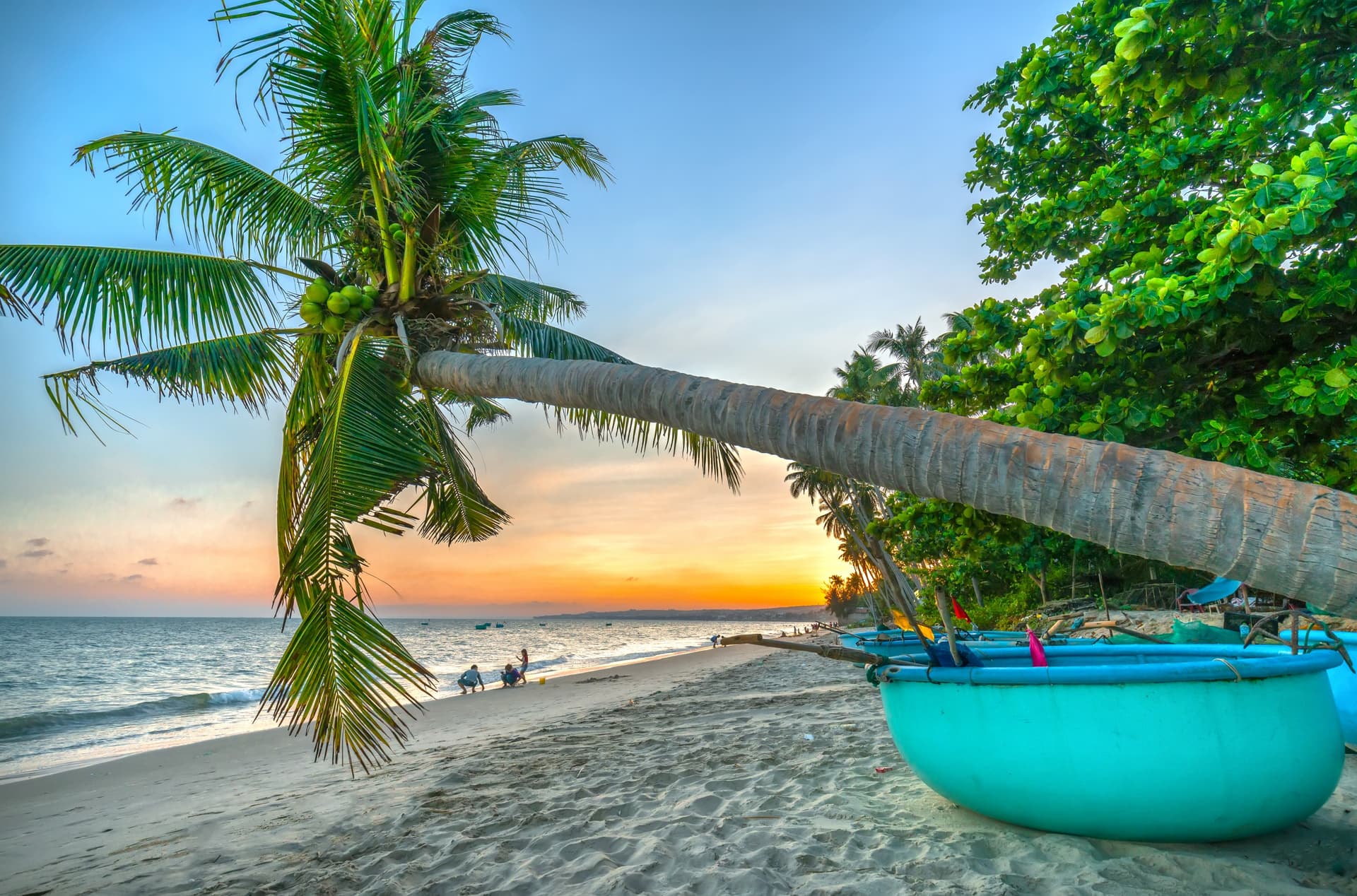
On Vietnam's southeast coast, Mui Ne Beach stretches its coconut palms and golden sand across a peninsula extending between the city of Phan Thiet and the fishing village marking the point. What sets this place apart is its dual identity: a long beach facing the South China Sea, and a hinterland of red and white sand dunes that descend almost to the shoreline. This contrast, combined with steady winds, makes it one of the most distinctive seaside destinations along Vietnam's coastline.
Why visit Mui Ne
Mui Ne is more than just a beach. The peninsula combines several landscapes within just a few kilometres: shifting dunes, an incised stream, ancient Cham towers, a traditional fishing port. Windsports enthusiasts find here a recognised kitesurfing and windsurfing spot, powered by the trade winds that blow much of the year. Travellers seeking tranquility appreciate stretches of beach still undeveloped beyond the tourist core, where coconut groves replace resort complexes.
What to see and do
The red and white sand dunes
The Doi Cat dune, a recurring subject for photographers and painters for decades, shifts shape with the wind. Two distinct areas stand out: the red dunes, closer to the village, accessible on foot in late afternoon for golden-hour light, and the white dunes, more extensive and higher, located roughly twenty kilometres to the north. On site, jeeps and quads can be rented to explore the area. Sand sledging can be improvised down the steeper slopes.
Suoi Tien Stream
The Suoi Tien stream, known as the "Fairy Stream," winds between cliffs of red and white clay sculpted by erosion. The walk takes place barefoot, through water that never exceeds ankle-height, over a distance of about one kilometre each way. The mineral landscape, dotted with bamboo and small rock formations, justifies the stop in itself.
Po Sah Inu Cham Tower
On a hill overlooking Phan Thiet, the Thap Poshaknu Cham tower (Po Sah Inu) groups three brick structures attributed to the late 8th century. These remnants of the Champa kingdom bear witness to the Hinduised culture that long occupied central and southern present-day Vietnam. The site also offers an expansive view over the bay.
Ong Hoang Viewpoint
Near the Cham towers, the ruins of the Ong Hoang viewpoint (Lau Ong Hoang) correspond to a residence built in the early 20th century by a French aristocrat, then used during the war. The collapsed walls and elevated position offer an interesting vantage point over the coast.
The fishing village
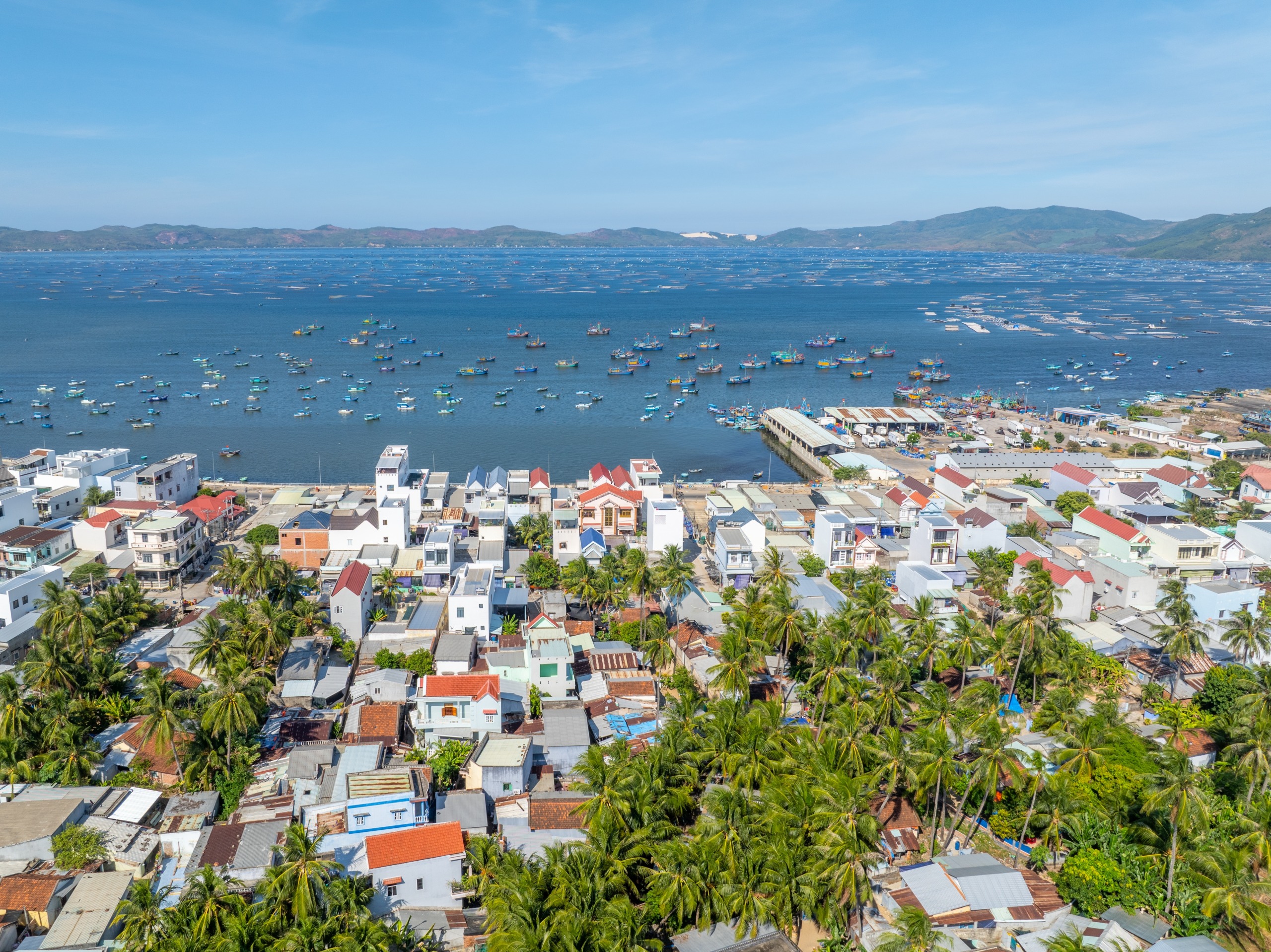
At the peninsula's tip, the fishing village lines its traditional round boats (thung chai) along the bay. The morning fish auction, around sunrise, remains one of the most animated moments of the local day.
When to go
The region enjoys a dry climate much of the year, more arid than the rest of Vietnam's coastline. The most favourable season runs from November to April: clear skies, calm seas, and steady afternoon winds ideal for kitesurfing. The rainy season, May to October, remains viable as showers are brief and localised, but the sea can be rougher and dunes less photogenic under overcast skies.
Practical information
- Duration of visit: allow two to three days to combine beach, dunes, and secondary sites.
- Accommodation: Nguyen Dinh Chieu road concentrates most resorts and guesthouses, spanning roughly twenty kilometres.
- Sea safety: currents can be strong on windy days; respect bathing guidelines posted by hotels.
- Prices: entry to dunes and cultural sites remains modest; budget additional funds for jeep or quad rentals.
How to get there
Mui Ne is located roughly 200 km east of Ho Chi Minh City. Several options exist:
- By train: the north-south line serves Phan Thiet station. The journey from Ho Chi Minh City takes about four hours, then 20 km by taxi or local bus to Mui Ne.
- By bus: daily connections (sleeper buses) link Ho Chi Minh City and Nha Trang to Mui Ne, in four to five hours.
- By private car: the most flexible option for combining photo stops along the way.
Combine with nearby attractions
Mui Ne integrates easily into a coastal itinerary heading north (Nha Trang, Hoi An) or south (Mekong Delta). To extend cultural discovery in Vietnam, several sites echo the Champa heritage visible at Po Sah Inu, such as Da Nang's Cham Sculpture Museum. On the nature itinerary side, Cat Ba Island in the north or Cai Rang Floating Market in the Mekong Delta round out a panorama of Vietnam's landscapes.
Frequently asked questions
Frequently asked questions
Two to three days are enough to enjoy the beach, visit the red and white dunes, Suoi Tien stream, and the Cham towers. Allow more if you wish to practise kitesurfing or simply rest.
Yes, it's one of Southeast Asia's premier spots. The most consistent winds blow between November and April. Several schools established on the beach offer lessons and equipment rental.
The red dunes are close to Mui Ne village, more modest in size, and accessible on foot. The white dunes, about twenty kilometres to the north, are more extensive and taller, but require a vehicle.
Swimming is possible in all seasons, with calmer waters between November and April. During windy season, some hotels advise against swimming on the most exposed days.
Scooter rental remains the most flexible option for reaching dunes and surrounding sites. Taxis and shared jeeps are also common, particularly for sunrise or sunset excursions.
Include Mui Ne in your itinerary
Mui Ne lends itself to a seaside stop between southern cities and the central coast. To build a bespoke journey blending beaches, landscapes, and culture, explore our Vietnam travel ideas.
Interested in this visit?
We can include it in your personalised itinerary.