Takou Mountain
Takou Mountain
Located 30 km from Phan Thiết, Takou Mountain is home to two ancient pagodas and a 49 m reclining Buddha, with views over Mui Ne and Ke Ga lighthouse.
Some thirty kilometers southeast of Phan Thiết, Takou Mountain rises 563 meters above rice paddies and dragon fruit plantations in Bình Thuận province. The site combines two Buddhist pagodas, a monumental statue of a reclining Buddha, and a viewpoint overlooking the Mui Ne coastline.
Why visit Takou Mountain
Takou brings together three points of interest rarely found in one place in Vietnam: an active pagoda complex, a reclining Buddha statue considered the largest of its kind in Southeast Asia, and a panorama embracing Phan Thiết, Mui Ne Bay, and Ke Ga lighthouse. Access is straightforward from the coast, making it a logical half-day excursion for travelers staying at a beach resort.
A Buddhist history spanning more than a century
Construction of the Linh Sơn Trường Thọ Pagoda, perched on the upper slopes of the mountain, began in the 1870s under the direction of monk Trần Hữu Đức. He had settled in the Ancestors' Cave, located near the current statues, where he practiced meditation. Following his death in 1887, his disciples continued his work by building the Long Đoàn Pagoda further down the slope.
The site's visual identity took shape much later. In 1958, Trương Đình Trí undertook the creation of the reclining Gautama Buddha statue, which would become the most recognizable element of Takou. The complex has continued to attract Vietnamese pilgrims and foreign visitors ever since.
What to see
The reclining Gautama Buddha
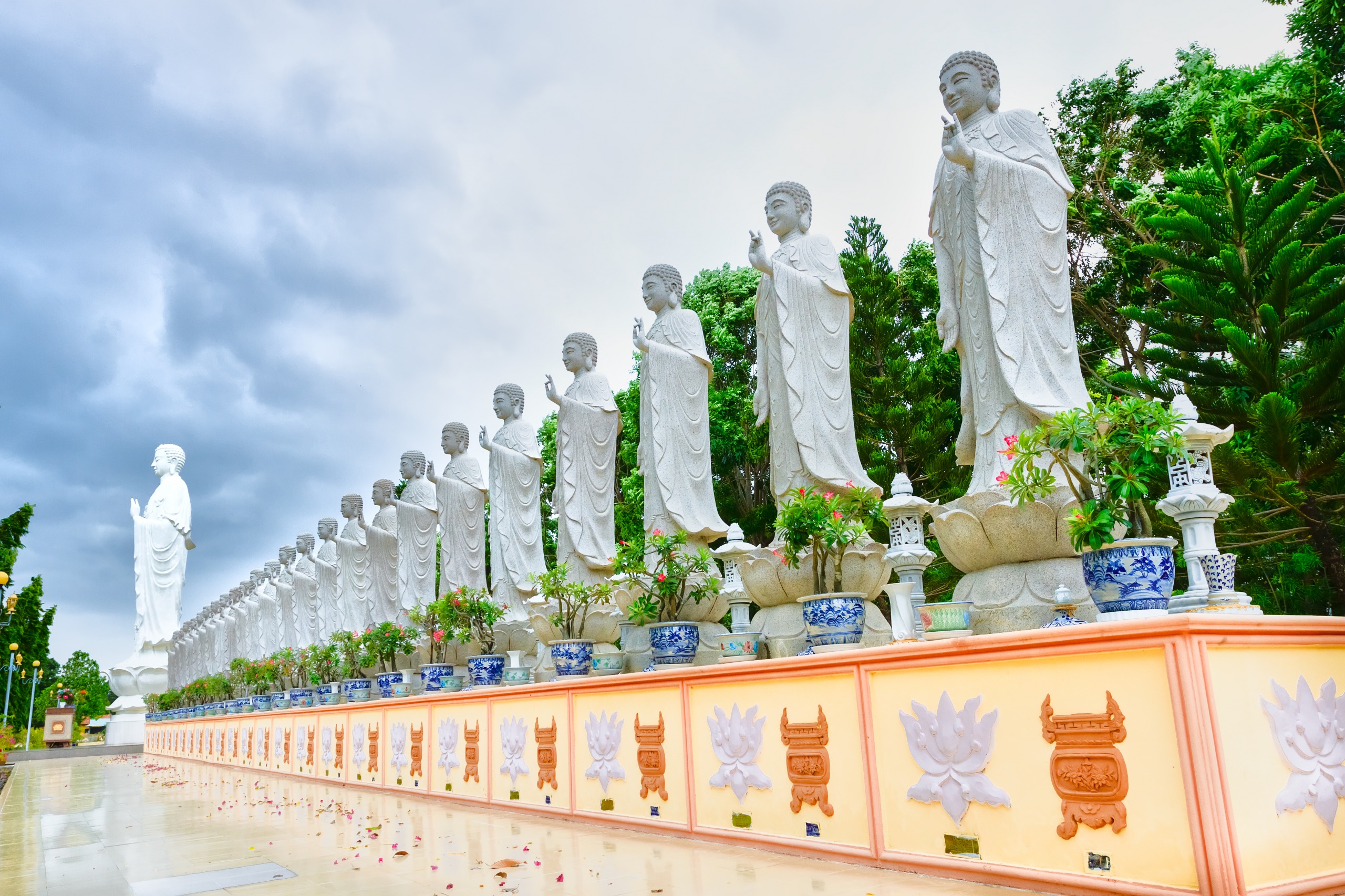
The statue measures 49 meters long and 11 meters high, making it the largest representation of its kind in Southeast Asia. It stands at the heart of the pagoda complex, surrounded by other Buddhist sculptures. Clothing covering shoulders and knees is expected in the immediate vicinity.
The Linh Sơn Trường Thọ and Long Đoàn Pagodas
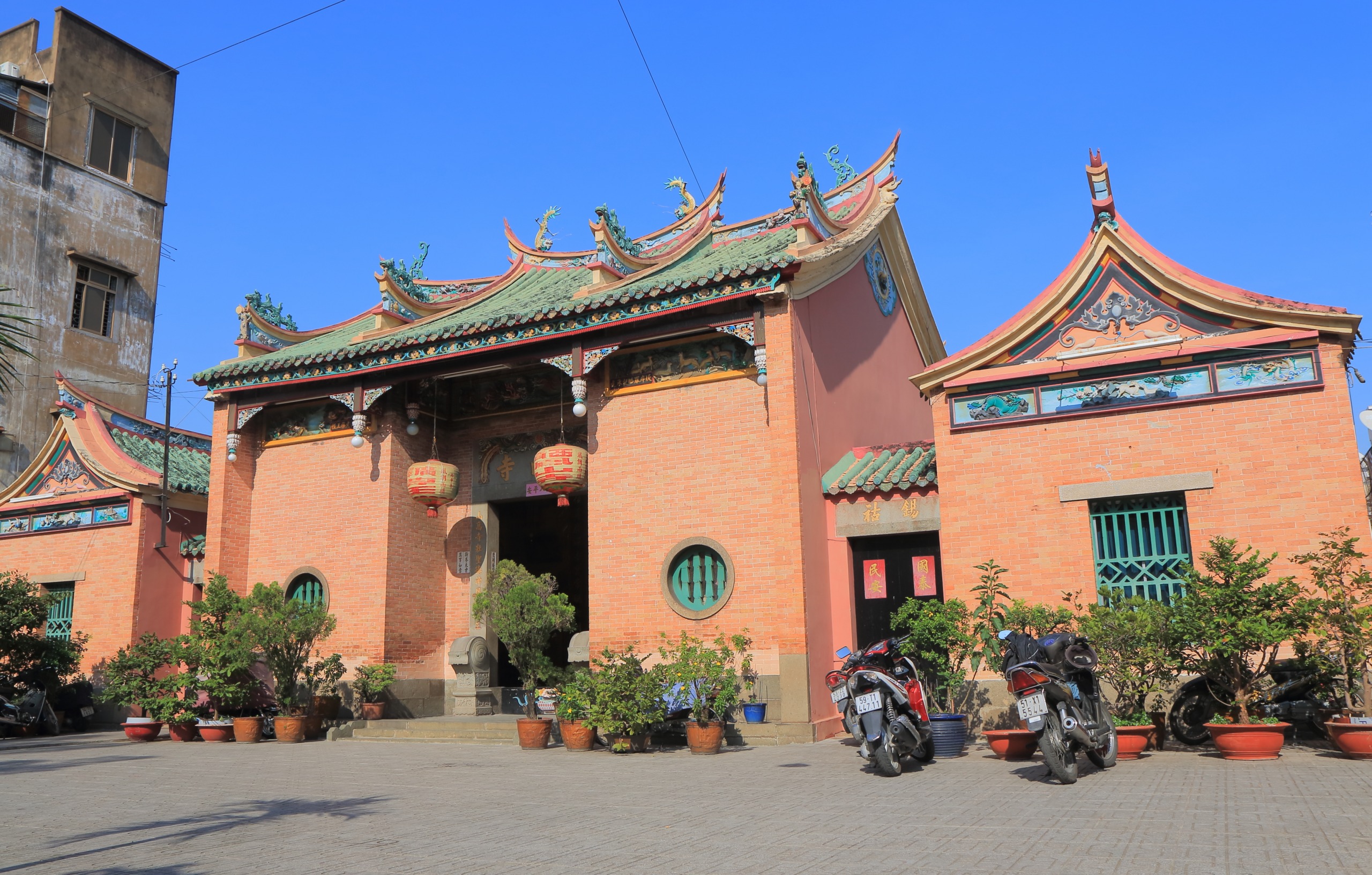
The Linh Sơn Trường Thọ Pagoda occupies the upper part of the site. Traditional Vietnamese architecture, incense-scented altars, and colorful statues make up an active complex. The Long Đoàn Pagoda, situated lower, marks the base of the spiritual path and remains frequented by devotees.
The panorama from the summit
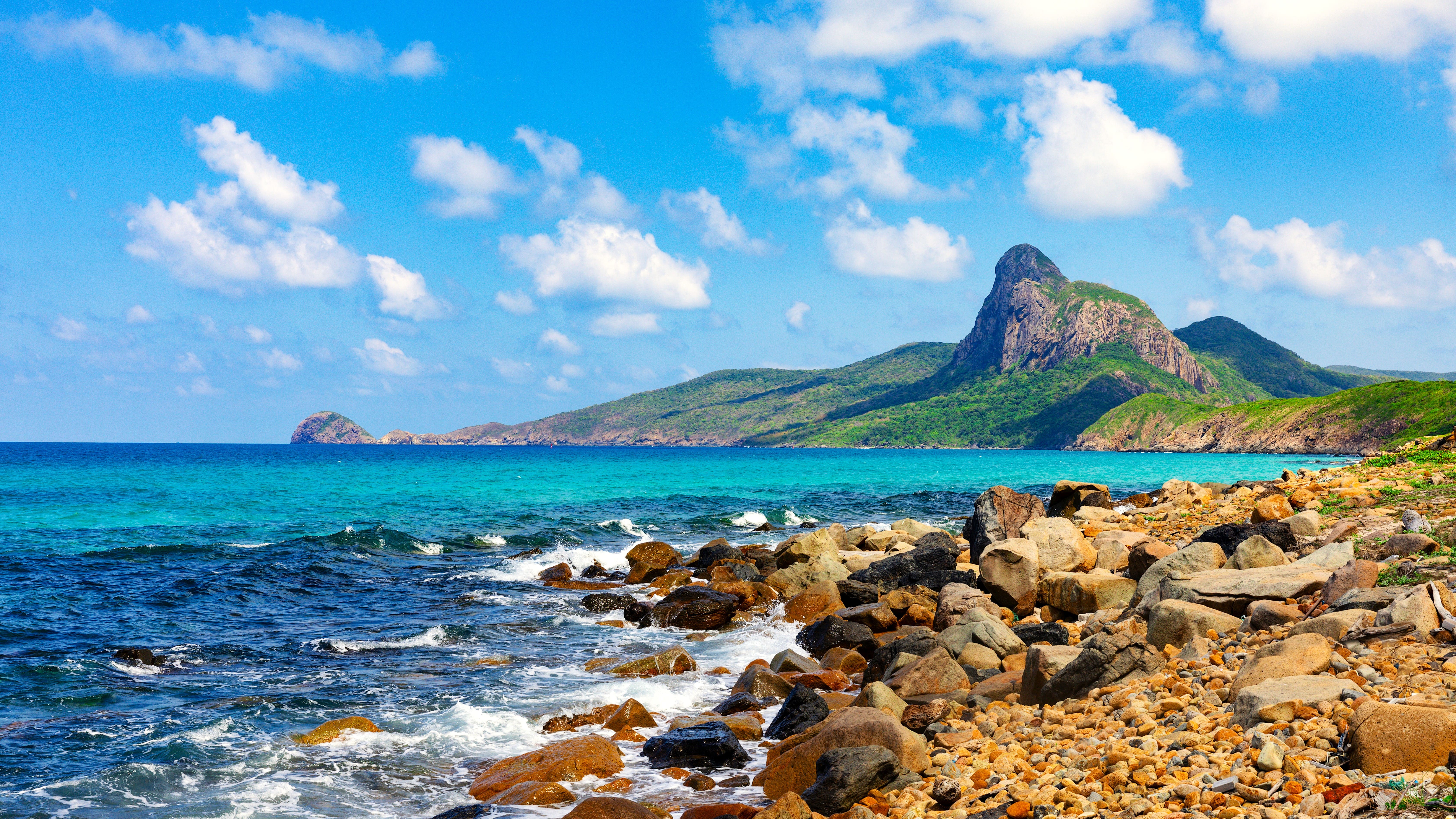
From the upper terraces, views unfold over Phan Thiết city, the Mui Ne coastline, and on clear days, Ke Ga lighthouse. Below, you can make out the rice paddies and dragon fruit farms characteristic of Bình Thuận province.
Practical information
Two options allow you to reach the pagoda complex from the foot of the mountain:
- On foot: a stairway trail of over 1,000 steps leads to the site through the forest. Expect a sustained climb, reserved for hikers in good physical condition.
- By cable car: the fastest and most comfortable option, with sweeping views over the forested slopes.
Various packages combine site entry, round-trip cable car access, and internal electric shuttle. As rates and hours change regularly, it's best to confirm them with your accommodation or travel agency before departing. Plan to spend 2 to 3 hours on site to enjoy the pagodas, statue, and viewpoint without rushing.
When to go
The dry season, from November to April, offers the best visiting conditions: clear skies, comfortable temperatures, and passable trails. The rainy season, roughly from May to October, adds green to the landscape but brings brief and sometimes intense showers, which can make steps slippery. An early morning visit helps you avoid midday heat and tour group crowds.
How to get there
From Phan Thiết, the mountain is located about 28 km south of downtown, less than an hour's drive away. This is the simplest option for travelers already staying in Mui Ne.
From Ho Chi Minh City, expect about 170 km via National Highway 1A heading northeast. At kilometer 28, near Thuận Nam commune, a sign marks the turnoff to Takou; it's then 12 km to the foot of the mountain. The journey is made by private car or long-distance bus.
Nearby attractions
Takou is part of a network of mountainous Buddhist sites scattered throughout southern Vietnam. If this type of landscape interests you, you can extend your itinerary to Bà Den Mountain, the highest peak in the south, or to Buu Long Mountain near Ho Chi Minh City. Further south, Cai Rang floating market offers a striking contrast with the serene atmosphere of mountain pagodas.
Frequently asked questions
Frequently asked questions
Allow 2 to 3 hours on site if you use the cable car, and a full half-day if you climb on foot via the stairs.
The cable car suits most visitors and offers fine views of the slopes. The over 1,000 steps of the trail are reserved for trained hikers, particularly in hot season.
Clothing covering shoulders and knees is expected in the pagodas and near the statues. Also bring closed-toe shoes, water, and a hat.
Yes, but it's a long day: about 170 km each way, plus 2 to 3 hours of sightseeing. A stay in Mui Ne or Phan Thiết makes the excursion more comfortable.
Yes, provided you opt for the cable car. The site remains accessible with a few internal stairs, and children generally appreciate the monumental reclining Buddha statue.
Incorporating Takou into your itinerary
Takou Mountain fits naturally into a trip combining Mui Ne beaches, sand dunes, and Buddhist culture in southern Vietnam. To build a coherent circuit around this region, check out our Vietnam travel suggestions.
Interested in this visit?
We can include it in your personalised itinerary.