Central Vietnam Region
With no fewer than 4 UNESCO sites, Central Vietnam is an area that absolutely deserves to be discovered during your visit to this country. It is in this part of Vietnamese territory that the city of Hué is nestled, captivating with its imperial citadel and cuisine. Hoi An, a former major Southeast Asian port, seduces with its ancient town and famous Japanese bridge. Danang, the largest city in this region, preserves the largest collection of artifacts related to Cham culture. Not far from Danang
With no fewer than 4 UNESCO sites, Central Vietnam is an area that absolutely deserves to be discovered during your visit to this country. It is in this part of Vietnamese territory that the city of Hué is nestled, captivating with its imperial citadel and cuisine. Hoi An, a former major Southeast Asian port, seduces with its ancient town and famous Japanese bridge. Danang, the largest city in this region, preserves the largest collection of artifacts related to Cham culture. Not far from Danang sits the celebrated Golden Bridge, offering postcard-perfect scenery.
The coastline of Central Vietnam also captures the attention of travellers. Splendid beach resorts extend along it, such as Quy Nhon and Nha Trang, as well as the Cloud Pass, whose coastal road is ranked among the most beautiful in the world.
The highlands of Central Vietnam are equally compelling. The most enchanting waterfalls in the country and the world's largest cave, Son Doong, await you here.
Geographic Extent
Known as "Trung Bộ" in Vietnamese, Central Vietnam is one of the three main regions of the country, alongside Northern Vietnam (Bắc Bộ) and Southern Vietnam (Nam Bộ). It is bordered by the provinces of Ninh Bình, Hòa Bình, and Sơn to the north, and the provinces of Bình Phước, Đồng Nai, and Bà Rịa–Vũng Tàu to the south. It shares boundaries with Cambodia and Laos to the west, and is bordered by the South China Sea to the east.
What are the unmissable destinations in Central Vietnam?
Hué
Hué captivates history and culture enthusiasts. Its citadel, classified as a UNESCO World Heritage site, testifies to the extravagance of the Nguyen Dynasty. This heritage reveals exceptional richness, despite the vicissitudes of history, notably the aftermath of American bombing and the Tet Offensive battle in 1968.
Hué extends along the banks of the Perfume River. A boat cruise on this waterway is one of the most sought-after tourist activities in the city. It reveals treasures such as the majestic Thien Mu Pagoda (Pagoda of the Celestial Lady) and the mausoleums of the Nguyen emperors (nestled in enchanting natural settings upstream).
Hué is also synonymous with varied craftsmanship, notably the creation of famous Vietnamese conical hats. Moreover, it is known for its distinctive "house-gardens", and its imperial culinary delights.
Hué's renown extends further. Approximately 30 kilometres from the city lies Tam Giang Lagoon, the largest in Southeast Asia. This magnificent saltwater lake invites wonder and contemplation.
Hoi An
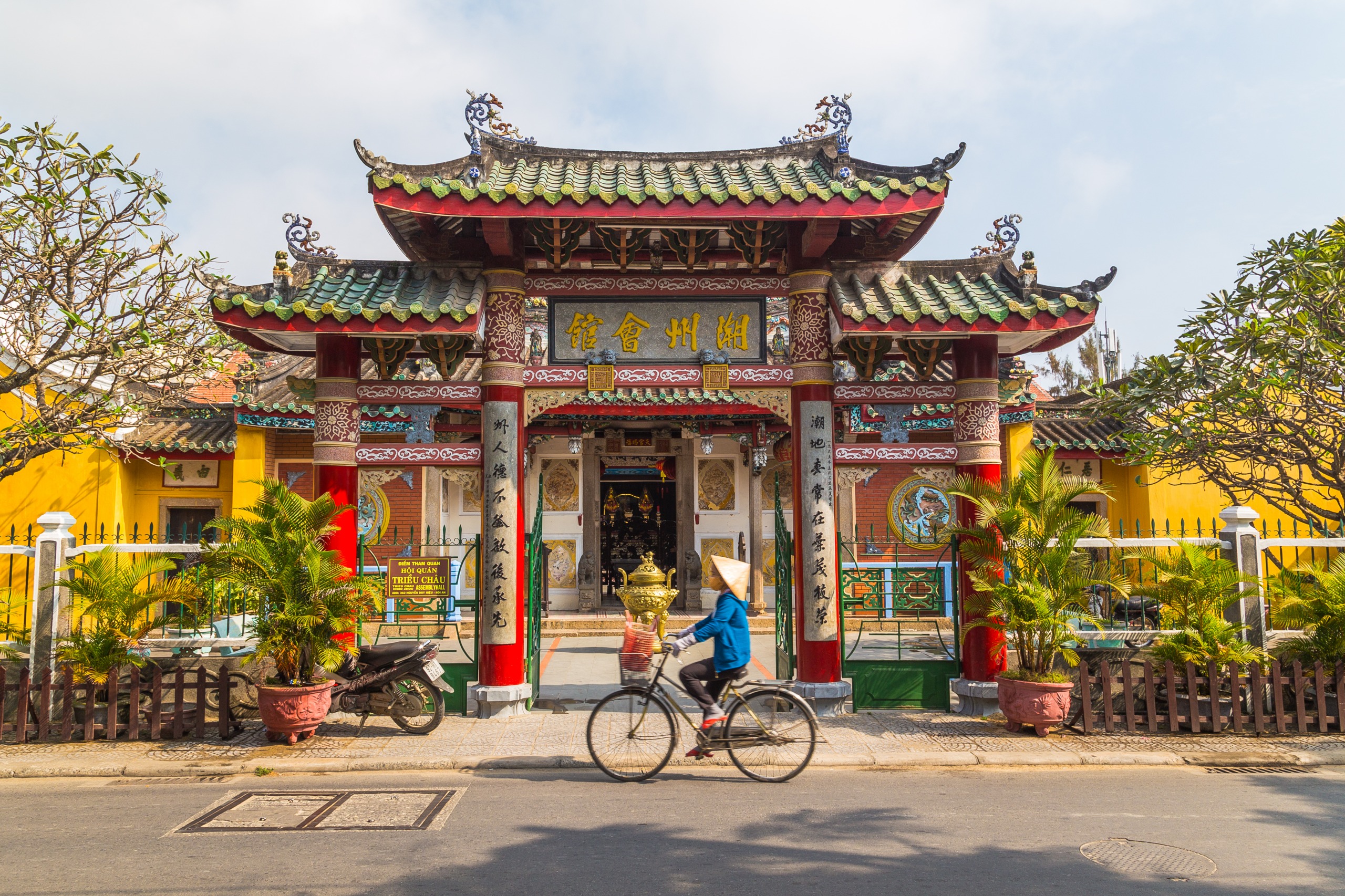
Like Hué, Hoi An enchants with its UNESCO World Heritage status. A witness to a flourishing merchant past, it was a port of major importance between the 15th and 19th centuries. You will certainly be captivated by the wooden houses of its old town, as well as the pagodas and the Japanese bridge, dating from the 17th century. Furthermore, its cuisine, among the most delicious in the country, will not leave you unmoved. Be sure to taste Cao Lau, one of the finest local specialities.
The countryside surrounding Hoi An is also worthy of interest. It offers splendid bicycle rides through agricultural scenes and charming fishing villages.
Some 20 kilometres offshore from Hoi An lie the Cham Islands or Cua Lao Cham. Designated a UNESCO World Biosphere Reserve, this idyllic archipelago attracts with its exceptional marine biodiversity.
Another UNESCO heritage site is also found in the vicinity of Hoi An: the archaeological site of My Son. This was once the religious and political centre of the Champa Kingdom, which flourished in the region between the 4th and 13th centuries.
Central Highlands
Blessed with a temperate climate and fertile lands, the Central Highlands play an important role in global production of coffee, pepper, tea, and cashew nuts. It is a territory still preserved from mass tourism, and a home to numerous ethnic minorities proudly attached to their ancestral traditions and customs.
The Central Highlands abound with breathtaking natural treasures, such as Lak Lake and Yok Don National Park, which still harbours wild elephants and tigers. Majestic waterfalls, including Dray Sap, and mysterious caves dot its landscapes.
Exploration of the Central Highlands should normally include a detour to Dalat. Founded in the early 20th century as a French colonial resort, this city attracts with its colonial architecture, flowered parks, peaceful lakes, vast pine forests, agricultural terrain, and invigorating fresh air.
Quy Nhon Beach Resort
Quy Nhon, a beach destination often overlooked by tourists, well deserves the attention of those seeking relaxation. Indeed, the beaches in its surroundings are genuine invitations to leisure. To the north, the splendid Ky Co beach displays its fine sand and crystal-clear waters, while to the south, an intricate tapestry of rocky coves conceals small paradisiacal beaches, each with its own unique charm.
Quy Nhon also harbours a precious archaeological treasure. It is in its region that most of the remains of the ancient Champa Kingdom are found.
Nha Trang Beach Resort
With its bay ranked among the 20 most beautiful in the world, Nha Trang is recognised as one of Vietnam's finest beach resorts. Its sublime beaches invite relaxation and water activities, while boat excursions allow tourists to discover an archipelago with a breathtaking seabed.
Beyond the beauty of its coastline, Nha Trang also reveals a rich cultural heritage. The Cham Towers of Po Nagar, erected between the 8th and 18th centuries, are the most visited. They were dedicated to the goddess Yan Po Nagar, the founder of the Champa Kingdom. The city's cathedral (in Gothic style), the museum dedicated to Dr. Yersin, and the Oceanographic Institute are also worth visiting.
Danang
Danang, named Tourane during the colonial era, is Vietnam's third-largest city. Setting out from Hué, the road to this city passes through the majestic Cloud Pass, which offers a superb panorama of the Vietnamese coast and the splendid Lang Co Peninsula.
Danang's renown rests on its beaches, ranked among the finest in Central Vietnam. That is not all. The city houses a museum dedicated to Cham art, containing an impressive collection of objects related to this civilisation.
The Marble Mountains, or Ngu Hanh Sơn, are another marvel to discover when visiting Danang. These five sacred summits, adorned with sanctuaries, temples, and pagodas carved into limestone, offer a unique spiritual experience and stunning scenery.
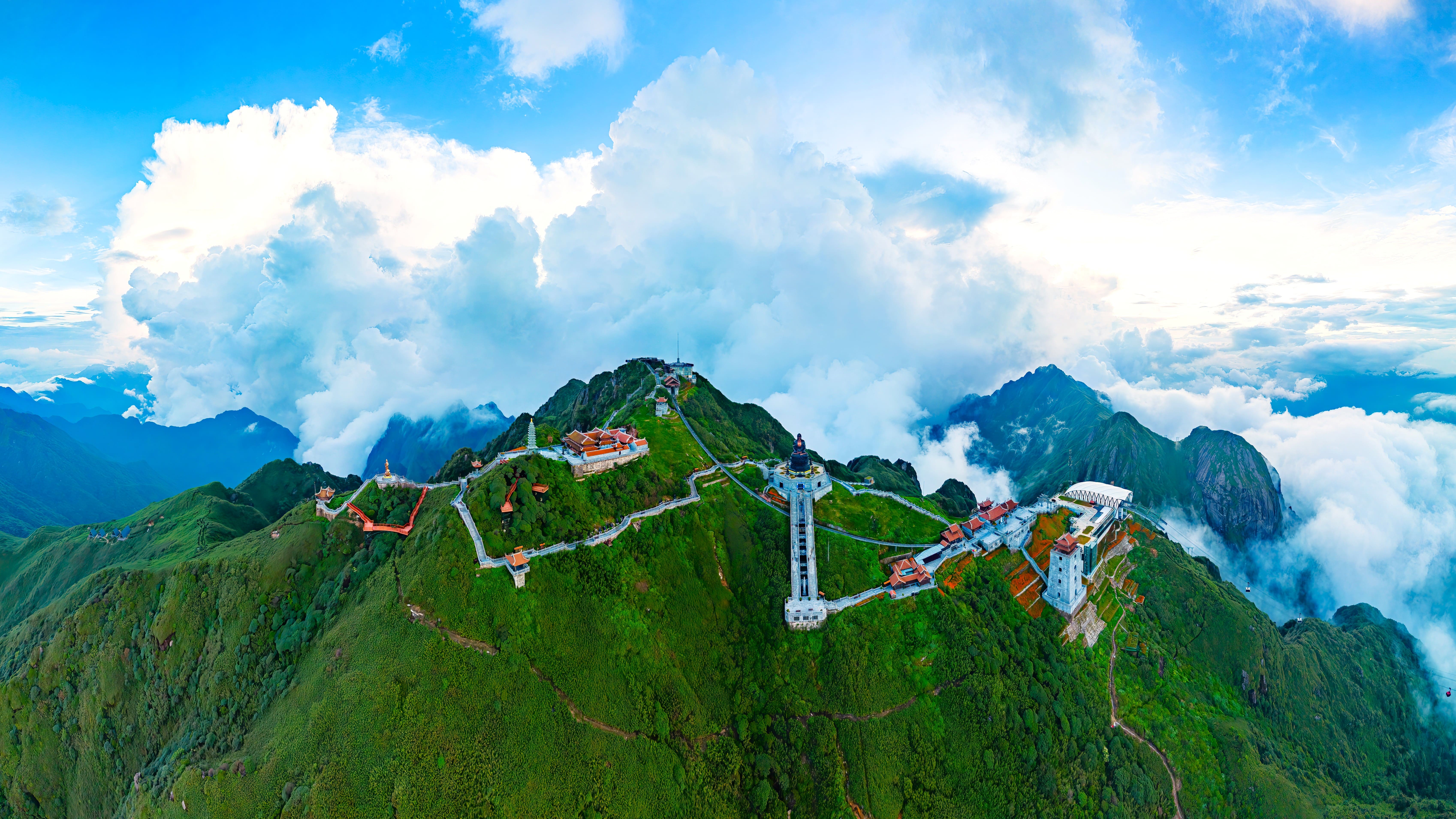
Not far away lies the former colonial hill station of Ba Na Hills, which is home to one of Vietnam's most iconic monuments: the Golden Bridge. This pedestrian bridge, perched in the mountains and supported by two giant stone hands, offers visitors spectacular panoramic views.
Phong Nha Ke Bang National Park
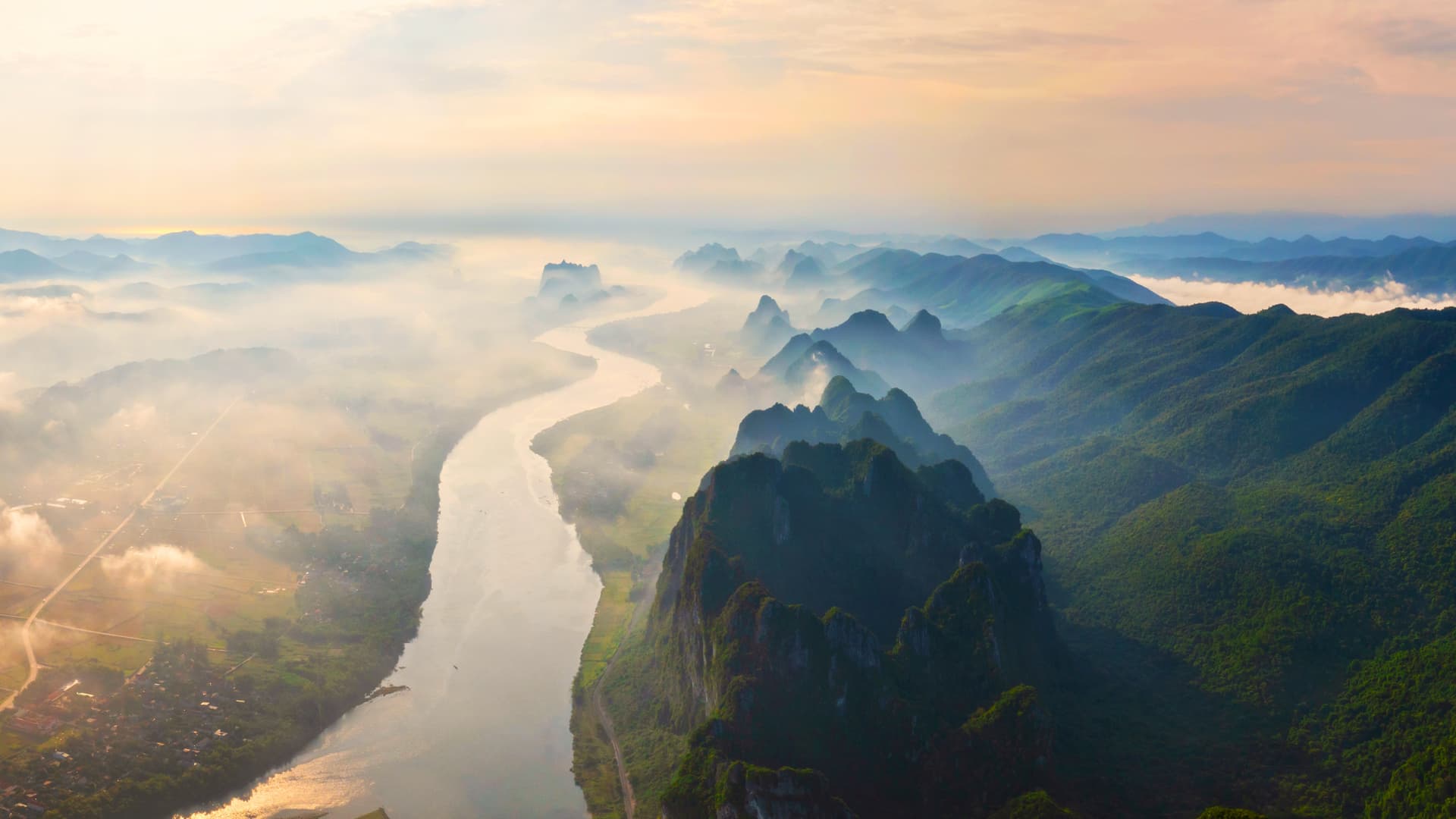
Phong Nha Ke Bang National Park, a UNESCO World Heritage site, impresses with its karst and limestone terrain aged over 400 million years. It is nestled in Central-Northern Vietnam, on the Annamite Range, and spans 2,000 km². It is a sanctuary of rich biodiversity and numerous endemic species.
The protected area is traversed by a network of 115 kilometres of rivers and underground cavities, adorned with spectacular stalagmites and stalactites. Its most famous cave is Son Doong. Measuring 9 kilometres and possessing a gallery 200 metres high by 100 metres wide, it is the world's largest cave.
Remnants of the Vietnam War
Central Vietnam, witness to the devastating confrontations of the Vietnam War (1965–1975), is scattered with remnants of this dark chapter in the country's history. Battles notably took place in the DMZ (demilitarised zone), at the level of the 17th parallel north. The Ben Hai River and the Hien Luong Bridge, today a "special national relic", formed the line of demarcation between North and South Vietnam.
The Vinh Moc tunnels, emblems of Vietnamese resistance, offer a moving testimony to the struggle for survival during American bombardment. The historical site of Khe Sanh recalls the bloody 77-day siege. The Dak Rong Bridge marks the beginning of the Ho Chi Minh Trail. These are just some of the remnants of this war in this part of the country.
When to Visit Central Vietnam?
The ideal period for exploring Central Vietnam extends from February to August, during the dry season. During these months, meteorological conditions are generally favourable, with pleasant temperatures ranging from 26°C to 32°C. Precipitation is rare, allowing you to enjoy sunny days and clear skies, perfect for admiring the region's magnificent landscapes.
It is also the ideal time to visit emblematic destinations such as Hué, Hoi An, Da Nang, and Nha Trang. Moreover, the dry season is punctuated by festivals and cultural events, such as the famous lantern festival in Hoi An.
However, if you seek a more peaceful experience and wish to avoid crowds, the rainy season, from September to January, could be ideal for you. Although showers are frequent, they are often interspersed with periods of clear skies. Furthermore, lush landscapes nourished by abundant precipitation offer striking natural beauty. Simply ensure you check weather forecasts and take necessary precautions, as this period is also subject to typhoons, particularly in September and October.