Mekong Delta
Mekong Delta
The Mekong Delta in southern Vietnam: 40,000 km² of canals, rice paddies and floating markets, the country's main agricultural heartland and cultural crossroads.
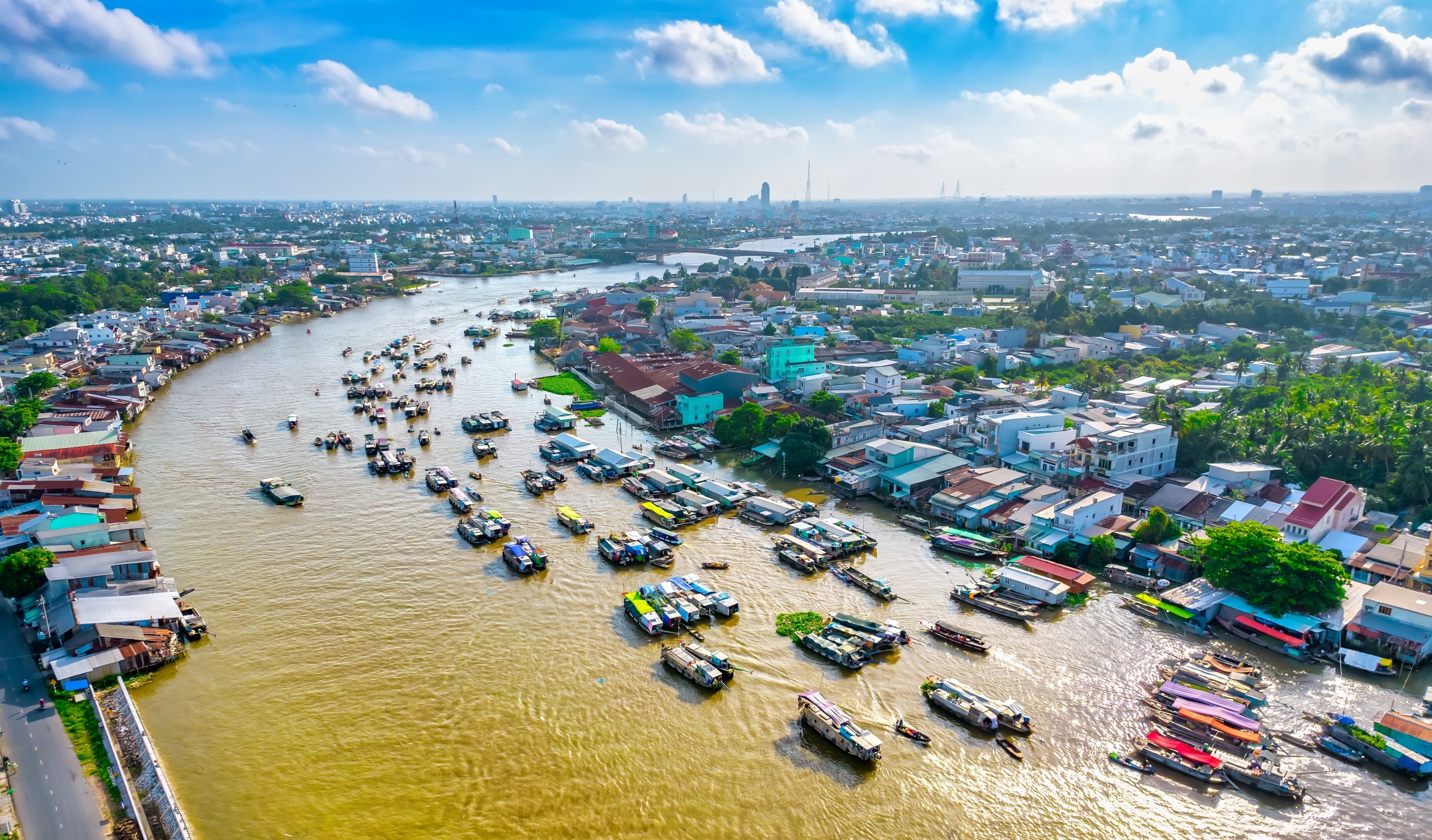
The Mekong Delta occupies the far south of Vietnam, between Ho Chi Minh City and the Cambodian border. Spanning nearly 40,000 km² and twelve provinces, the river branches into a labyrinth of waterways, canals and islands that structure daily life: floating markets, rice paddies, tropical orchards, stilt villages. It is the country's primary agricultural region and a cultural crossroads where Vietnamese, Khmer, Chinese and Cham populations converge.
Why visit the Mekong Delta
The delta produces more than half of the rice and fish consumed in Vietnam. This agricultural intensity translates into highly distinctive landscapes: orchards, checkered rice paddies, aquaculture farms, wholesale markets on the water. A visit combines multiple dimensions: navigating the canals, discovering artisanal villages, experiencing southern cuisine (quite different from the north), and exploring a religious heritage marked by the coexistence of Vietnamese, Khmer Theravada and Chinese worship.
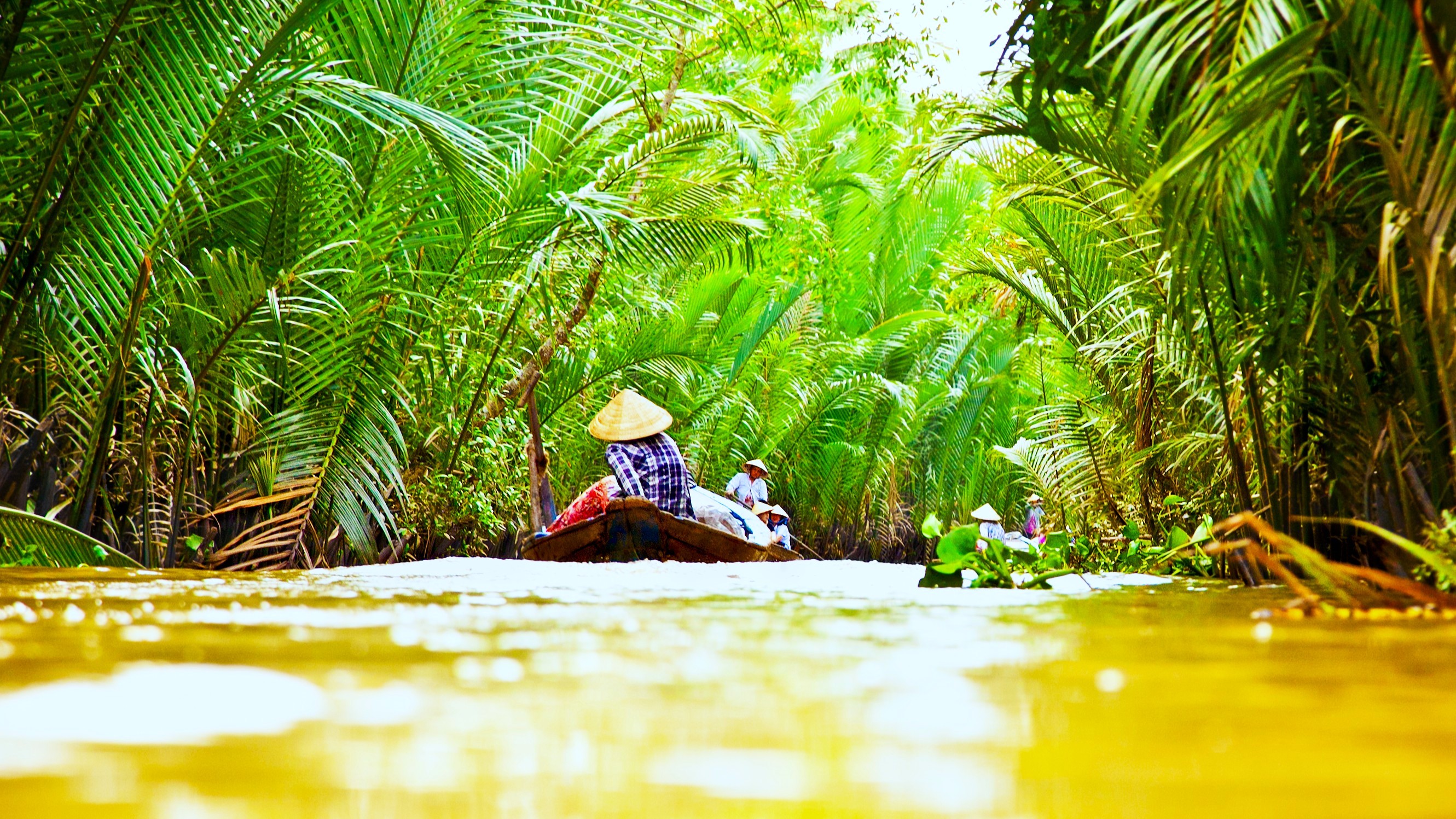
Compared to the mountainous regions of the North, the delta offers a flat, slow, river-centered Vietnam. Most journeys are made by boat, sometimes by bicycle along the dikes. For those discovering the country after Ho Chi Minh City, it provides a useful contrast to understand the diversity of the territory.
Geographic landmarks
The Mekong flows approximately 4,350 to 4,900 km from the Tibetan plateau before reaching the South China Sea. In Vietnam, it is also called Đồng bằng Sông Cửu Long, the "delta of the Nine Dragons," referring to the nine estuaries through which it reaches the sea. Two main branches structure the whole: the Tiền Giang in the north and the Hậu Giang in the south.
Administratively, the delta comprises twelve provinces—among them Đồng Tháp, An Giang, Vĩnh Long, Bến Tre, Sóc Trăng and Cà Mau—as well as the municipality of Cần Thơ, which serves as the region's capital.
History
Ancient civilizations to the Khmer kingdom
The region has been inhabited since the 4th century BCE. It was home to the Funan and Chenla civilizations, whose archaeological sites—Óc Eo (An Giang Province) and Angkor Borei, just across the Cambodian border—testify to their presence. These trading posts conducted commerce with India and the rest of Southeast Asia. The delta subsequently fell under the influence of the Khmer kingdom for several centuries.
Vietnamese settlement
In the 17th century, a political marriage between Princess Nguyễn Phúc Ngọc Vạn and Khmer King Chey Chettha II paved the way for Vietnamese migrants to settle. The Nguyễn lords progressively extended their authority and annexed the entire delta by 1757. In 1802, Emperor Gia Long unified Vietnam and permanently integrated the region.
Colonial period and 20th century
Under French colonization, the delta became the agricultural heart of Cochinchina. The Geneva Conference of 1954 assigned it to the Republic of South Vietnam; it became a major theater of the Vietnam War until reunification in 1975. Today, despite climate change pressures on the low-lying lands, it remains one of Southeast Asia's key agricultural engines.
What to see and do
Floating markets
Cái Răng, near Cần Thơ, is the delta's largest floating market: wholesale commerce, boats laden with fruits and vegetables, soup vendors selling hủ tiếu directly on the water. Cái Bè, in Tiền Giang Province, offers a smaller-scale experience. Both come alive early in the morning and wind down by mid-morning.
Pagodas and religious heritage
- The Vĩnh Tràng Pagoda in Mỹ Tho, which blends Vietnamese, Khmer and European architectures.
- The Bat Pagoda (Mahatup) in Sóc Trăng, important to the Khmer Theravada community.
- The Bà Chúa Xứ Temple in Châu Đốc, a major pilgrimage site in the South.
Villages, orchards and literary heritage
Bến Tre, known as the "land of coconuts," lives from coconut processing (candy, oil, fibers). In Sa Đéc, the house of Huỳnh Thủy Lê—the Chinese lover in Marguerite Duras's The Lover—can be visited and offers a glimpse of Sino-colonial architecture. In Cần Thơ, the Ninh Kiều waterfront serves as the departure point for river excursions.
Delta cuisine
Three dishes to taste on site:
- Bánh xèo: crispy turmeric crepe filled with shrimp, pork and bean sprouts, rolled in lettuce leaves.
- Lẩu mắm: hot pot with fermented fish, the South's iconic dish.
- Bánh tét: cylindrical sticky rice cake with pork and beans, served notably during Tet.
Practical information
- Recommended duration: 2 to 4 days for a coherent overview; 1 day only allows a quick day trip to Mỹ Tho or Bến Tre from Ho Chi Minh City.
- Base for lodging: Cần Thơ for floating markets and cruises; Châu Đốc for the border zone and temples; Bến Tre for a more rural atmosphere.
- Accommodation: from family homestays (often in orchards) to international-standard hotels in Cần Thơ.
- Budget: moderate overall, more economical than Ho Chi Minh City except for luxury cruises.
When to go
The delta experiences two seasons:
- Dry season, November to April: clear skies, easy navigation, high temperatures especially in March-April. The most comfortable period for visiting.
- Rainy season, May to October: often brief showers, very green landscapes, lotus flowers in bloom. Late-season flooding (August-October) transforms certain areas, particularly around Châu Đốc.
How to get there
From Ho Chi Minh City
Regular buses connect Ho Chi Minh City to the delta's main towns (Mỹ Tho, Bến Tre, Cần Thơ, Vĩnh Long, Sa Đéc, Long Xuyên, Châu Đốc). Allow 3 to 6 hours depending on your destination. A private car with driver offers more flexibility if you plan multiple stops.
By air
Cần Thơ Airport is connected to Hanoi and Phú Quốc. Useful for saving time on a short itinerary.
By water
From Phnom Penh (Cambodia), boats reach Châu Đốc in a few hours (duration varies with vessel type, from speedboat to multi-day cruises). From Phú Quốc, maritime connections serve Rạch Giá and Hà Tiên.
Combine with other Vietnam sites
Several sites lend themselves to an extended itinerary from the south:
- The Notre-Dame Cathedral in Ho Chi Minh City, the logical starting point before heading into the delta.
- The Can Gio mangrove, a UNESCO biosphere reserve accessible as a half-day excursion from Ho Chi Minh City.
- The Ba Chuc memorial site in An Giang Province, near Châu Đốc.
- The Ca Na coastline on the central-south coast, to continue toward Phan Rang.
- The Bach Ma national park, further north, for those continuing to Hué.
Frequently asked questions
Frequently asked questions
A single day from Ho Chi Minh City allows only visiting Mỹ Tho or Bến Tre. To explore Cần Thơ's floating markets and multiple provinces, plan 2 to 4 days, ideally with a night in a local home.
Cần Thơ is the most practical base: well-equipped city, direct access to Cái Răng floating market, airport connected to Hanoi and Phú Quốc, embarkation point for cruises.
Yes. Boats connect Phnom Penh to Châu Đốc via the Mekong, with a border crossing at Vĩnh Xương. Duration varies with vessel type: a few hours by speedboat, several days by cruise.
The dry season (November-April) remains the most comfortable. The rainy season offers greener landscapes and lotus blooms, but certain low-lying areas may flood between August and October.
Yes, but their activity is declining with road development. Cái Răng remains a genuine wholesale market frequented by local producers, especially between 5am and 8am. Cái Bè is more modest and more tourist-oriented.
To incorporate the Mekong Delta into a complete Vietnam circuit, consult our Vietnam journeys.
Interested in this visit?
We can include it in your personalised itinerary.