Sapa
Sapa
Trekking through terraced rice fields, nights with Hmong families, climbing Fansipan: everything you need to plan your stay in Sapa, the jewel of mountainous Tonkin.
Despite its growing popularity, Sapa has managed to preserve its authentic charm. Ranked among Asia's most promising emerging destinations, this mountain town in northwestern Vietnam captivates with the breathtaking beauty of its landscapes: emerald-green terraced rice fields, mist-shrouded peaks, and valleys dotted with ethnic villages where inhabitants proudly wear traditional dress. Sapa is also an encounter with living cultures, a peaceful atmosphere, and a call to escape.
The history of Sapa
In the late 19th century, the arrival of the railway line connecting Haiphong to Lao Cai marked the beginning of Sapa's development. French colonial authorities established a military post, a sanatorium, and then a hill station founded in 1922. To make room for this new settlement, a Hmong hamlet was relocated, giving rise to the present-day town. Today, a few remnants from this era, such as the ruins of the military camp, bear witness to this history.
Sapa today
Now a flagship destination in northern Vietnam, Sapa attracts thousands of visitors each year drawn by its landscapes and ethnic villages. This enthusiasm, however, places growing pressure on local resources and the traditions of minority communities. Despite these challenges, the town preserves a rich heritage, including the engraved stones site, recently added to UNESCO's indicative list, which underscores the region's cultural significance.
Points of interest in Sapa
Nature and spectacular views
- Fansipan Mountain, the roof of Indochina
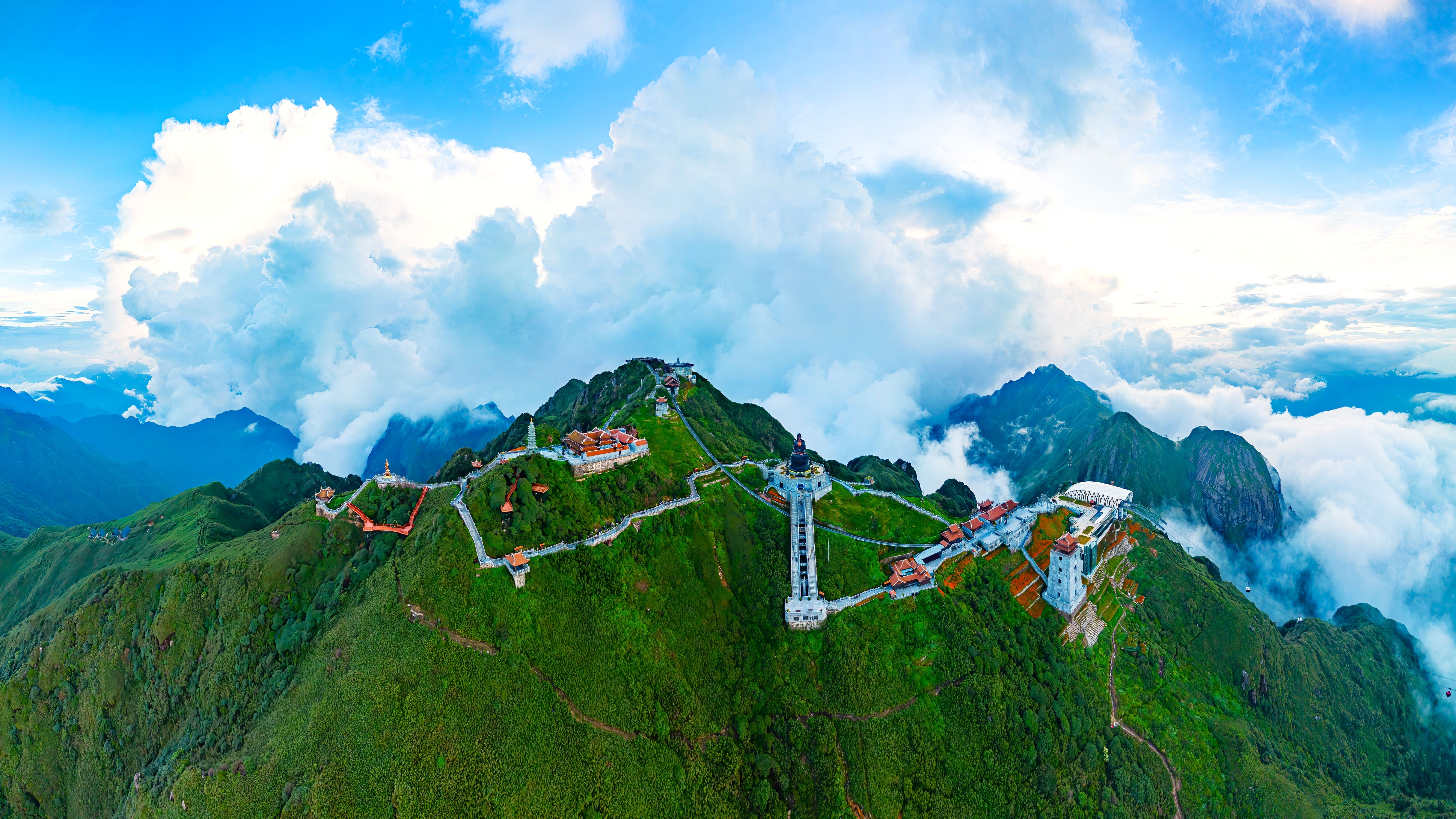
Vietnam's highest peak at 3,143 meters, it offers stunning views of the surrounding mountains. Thanks to a state-of-the-art cable car crossing the Muong Hoa Valley, you can reach the summit in 15 minutes. There remain 600 steps to climb on foot, or alternatively by funicular, to reach the peak. Along the way, you'll discover a complex of pagodas and Buddhist statues in a mystical atmosphere.
- Tram Ton Pass (O Quy Ho Pass)
Located at 1,900 meters altitude, this pass connects Sapa to Lai Chau. It is renowned for its breathtaking views and striking climate contrast: cool and misty on the Sapa side; sunny and warm on the Lai Chau side. An essential photo stop.
Culture and heritage
- Sapa Museum
Small but enriching, it presents local history and mountain ethnic groups (Hmong, Red Dao, Tay, and others). Traditional costumes, everyday objects, agricultural and artisanal tools provide insight into local cultures. It is located near the church, above a handicraft shop.
- Sapa Market
Located near the bus station, the market remains a vibrant place where members of surrounding tribes come to sell crafts, fabrics, jewelry, and local products. Market stalls and activity peak on Saturdays.
- Sapa Church (Stone Church)
Built by the French in the early 20th century, this small stone church stands in the town center. It still hosts Sunday masses and remains an iconic landmark of the town.
Top activities not to miss
- Mountain trekking
Numerous trails cross spectacular landscapes: rice fields, deep valleys, waterfalls. An ideal activity for nature lovers.
- Immersion in ethnic villages
Villages such as Cat Cat or Ta Pin offer the chance to discover the daily life of minorities. For a richer experience, a night with a local family is highly recommended.
- Mountain biking adventure
The region offers ideal terrain for mountain biking. Depending on your level, you'll find varied routes away from crowds, through impressive panoramas.
When to visit?
- Spring (March to May): Mild climate, flowers in bloom, rice fields being planted. Ideal for trekking.
- Summer (June to August): Heat and frequent rain. Less comfortable, but still pleasant for active travelers.
- Late summer/early autumn (late August to September): Golden rice fields ready for harvest. Stunning for photography.
- Autumn (October to November): Dry and pleasant weather. Perfect for exploring villages.
- Winter (December to February): Cold and misty, rice fields lying fallow. A mysterious and restful atmosphere.
How to get there?
Overnight train from Hanoi: Arrival in Lao Cai after 8 hours. Allow a further hour to reach Sapa by minibus or taxi.
Direct bus from Hanoi: Quick journey (5 to 6 hours) via the expressway. Arrival in town center.
Private car with driver: Comfortable and practical for small groups or families. Bookable through an agency.
Motorbike taxis: Readily available, economical, perfect for short trips within and around Sapa.
Taxis and ride-hailing services (Grab): Available, particularly for trips to villages or to avoid steep climbs.
Bicycle or scooter rental: A popular option for travelers wishing to explore at their own pace.
On foot: Many visitors choose walking, particularly to reach villages like Cat Cat, Lao Chai, Ta Van, etc.
Local guides or organized excursions: Widely used for more remote areas or cultural trekking experiences.
Want to discover this destination?
Our local advisors design your tailor-made trip.