Muong Lo Valley
Muong Lo Valley
Vietnam's second-largest valley, Muong Lo reveals 3,000 hectares of rice paddies, 17 ethnic groups and vibrant Black Thai culture, just 200 km from Hanoi.
Nestled in the heart of the mountains of northwest Vietnam, Muong Lo Valley unveils a face that is both peaceful and vibrant, where time seems to have stood still. Surrounded by morning mist and rice paddies stretching to the horizon, this fertile plain captivates with its raw beauty and an atmosphere imbued with serenity. Far from the hustle of major cities, Muong Lo offers a rare immersion into authentic Vietnam—one of living traditions, stilt-built villages and genuine smiles.
Location
Situated in Yên Bái province, approximately 80 km from the city of the same name and roughly 200 km from Hanoi, Muong Lo Valley spans several communes in Văn Chấn district and encompasses the town of Nghĩa Lộ. Vietnam's second-largest valley after Muong Thanh in Điện Biên, and still preserved from mass tourism, this valley represents one of the most authentic faces of northwest Vietnam.
Characteristics
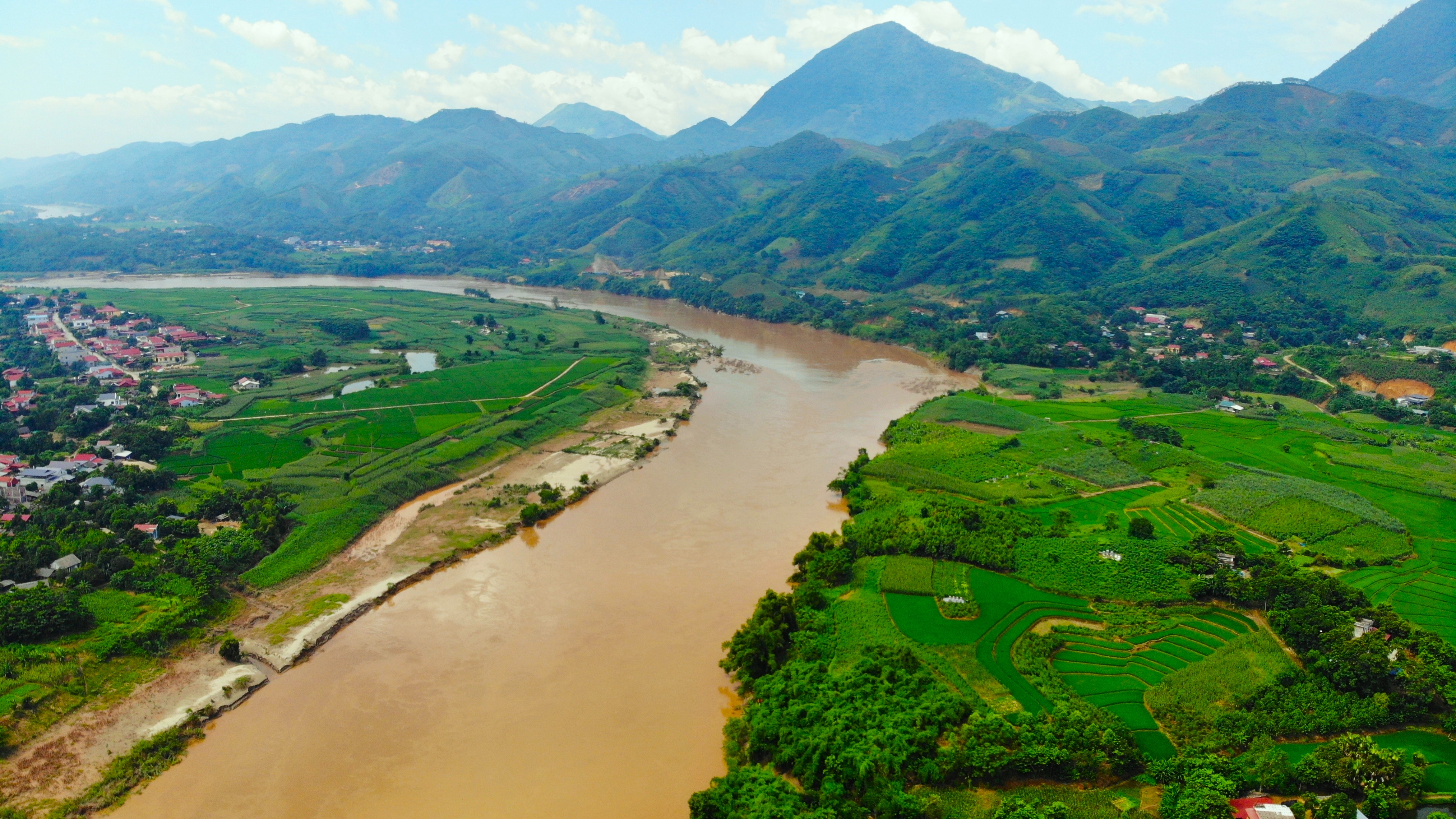
Seen from above, Muong Lo Valley unfolds like a vast natural amphitheater. Its relief forms a fertile basin encircled by majestic mountains, their summits often draped in clouds and mist. At the heart of this basin stretch rice paddies as far as the eye can see, interspersed with winding rivers and stilt villages. The forested slopes shelter abundant nature where crystal-clear streams flow.
The Nam Thia stream traverses the valley, winding through golden fields before joining the surrounding mountains. Waterfalls cascade from the heights to mingle with turquoise waters that irrigate the crops. The whole composes a living tableau, where hues shift with the hours and seasons.
Encircled by the Hoàng Liên range, the agricultural wealth of Muong Lo Valley makes it the largest rice granary in Yên Bái province. It is also a region of abundant resources, prized for its purity and tranquility.
Population and Culture
Muong Lo Valley is territory deeply marked by its history and the richness of its traditions. It is home today to approximately 17 ethnic groups, among which the Black Thai are the majority, having lived here for generations. This people, alongside the Mường, Tày, Hmong and other highland minorities, have succeeded in preserving a cultural heritage of great diversity, faithfully transmitted from generation to generation.
According to an ancient legend, two brothers, Tao Xuong and Tao Đâu (Tao Ngần), once set out in search of hospitable land. Seduced by the fertility of the soil and abundance of waters, Tao Xuong chose Muong Lo to found the cradle of the Black Thai, while his brother settled in Muong Then (now Muong Thanh), giving birth to the lineage of the White Thai.
This living culture expresses itself through the architecture of stilt houses, colorful costumes, silver jewelry and above all the Xòe dance, a symbol of unity and shared joy. Dancers hold hands forming a circle in a harmonious movement accompanied by "Pí" flutes, drums and traditional songs. These festive evenings, often rhythmed by the sound of instruments and firelight, are privileged moments of encounter between locals and travelers.
Visitors staying in Muong Lo discover a simple and warm way of life. In villages such as Bản Diêu or Sà Rèn, they can participate in daily activities, learn to weave, make baskets, forage in the forest or fish in the rivers. In the evening, local families gladly share their table, offering traditional dishes.
What to See and Do in Muong Lo Valley?
Admire the Rice Paddies
At the heart of the valley, Muong Lo's rice paddies stretch across more than 3,000 hectares, creating a patchwork of greens and golds that shifts with the seasons. In spring, young shoots blanket the plain in brilliant green, while in autumn, the fields transform into a golden sea. But beyond the visual spectacle, these paddies embody the life and rhythm of the valley. Visitors can participate in harvests, share the lives of Thai families and discover the harmony between humans and the land.
Discover Hot Springs and Natural Landscapes
Muong Lo Valley abounds in natural treasures: crystal-clear rivers, verdant mountains and thermal hot springs renowned at Sơn Thịnh, Hốc, Bôn and Suối Giàng. These mineral-rich waters, known for their relaxing and healing properties, have been frequented for generations.
Around them, hiking trails lead to wild sites such as Hồ Cave or the Mường and Thia streams. A day's hike followed by a hot bath in the heart of nature offers an unforgettable experience, combining relaxation and contemplation.
Ethnic Villages and Living Traditions
Exploring the Thai, Mông and Dao villages of the valley is to dive into a world where time seems suspended. Wooden stilt houses, artisanal weaving, colorful costumes and spiritual rites testify to an ancestral culture still very much alive. In these villages, conviviality is omnipresent: between Xòe dances, traditional songs and rice wine, immersion is total. The area's communal houses and ancient temples evoke the historical and spiritual depth of this territory.
Taste Local Cuisine
Muong Lo's gastronomy reveals another facet of its identity. Sticky rice with fish (Pa Mók), xôi ngũ sắc (five-colored sticky rice), nem chua, xôi cá and thịt tái chua rank among the most renowned specialties. Prepared with natural products (river fish, wild vegetables, meats dried or grilled on bamboo stalks), these dishes reflect the intimate bond between culture, nature and conviviality.
Festivals, Markets and Local Life
Muong Lo Valley comes alive throughout the year with traditional festivals, where dances, music and communal feasts blend:
- Cầu Mùa (prayer for a good harvest)
- Khùông
- Xên bản – Xên mường.
The Nghĩa Lộ market, the largest in western Yên Bái, remains a central place for encounters and exchange. Here you'll find local crafts, agricultural products, fabrics and ethnic jewelry, but also a glimpse into the daily lives of different communities.
When to Visit?
Muong Lo Valley offers magnificent scenery in every season, but the most favorable period for discovery extends from September to November, at harvest time. The rice paddies then take on a striking yellow hue, creating a landscape of breathtaking beauty, punctuated by traditional festivals. Spring, from March to May, is also an ideal time: the valley turns green again, nature awakens and the mild climate makes walks particularly pleasant.
From Hanoi, allow approximately 5 to 6 hours by car or bus to reach Nghĩa Lộ, then access the valley. Once there, renting a scooter or bicycle allows you to explore at your own pace and venture beyond main circuits.
Practical Advice
Muong Lo Valley is a region with deeply rooted culture, where respect for local traditions and way of life is essential. Visitors are invited to adopt a kind and discreet attitude:
- Ask permission before photographing
- Dress modestly in villages or sacred places
- Avoid entering fields without authorization.
Learning a few local words or purchasing crafts not only fosters exchange but also supports community economy and preserves traditional know-how. To experience authenticity, it is better to take time strolling through rice paddies, staying with local families, and sharing the meals and customs of everyday life.
Want to discover this destination?
Our local advisors design your tailor-made trip.