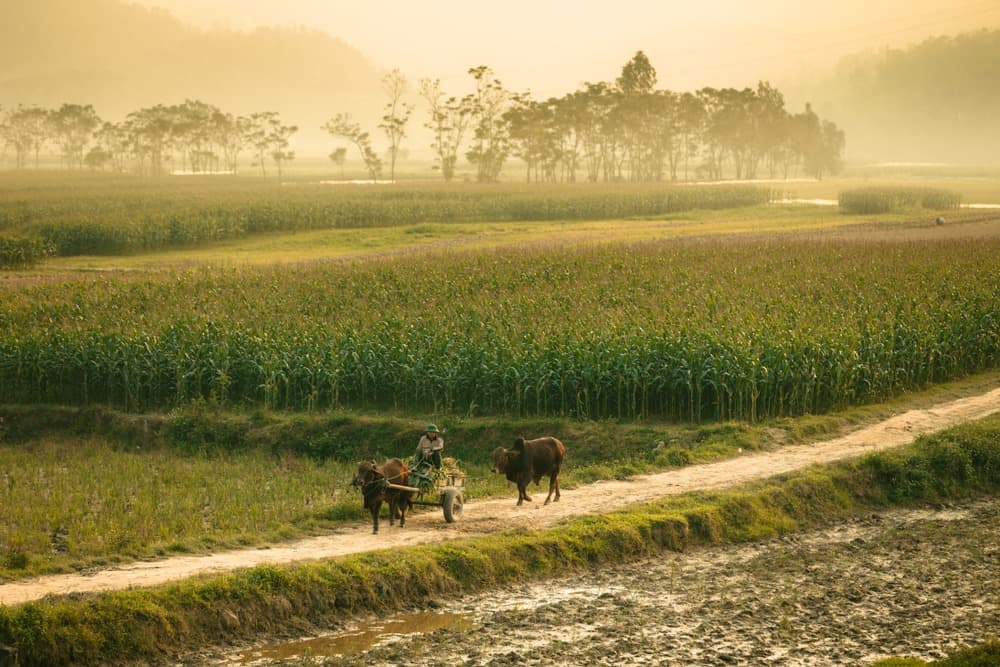
The Central Region
Geographically speaking, it's worth noting that Vietnam's central coast encompasses those of the north and south of the country. Also known as Bắc Trung Bộ, it comprises six provinces nestled between the South China Sea to the east and Laos to the west.
Geographically speaking, it's worth noting that Vietnam's central coast encompasses those of the north and south of the country. Also known as Bắc Trung Bộ, it comprises six provinces nestled between the South China Sea to the east and Laos to the west. Each possesses its own distinct character, which you'll especially discover during your next trip to Vietnam.
Thanh Hóa Province
The capital of the same name covers an area of approximately 11,000 km². Divided into 23 rural districts and 4 cities, it was home to nearly 3 million inhabitants in 2009, according to the latest census. The region is blessed by two of Vietnam's greatest rivers, the Chu and the Ma. The latter flows through Thanh Hóa from east to west.
This province is renowned for its diverse economic sectors—fishing, rice cultivation, tea, cotton, corn, exotic fruits like oranges and watermelons, and salt production. As for local culinary specialties, Thanh Hóa excels particularly in cinnamon (Truong Son), ginseng (Bông Son), as well as deer antlers, swiftlet nests, and sturgeon.
The region also abounds in forest products. It's possible to harvest iron wood, teak, and honey, among other resources. Throughout the province you'll find abundant mineral reserves—chromium, manganese, phosphate, iron, magnesium, and nickel. Moreover, a visit to one of its villages will reveal the secrets of traditional craftsmanship. You'll discover various objects crafted from ceramics, silk, paper, and colorful pearls. The forests are home to numerous wildlife species including pheasants, peacocks, elephants, tigers, leopards, and bears.
Thanh Hóa offers wonderful opportunities for excursions to remarkable sites. Begin your journey in the mountainous Lam Son region, the birthplace of the Lê royal dynasty and their tombs, then continue to the Ba Dinh resistance base, the Hô citadel, Tu Thuc cave, and Pho Cat temple. Next, head to the Sam Son beaches with their emerald waters and sublime views of Truong Le mountain. Along the way, take a look at the Doc Cuoc temple.
Nghê An Province
Located 291 km from Hanoi, this vast province connects the north and south regions. To the west, two-thirds of the territory is covered with dense forests and mountains. Nghê An is watered by the Ca River. Its tropical climate favors rice cultivation and excellent production of sandalwood, cinnamon, ginseng, and Doai oranges—all regarded as the region's local specialties. The forested areas are home to protected animal species such as rhinoceros, elephants, deer, and pheasants. The province also owes its reputation, beyond its artisanal crafts, to its substantial production of fish sauce, shrimp paste, and silk.
Nghe An distinguishes itself through its historical and cultural heritage. Among the most important sites are: the temple dedicated to King An Duong Vuong, perched on Cuong Mountain; the remains of Phuong Hoang Trung Do on Quyet Mountain; Quynh Lôi, birthplace of poetess Hô Xuan Hong; the native village of former revolutionary Hô Chi Minh, Kim Lien, in Nam Dam district; and finally the Cua Lo beaches.
Hà Tĩnh Province
Hà Tĩnh lies 341 km from Hanoi. It is bordered by Nghe An province to the north, Quang Binh to the south, the sea to the east with a coastline of 137 km, and extends to the Laos border in the west. The terrain is composed largely of mountains, with a narrow plain flanking the coast and running alongside national routes. Generally influenced by tropical monsoons, Hà Tĩnh displays two distinct seasonal patterns—one characterized by cold, dry weather (November to April) and the other by intense heat and rainy days.
In this region, inhabitants favor the cultivation of pomelo and orange trees. The trees found within the forests are highly valued for their wood, particularly ebony, rosewood, rattan, and iron wood. Similarly, numerous deposits provide tin, iron, manganese, and phosphorus. Local specialties center on swiftlet nests, dried cod, and mountain pigeons that emerge from their hiding places only during winter months, on Vàng Mountain.
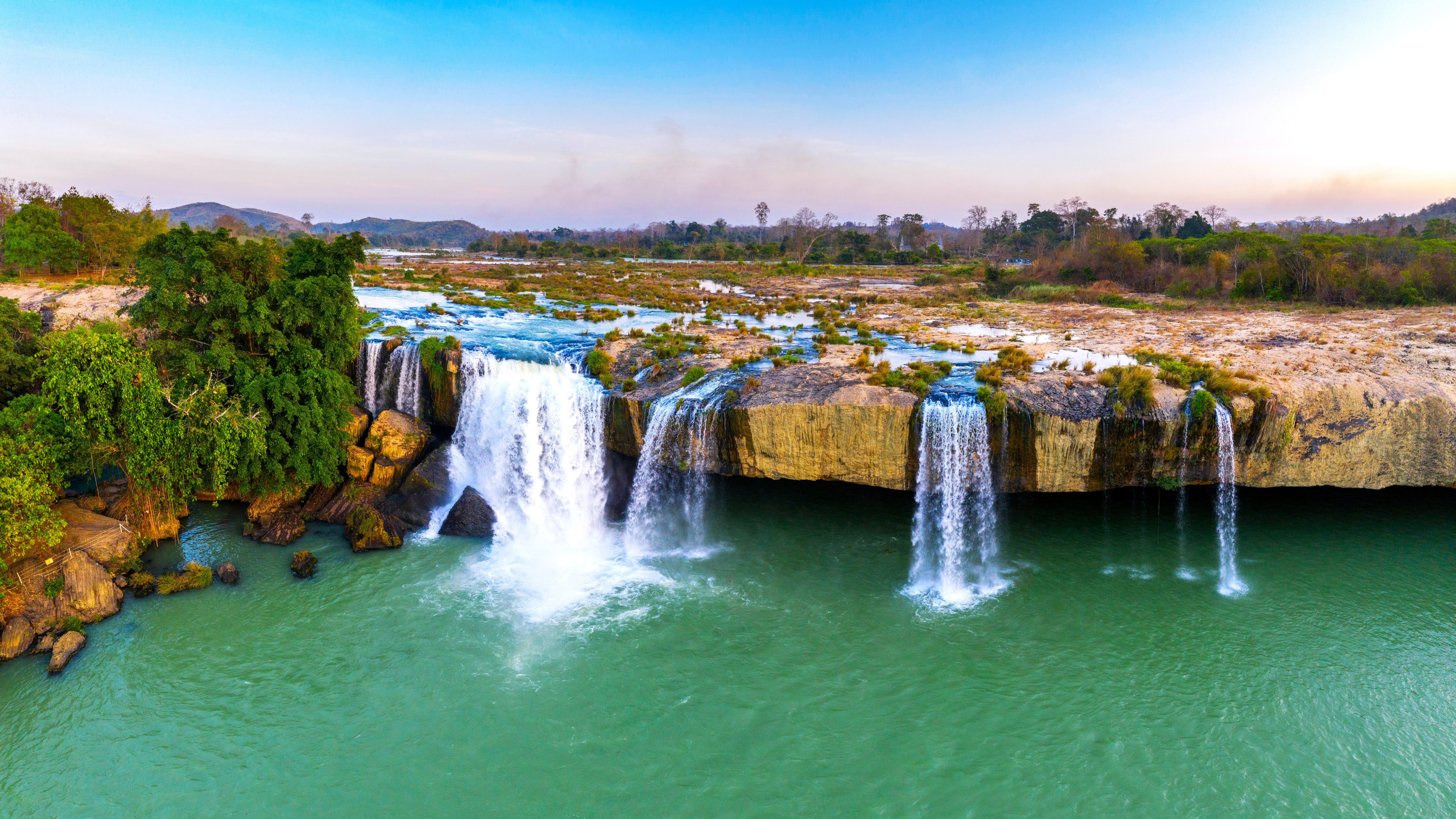
When visiting this part of Vietnam, don't miss a detour to the Vong Lieu communal house, or observe the ruins of the Cham stone citadel in the locality of Ky-Anh. You'll also have the opportunity to visit Hon En Island, renowned as the preferred location for swiftlets to build their nests. By organizing a trek, the journey will lead you to Ngang Pass, to the brick gateway marking the boundaries between Ha Tinh and Quang Binh. If you extend your walk, head toward Vu Mon waterfalls, the Vu Quang National Park, the Ke Go Reservoir, and the Son Kim springs. You'll appreciate the beaches along the coasts of Xuan Than and Thien Cam. Most villages harbor numerous sanctuaries such as Huong Tich Pagoda, Thai Yen Temple, or the Nguyen Du memorial site. Finally, Ha Tinh carefully preserves folk art traditions perpetuated by villagers, such as the popular songs "vi" and "dam".
Quảng Bình Province
This province displays the narrowest coastal strip among all central-north provinces, with a coastline of approximately 135 km. The community comprises sixteen ethnic groups, composed primarily of Kinh and Bru-Van Kieu peoples. The Gianh and Nhat are its principal rivers. Its capital, Dong Hoi, is located 491 km from Hanoi. Deep within its forests lurk several types of wildlife including elephants, rhinoceros, flying foxes (giant bats), peacocks, and pheasants.
To fully appreciate these numerous sites, choose the most favorable time to visit—between February and April. The Phong Na National Park harbors fabulous caves that have been subject to significant speleological research. Ke Bang Cave is currently listed as a World Heritage site. The coastline boasts several magnificent beaches, including Nhat Le and Da Nhay. History enthusiasts will find their delight admiring the old citadel standing on the banks of the Nhat Le and the Quang Binh Quan gate. Wait until you behold the beauty of the typical Cu Nam village and, time permitting, a quick visit to the Bau Tro archaeological site.
Quảng Tri Province
Located 617 km from Hanoi and over 1,000 km from Ho Chi Minh City, Quang Tri province lies between Laos and Thailand. It is bordered by Quảng Bình, Thừa Thiên to the south, Savanakhet in Laos, and the East Sea to the east. A north-south railway network traverses Dong Ha municipality, situated between the intersections of Route 1A and Route 9.
The region is characterized by narrow plains entirely covered with sand dunes. Around the two rivers Ben Hai and Thach Han stretch vast fertile fields, favorable for rice, sweet potato, corn, cassava, coffee, tobacco, and other agricultural products. Like all provinces in the central-north region, you may encounter wildlife such as tigers and bears in the forested zones. Quảng Tri specializes in the manufacture of conical hats, a traditional craft passed down through generations.
Quang Tri attracts travelers for its cultural and historical sites. Here you'll find the old citadel dating from the 19th century during King Minh Mang's reign, the Hien Bridge which symbolized the demarcation between north and south Vietnam from 1954 to 1975. Cua Tung Beach, nicknamed the queen of Southeast Asian beaches, will not fail to seduce visitors at first glance. The location can be visited year-round, with average temperatures ranging from 20°C to 25°C.
Thừa Thiên Province, Huế of the South
Here we speak of a province where all four seasons of the year succeed one another—spring, summer, autumn, and winter—marked alternately by intense heat, cold spells, cool weather, and especially torrential rains occasioned by numerous typhoons.
Endowed with a rich historical past, Thừa Thiên reveals a picturesque allure when contemplating the old Huế citadel. Amidst a typical landscape composed of hundreds of pagodas, churches, and beaches, a rich traditional culture flourished long before our era. The majority of villagers have devoted themselves to craftsmanship such as goldsmithing, embroidery, and copper foundry work. All of the architectural monuments have been classified as World Heritage sites since 1993. Thừa Thiên is also the culinary capital. Here you'll find all imperial specialties, most often based on pastry recipes. The city is also the subject of numerous festive celebrations, illustrated by folk popular songs of "ho" and "ly" style. If you're inclined to make the journey, November to April seems to be the ideal time to head to this destination.