Central Highlands
Between 500 and 1,500 meters elevation, Vietnam's coffee-growing hinterland where colonial Dalat, Buon Ma Thuot, and the Bahnar villages of Kon Tum remain far from the main tourist flows.
The Central Highlands, known to Vietnamese as Tay Nguyen, span five provinces between the Annamite Range and the Cambodian border: Lam Dong, Dak Nong, Dak Lak, Gia Lai, and Kon Tum. Elevation ranges from 500 to 1,500 meters, with peaks like Lang Biang (2,167 m) above Dalat and Chu Yang Sin (2,442 m) in the national park of the same name. This elevation changes everything: while Ho Chi Minh City swelters at 33°C, our English-speaking guides work in Dalat beneath 20°C in a light sweater.
Dalat remains the most accessible entry point, 300 km northeast of Ho Chi Minh City. Founded in 1893 by physician Alexandre Yersin as a sanatorium for colonists, the city preserves several hundred Art Deco and neo-Norman villas, a railway station from 1938 designed by Moncet and Reveron, and the summer palace of Emperor Bao Dai. Around it, greenhouses growing strawberries, artichokes, and cut flowers supply the entire country. It is also Vietnam's robusta coffee basin: Vietnam is the world's second-largest coffee producer, and nearly 90% of this volume comes from the Central Highlands, primarily from Dak Lak province, whose capital is Buon Ma Thuot.
Further north, Buon Ma Thuot lives by the rhythm of coffee harvests between October and December, by Dak Lak pepper and rubber plantations. Here, and in neighboring Yok Don National Park, you still encounter Mnong elephant herders, though elephant trekking has been replaced since 2018 by ethical observation programs funded by Animals Asia. The Dray Nur and Dray Sap waterfalls on the Serepok River, 250 meters wide during the wet season, mark the transition to the Dak Nong plateau, designated a UNESCO Global Geopark in 2020 for its volcanic lava tunnels.
Kon Tum, at the far north of the region, is the territory of the Bahnar, Jarai, Sedang, and Gie Trieng ethnic groups. Villages like Kon K'tu, Kon Jodreh, or Plei Phun, 10 to 40 km from the city, preserve their communal rong houses, 15 to 20 meters high, with steeply pitched thatched roofs. Kon Tum's wooden cathedral, built in 1913 by French missionaries in a style blending Gothic and Bahnar architecture, still serves as a parish. Further west, the Vietnam-Laos-Cambodia border triangle at Bo Y sits 80 km away via Route 14C.
Regarding cuisine, the Central Highlands have their own dishes: bo nuong da (beef grilled on hot stone) from Dalat, com lam (rice cooked in bamboo) served with grilled chicken in Ede villages, ruou can (fermented rice alcohol drunk through a communal straw during Bahnar ceremonies), and of course coffee filtered through a phin, often enriched with egg or condensed milk according to Buon Ma Thuot tradition. Dalat's morning markets, around Xuan Huong Lake, and Buon Ma Thuot's market sell locally grown avocados, persimmons, durians, and passion fruit.
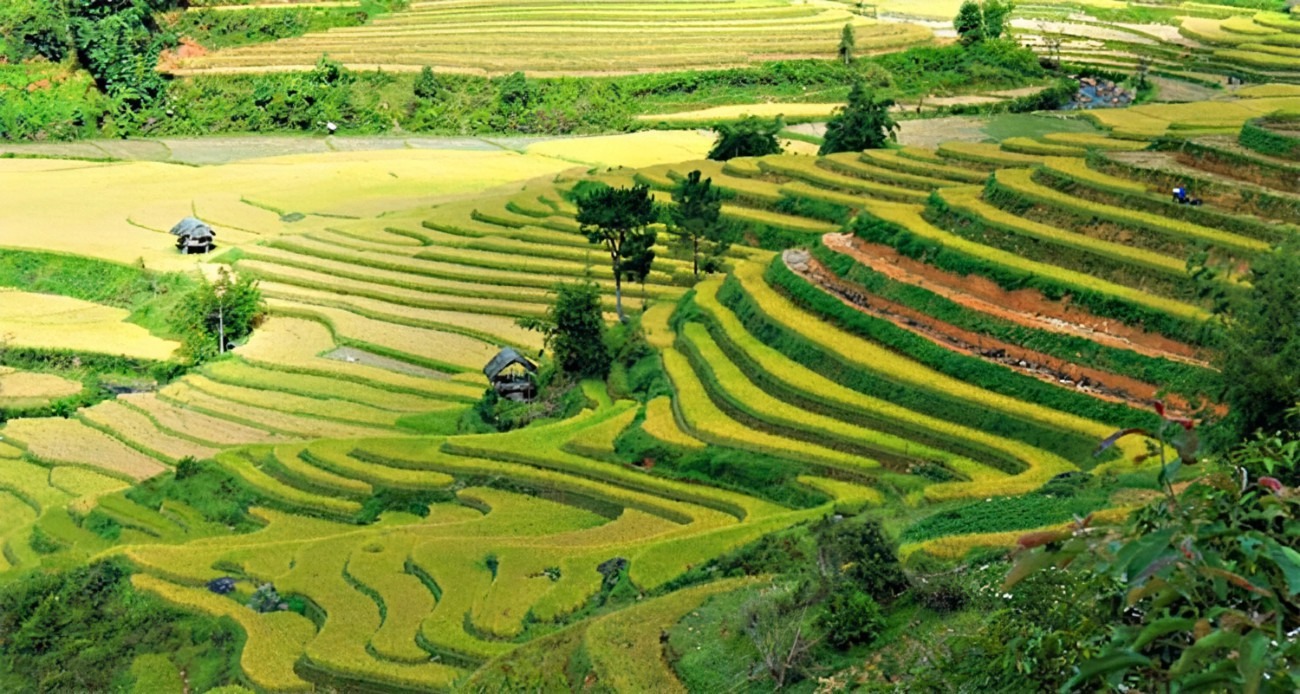
The region remains off the main tourist circuit between Hanoi, Hoi An, and Halong Bay. This is precisely what we seek there: uncrowded roads between plantations, unhurried encounters in villages, a climate that soothes after the Mekong Delta heat, and an agricultural economy still visibly woven into the landscape.
To Discover
Coffee Plantations Around Buon Ma Thuot. Visit a family-run Ede farm during October to December harvest, from drying coffee cherries on concrete patios through artisanal roasting tasted via traditional phin filter.
Bahnar Villages Around Kon Tum. Two days between Kon K'tu and Kon Jodreh with overnight homestay in a stilt house, meals around the central hearth, and time in the communal rong house.
Colonial Architecture in Dalat. Bicycle loop between the 1938 station, villas in the French quarter above Xuan Huong Lake, and Bao Dai's summer palace, beneath 20°C even at the height of dry season.
Dak Nong Volcanic Geopark. Descent into the C7 lava tunnel, 1,066 meters long, one of Southeast Asia's most extensive, formed 140,000 years ago within the Chu B'Luk volcano system.
Yok Don National Park. Two-day trek with a Mnong forest ranger through dipterocarp dry forest, observing semi-wild elephants far from elephant-riding tourism.
When to Go
Dry season runs from November to April and offers the best window for visiting. In Dalat, expect 15 to 22°C during the day, with cool nights of 10–12°C in December–January (bring a fleece layer). Buon Ma Thuot and Kon Tum, lower in elevation, range between 20 and 28°C over the same period, with clear skies ideal for motorcycle journeys and plantation visits. Coffee harvest is in full swing from October to December, a period when our guides particularly recommend Dak Lak.
From May to October, the southwest monsoon brings daily rain, often in late afternoon, with totals exceeding 300 mm per month in August and September. Trails toward remote villages around Kon Tum become slippery and access to some waterfalls, like Dray Nur, becomes complicated even as water flow peaks. July and August remain passable if you accept clear mornings followed by showers, and coffee plantation landscapes are then an intense green.
Practical Information
We recommend a minimum of 4 days for Dalat alone (architecture, surroundings, flower plantations), 6 to 7 days to combine Dalat, Buon Ma Thuot, and Kon Tum by driving north on Route 14, roughly 600 km from Dalat to Kon Tum. Lien Khuong Airport serves Dalat from Hanoi and Ho Chi Minh City; Buon Ma Thuot's airport supplements the center, and Pleiku connects to Kon Tum in 50 km of driving. Distances between stops (4 to 6 hours by car) require a hired vehicle with driver, the standard arrangement in this region where trains and public buses are impractical.
The most coherent combination pairs with the South and Mekong Delta by entering through Ho Chi Minh City, or with the Imperial Centre by exiting Kon Tum toward Hoi An (250 km via the Lo Xo Pass). The Central Highlands suit travelers already familiar with Asia seeking ethnic encounters without the dense tourism of the northern mountains, coffee enthusiasts, slow-travel lovers, and colonial architecture admirers. Families with school-age children: yes, provided you prioritize Dalat and a one-day excursion to Buon Ma Thuot. Hotel comfort ranges from standard 3-star properties in Dalat to simple but clean homestays in Bahnar villages.