How to Get Around Vietnam?
Getting around Vietnam is an integral part of the journey. Between bustling cities, rural regions, northern mountains and an island-dotted coastline, the country offers a varied, accessible and often economical transport network.
Getting around Vietnam is an integral part of the journey. Between bustling cities, rural regions, northern mountains and an island-dotted coastline, the country offers a varied, accessible and often economical transport network. Whether you prefer slow travel, saving time or exploring freely, you'll find a solution suited to your pace and itinerary.
Long-Distance Buses
Bus travel is one of the most commonly used and economical ways to get around Vietnam, with a network covering almost the entire country, from Hanoi to the Mekong Delta. Journeys can be lengthy due to irregular road conditions (for example, 276 km can take 8 hours in the south).
For long distances, "sleeper" buses with reclined seats or bunks allow you to travel overnight between Hanoi, Hue, Da Nang, Ho Chi Minh City, Sapa and Nha Trang, saving you a night's hotel stay. Even more comfortable versions, such as "VIP limousine" buses, offer Wi-Fi, power outlets, air conditioning and sometimes private cabins. Air-conditioned "open-tour" tourist buses, with fewer passengers, are often more reliable than rustier national buses.
Within cities, local buses are very affordable but often crowded, noisy and difficult to navigate due to poorly marked stops, although the network is modernizing with the arrival of electric buses. "Hop-On Hop-Off" tourist buses make visiting Hanoi and Ho Chi Minh City easier.
For a stress-free journey, it's recommended to choose reliable companies such as Phuong Trang (FUTA Bus), The Sinh Tourist or Hanh Café. Don't forget to book in advance. Specify your destination to the driver, as bus stations sometimes lack signage and daytime buses often stop to pick up passengers.
By Train
Train travel is a safe, comfortable and authentic way to explore Vietnam. Its main line, the Reunification Express, connects Hanoi to Ho Chi Minh City over nearly 1,700 km, serving Ninh Binh, Hue, Da Nang, Nha Trang, Phan Thiet and Lao Cai (gateway to Sapa). The complete journey exceeds 30 hours, but portions like Hue-Da Nang offer exceptional views between sea and mountains.
Train travel allows for a peaceful and immersive experience. Several classes are available: hard or soft seats, air-conditioned bunks with 4 or 6 beds. SE trains are faster than TN trains, and premium options (Victoria Express, Livitrans, Violette, The Vietage, SJourney) provide high-end comfort for overnight journeys like Hanoi-Lao Cai.
Overnight trains offer an economical alternative by avoiding a hotel night. It's advisable to book in advance, especially during Tet and high season, either at the station or online. Although the network is aging and slow (approximately 40 km/h), it remains reliable, air-conditioned on express trains and appreciated for its picturesque charm.
By Plane
Flight is the fastest way to travel across Vietnam, especially for long distances. The country has over 20 airports, including 8 international ones (Hanoi, Ho Chi Minh City, Da Nang, Nha Trang, Hai Phong, Phu Quoc, Can Tho, Dalat), making it easy to reach major cities and islands (such as Phu Quoc and Con Dao). Domestic flights are considerably faster than bus or train journeys, ideal for time-pressed travelers or those with a packed itinerary.
The modernized air network is operated by:
- Vietnam Airlines
- VietJet Air
- Bamboo Airways
- Jetstar
- Pacific Airlines
- VASCO.
Fares vary by season and route, with 20-25 kg of checked baggage included, and discounts available when booking in advance. Low-cost carriers may apply additional charges (baggage, seat selection).
By Motorbike or Scooter
In Vietnam, the scooter is the most commonly used mode of transport and one of travelers' favorites. It allows you to freely explore cities like Hanoi, Hue, Hoi An or Ho Chi Minh City, as well as remote villages, isolated rice fields or secluded beaches. Renting a two-wheeler is straightforward: hotels, agencies, shops and online platforms offer them. Helmets, sometimes repair kits, are provided and it's possible to negotiate the price for longer rentals.
However, dense and chaotic traffic demands caution: drive slowly, keep headlights on, honk regularly, give way to larger vehicles and wear a helmet at all times. Officially, only two-wheelers under 50 cc can be ridden without a Vietnamese license. An international driving permit with a motorcycle category is mandatory to ride legally. Wearing a pollution mask in the city is recommended. Supervised parking is available everywhere for a small fee.
Alternatively, if you'd prefer not to drive, you can use local motorbike taxis, called "xe ôm", by negotiating the price before boarding, or book via applications like Grab.
Car with Driver
Traveling by car with a driver is a highly appreciated option in Vietnam: comfortable, flexible and often more affordable than in Europe. Ideal for trips between regions or to discover remote areas, this mode of transport allows you to travel at your own pace, stop to admire scenery or visit villages, while avoiding the stress of sometimes complex traffic. It's perfect for couples with plenty of luggage, families and groups of friends.
Before confirming the rental, it's recommended to check the vehicle's condition, ensure the driver speaks at least English (or even French), and clarify the itinerary, conditions, schedules and expectations to avoid surprises. The driver will wait at each stop, ready to depart when you call: a simple, practical and risk-free solution for exploring Vietnam with complete peace of mind.
By Taxi
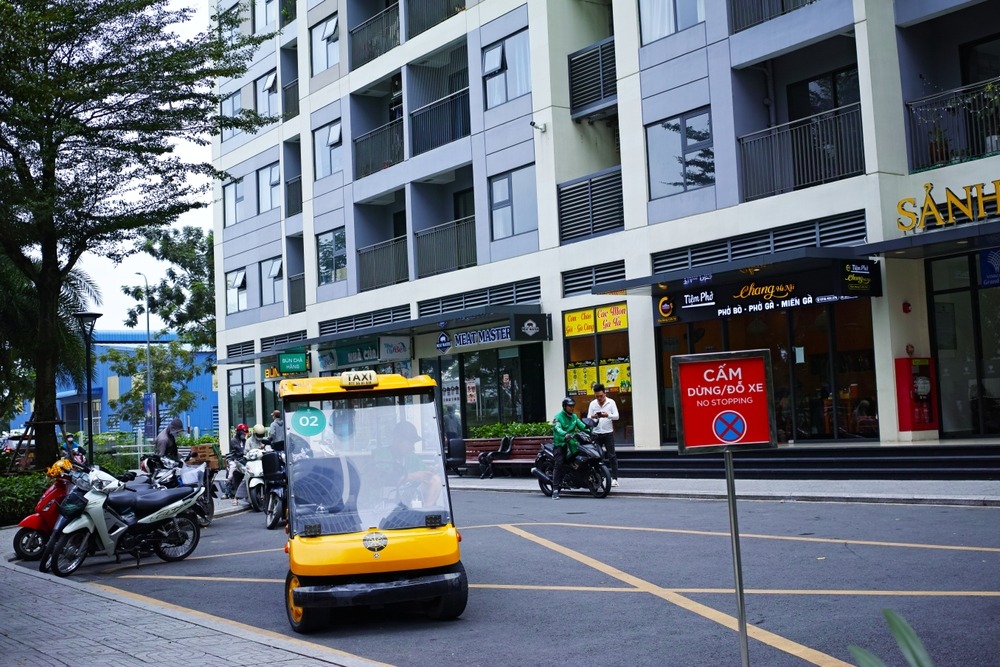
Taxis are available throughout Vietnam and are a convenient and economical way to get around, especially in cities or at night. Before taking a taxi, always have the address written down, as some drivers don't speak English. Use only reliable companies like Mai Linh, Vinasun, Taxi Group, Thanh Cong or Than Nga, as scams do exist (rigged meters, drivers loitering around stations). Always check that the meter is working or negotiate a fixed price for longer distances.
Grab
Applications like Grab are widely used: they display the price in advance, eliminate negotiation and are often cheaper than traditional taxis. You can book a car, motorbike or motorbike taxi (xe ôm / GrabBike), ideal for weaving through urban traffic. Payment can be made online or in cash, and your booking history makes it easy to contact a driver if you forget an item. These services also work very well at the airport. Remember to check the license plate before boarding and keep the provided helmet for motorbike trips.
Other Available Transport Options
Boat
Essential for exploring Halong Bay, Ninh Binh (Tam Coc, Tràng An) and the Mekong Delta, as well as reaching islands (Phu Quoc, Cham, Con Dao). Junks, sampans, small boats or basket boats in Hoi An offer immersion between karst formations, canals, floating markets and tropical landscapes. Some cruises even extend to Cambodia.
Metro
The metro is taking its first steps in Vietnam. In Hanoi, the Cát Linh-Hà Đông line is already in service; in Ho Chi Minh City, the first line (Bến Thành – Suối Tiên) began operations on December 22, 2024, with air-conditioned trains. Additional lines are under construction in both cities to ease traffic congestion and modernize urban transportation.
Cyclo (Pedicab)
The cyclo-pousse, now primarily a tourist attraction, can be found in historic centers (Hanoi, Hue, Hoi An). Seated at the front while the driver pedals, you enjoy a slow and authentic ride, perfect for wandering through narrow streets. This eco-friendly mode of transport remains picturesque but may make some travelers uncomfortable. Don't hesitate to negotiate the price before boarding. Also verify the destination and whether there are zones where cyclos are prohibited due to congestion.