Customs and Etiquette in Vietnam: What You Need to Know
Traveling to Vietnam means immersing yourself in a world where traditions hold an essential place in daily life. Behind the smiles of locals and the hustle of markets lies a culture built on social codes, subtle gestures, and deeply rooted values. To travel with respect and create genuine connections, it's best to understand some of the local customs.
Traveling to Vietnam means immersing yourself in a world where traditions hold an essential place in daily life. Behind the smiles of locals and the hustle of markets lies a culture built on social codes, subtle gestures, and deeply rooted values. To travel with respect and create genuine connections, it's best to understand some of the local customs.
Greeting with Respect
In Vietnam, greetings are understated. A simple "Xin chào" (hello) suffices in most situations. You can accompany this with a slight nod of the head, especially toward elders. In major cities or professional contexts, a handshake is acceptable—typically light, sometimes with both hands for support. Western-style kisses and hugs, however, are not customary and can be poorly received, particularly with women or in rural areas. Avoid the prayer-like hand greeting common in Thailand or Laos: it's reserved for religious rituals in Vietnam.
Respecting Hierarchy and Elders
In Vietnamese culture, elders hold a central place. Allow them to speak first, wait for them to begin a meal or meeting, and greet them with deference. When offering or receiving something important—a business card, a gift—do so with both hands, especially to an older person. It's common for locals to ask personal questions (age, profession), not out of nosiness but to establish the relationship context. What might seem intrusive elsewhere is here a natural way to initiate dialogue.
Gestures and Behaviors to Avoid
Certain gestures common elsewhere can be considered inappropriate in Vietnam:
- Never touch someone's head, especially a child's. It's the most sacred part of the body. Among certain ethnic groups like the Hmong and Dao, the head is believed to house the soul.
- Avoid pointing your finger: instead use a hand gesture with palm facing down.
- Don't pass an object over someone's head.
- Refrain from public displays of affection (kissing, hugging), especially outside cities.
- Never raise your voice: anger, however justified, is seen as a loss of self-control.
- Don't boast or flaunt your wealth—remain modest in your speech.
Daily Politeness
Beyond formal greetings, Vietnamese politeness manifests in the details:
- Smile often: it's a universal social passport in the country.
- Prefer simple, courteous phrases: "Cảm ơn" (thank you), "Chào tạm biệt" (goodbye)
- In conversation, don't interrupt, especially an elder
- Speak softly, particularly in public places
- In exchanges, some Vietnamese may answer "yes" out of politeness even if they disagree: learn to read between the lines.
Behaviors to Avoid
Things to refrain from are many, often aimed at respecting local sensitivities:
- Never photograph someone without permission, especially in rural areas or with children.
- Don't shout, even in a conflict.
- Don't impose yourself: give space, show humility and respect.
- Don't stare intensely into someone's eyes: it can be interpreted as arrogance.
- Avoid sensitive topics like politics, money, or war, especially with strangers.
Table Etiquette in Vietnam
Mastering Chopsticks
Vietnamese eat with chopsticks, and their use follows precise codes. Never stick them vertically in a bowl of rice: this evokes funeral offerings. Also avoid crossing them, licking them, pointing at someone with them, or tapping a bowl. Never pass food from one chopstick to another.
Respecting Your Host and Elders
Never start eating or drinking before your host or an elder. Wait for their signal, then wish them a good meal with "Chúc ngon miệng." This gesture of respect strengthens table harmony. If there's a toast, drink at least a sip, or politely decline by covering your glass with your hand.
Sharing Dishes
Vietnamese meals are communal: dishes are shared from a center platter. Everyone serves themselves in small portions, and it's well-regarded to try everything, even if a dish doesn't appeal to you. This shows respect for the hospitality offered. Don't immediately ask for Western utensils: your efforts with chopsticks will be appreciated.
Waste and Quantities
Finishing your plate is a sign of respect, especially when dining at someone's home. Serve yourself only what you're sure you'll eat. This shows you don't waste and that you honor the food served. However, if the quantity is too large, your hosts will understand.
Good Manners
Never blow your nose at table; step away discreetly if needed. Avoid sniffing dishes loudly or picking your teeth without discretion, even with a toothpick. Compliment your hosts, thank them at the end of the meal, and accept that dishes won't necessarily arrive in a strict order.
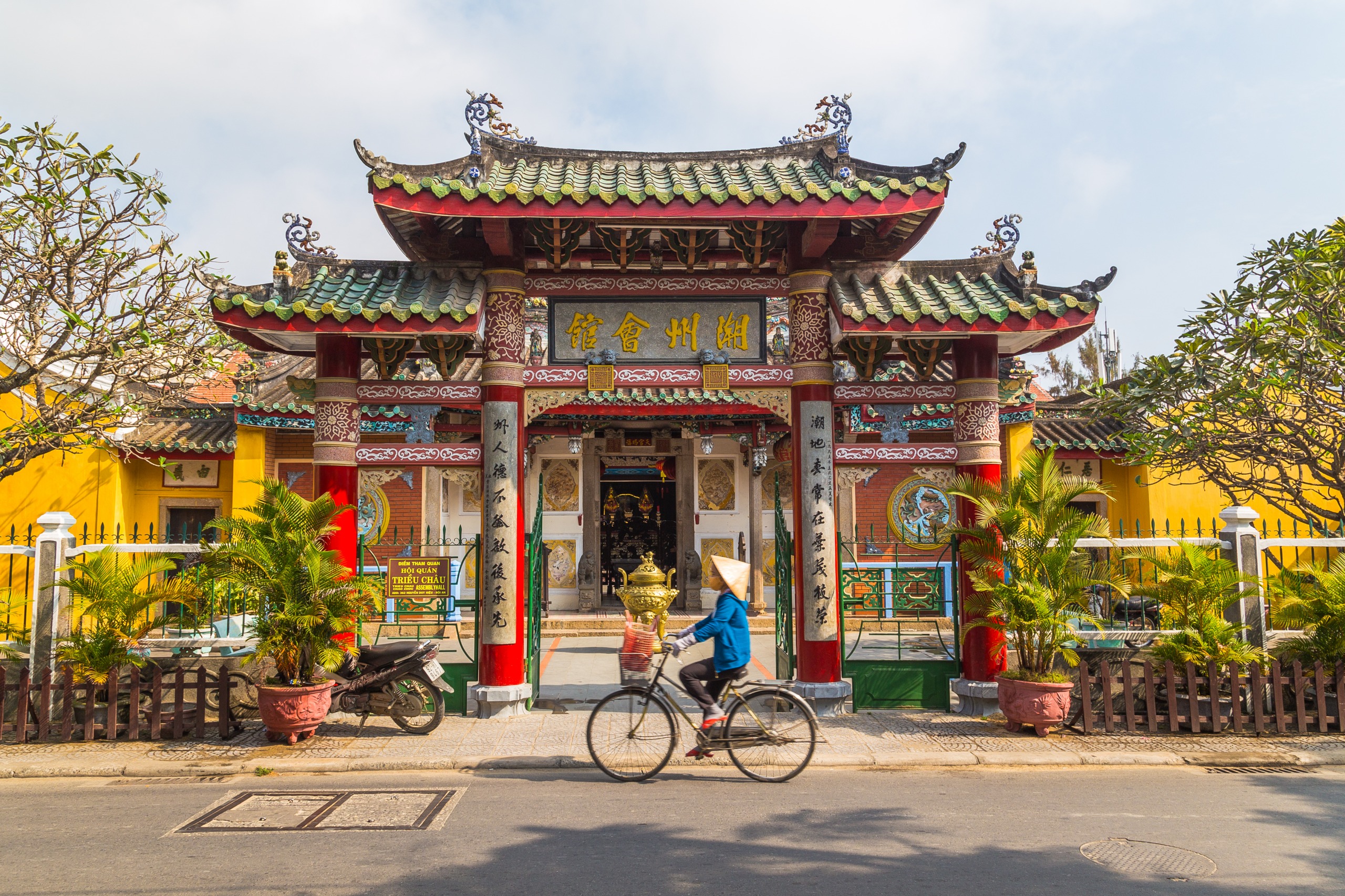
Behavior in Temples and Pagodas
To enter a temple, pagoda, or sacred site, cover your shoulders and legs: no shorts, short skirts, tank tops, or low necklines. Remove your shoes and any head covering at the entrance.
Keep quiet or speak softly. Don't touch religious objects, never turn your back to an altar, don't sit on it, and never point your feet toward statues. Don't walk in front of someone praying.
Don't take photos without asking permission. Monks, worshippers, and sacred interiors should never be photographed without consent. Avoid flash and bulky equipment.
Furthermore, you may place incense, fruit, or symbolic money as an offering. It's not mandatory, but appreciated. Respect local rituals, especially in villages or family homes, where the ancestor altar is sacred. Don't sit in front of it or navigate around it carelessly.
Dress Code
Modesty and Decency Standards
While Western style is common, modesty remains fundamental, especially in rural areas. Avoid provocative, transparent, or low-cut clothing, and opt for garments with sleeves and collars that cover shoulders and knees. In public, shirtless torsos and very short shorts are inappropriate for everyone.
Context-Based Adjustments
Casual but neat styling is tolerated in cities, but rural and religious areas require conservative dress. A shawl can then cover your shoulders if needed. At the beach, swimwear is acceptable, but change into clothes after leaving the water, knowing Vietnamese women often swim fully clothed. Finally, custom dictates removing your shoes when entering homes.
Cultural Symbolism and Prohibitions
Black and white evoke mourning and are poorly received outside ceremonies, especially during Têt when red and yellow are preferred. Out of respect, avoid clothing with political or obscene messages and cover tattoos in sacred places.
Social Behaviors and Interactions in Vietnam
Bargaining is common in markets and tourist areas, even when prices are posted. Vendors sometimes inflate prices, especially for foreigners. Negotiate with a smile and respect, without excessive insistence or anger. Refusing a significant discount can show respect toward the vendor.
Don't photograph military personnel, sensitive installations, monks, or worshippers without permission. Certain gestures are also codified: Don't put your hands on your hips or in your pockets during exchanges, as this can be interpreted as arrogance or rudeness. To call someone, always do so with palm facing down.
Behavior in Homes and Families
When invited to someone's home, don't refuse: it would be poorly received. Bring a small gift (chocolates or a specialty from your country), but know it won't be opened in front of you, as a mark of respect. Avoid certain objects: flowers (mourning), watches (time counting down), knives (conflict), soap (impurity). For children in rural areas, offer clothing or school supplies, not candy (cavities) or money (begging). Don't compliment a baby: according to local belief, this brings bad luck.