Perfume Pagoda
Perfume Pagoda
A complex of Buddhist pagodas and caves nestled within the limestone cliffs of Mount Huong Tich, 70 km south of Hanoi, accessible by boat from the Duc landing.
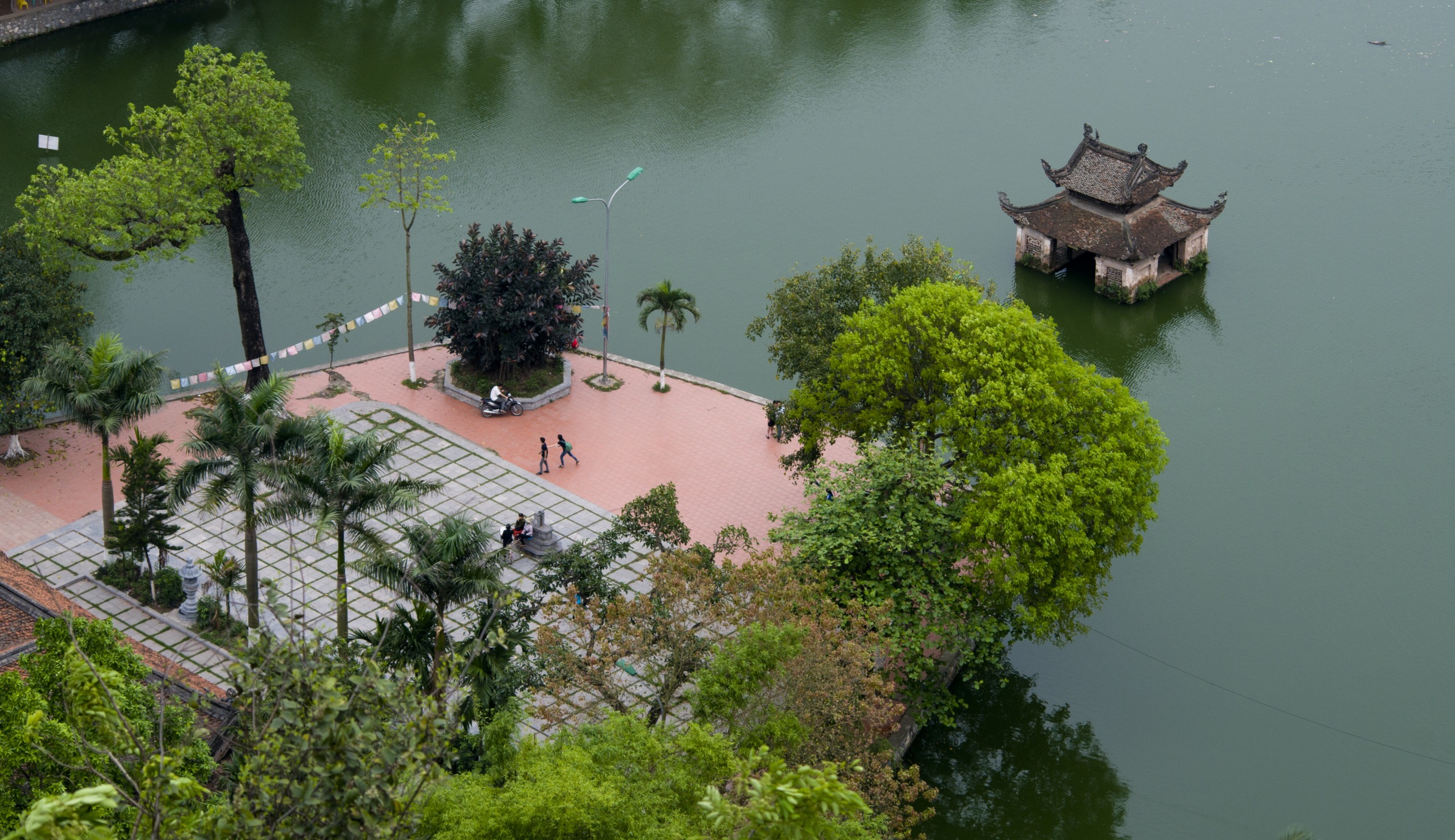
Approximately 70 km southwest of Hanoi, the Perfume Pagoda (Chua Huong) is in fact a vast complex of temples, shrines and Buddhist caves scattered across the limestone cliffs of Mount Huong Tich, north of the Truong Son mountain range. The site combines pilgrimage, boat travel on the Yen River and mountain hiking, making it one of the most popular excursions from the Vietnamese capital.
Why visit the Perfume Pagoda
The site is not a single monument but a religious complex spread over several kilometers, dotted with ancient pagodas and natural caves. Access is by boat from the Duc landing, 3 kilometers from the heart of the site, through a landscape of mountains with evocative names: unicorn, phoenix, python, as well as Bung and Voi mountains (elephant mountain) or Mam Xoi (sticky rice plateau mountain). The experience thus combines river travel, climbing a steep path and exploring cavities carved by limestone formations.
It is also the largest Buddhist pilgrimage in northern Vietnam, allowing visitors to observe living religious practice, particularly in spring.
History and legends
The complex is dedicated to the worship of Quan Am (Kwan Yin in older transcription), the bodhisattva of compassion. The Thien Tru pagoda, halfway up the mountain, was originally only a small shrine built by Patriarch Cuong Truc. It was renovated twice, in 1928 and 1937, and the Tu Van shrine was added in 1995.
A legend associated with the site tells that Quan Am washed herself in a well on the site before reaching Nirvana. Even today, pilgrims drink from its water, considered purifying.
What to see on site
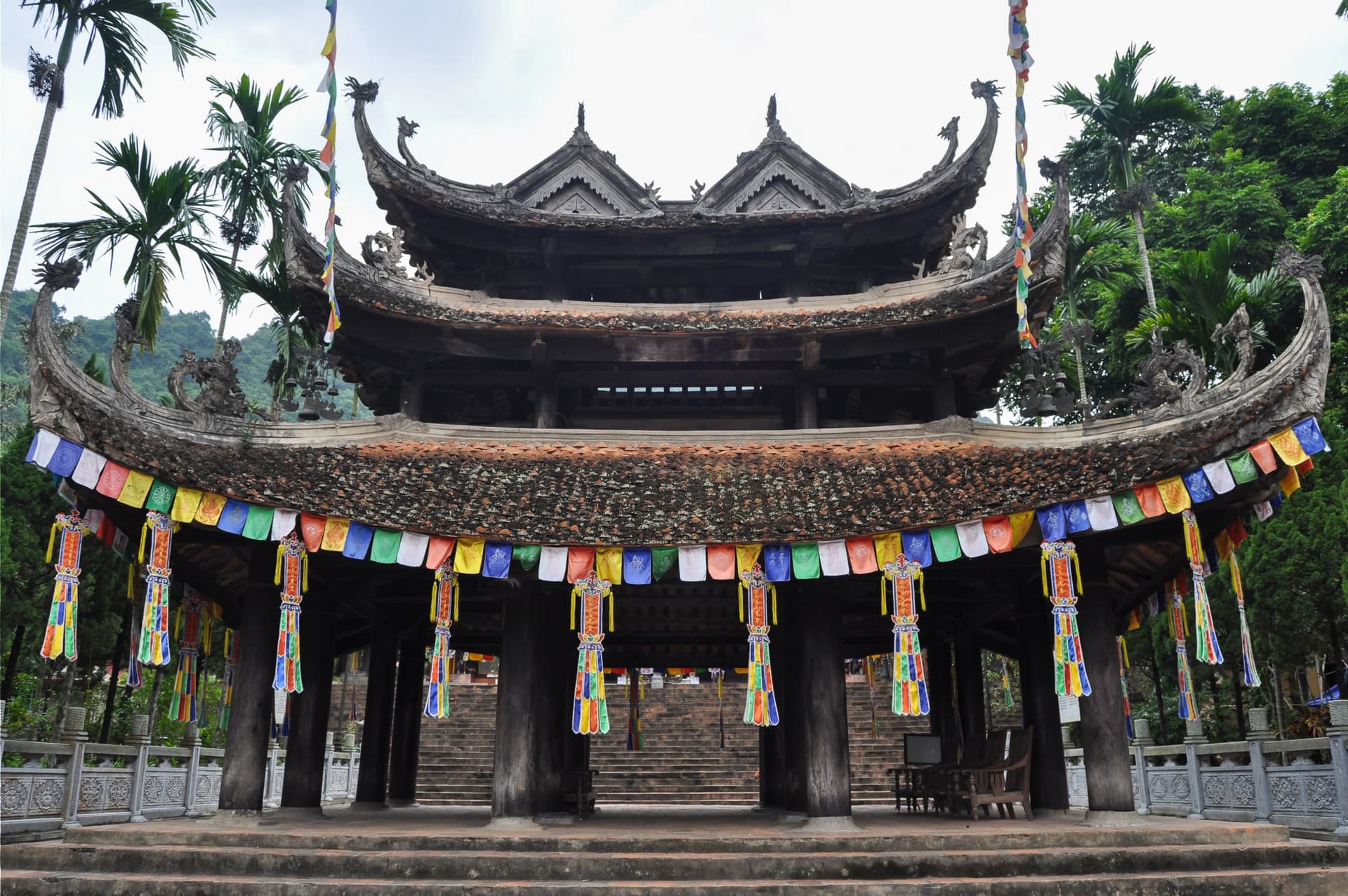
Three pagodas structure the main route: the Path of Heaven Pagoda (Thien Chu), the Purgatory Pagoda (Giai Oan Chu) and the Fragrant Footprint Pagoda (Huong Tich Chu).
The Thien Tru pagoda
Located on the mid-slope, dedicated to the worship of Quan Am, it houses the Tu Ty Quan Am statue dating from the 18th century, as well as the well associated with the goddess legend. It is the usual starting point for the climb to Huong Tich cave.
Huong Tich cave and pagoda
From Giai Oan, allow approximately 2.5 km of steep path to reach Huong Tich cave, the most venerated sanctuary on the site. Final access is via a stairway of about a hundred steps carved into the rock. A stalagmite marks the entrance, and two symbolic passages open inside: one leads to "paradise," the other to "hell." The formations have been given imaginative names — golden plant, silver plant, silk worm basket. At the back of the cavity, in the shadows, stands a green stone statue of Quan Am attributed to the Tay Son dynasty (late 18th century).
Tuyet Son pagoda
Off the main route, Tuyet Son pagoda is located at the end of a path along the mountain, near Tuyet stream. The place is quieter and frequented mainly by pilgrims.
Bao Dai pagoda and Ngoc Long cave
The Bao Dai pagoda is preceded by the Cuu Long chapel (chapel of the Nine Dragons). Nearby, Ngoc Long cave features stalactites and stalagmites enhanced by light filtering into the cavity. On the cliff, the sculpted face of the bodhisattva Quan Am is visible.
Tien Son pagoda
Dedicated to Quan Am, Tien Son pagoda is built into Nui Tien cave, approximately 1 km from Thien Tru. It is a secondary but interesting stop for those with time.
When to visit
The Perfume Pagoda festival lasts nearly three months, from mid-2nd lunar month to the last week of the 3rd lunar month, roughly from late January-February to late March-early April depending on the year. This is the busiest period, but also the most crowded: the Yen River is saturated with boats and paths are packed.
For a quieter visit, choose autumn (October-November), when the weather is dry and sites nearly deserted. Summer is very hot and humid, making the climb to Huong Tich difficult.
Practical information
- Duration of visit: allow a full day from Hanoi (round-trip travel, boat and hiking included).
- Admission: site entry and boat crossing are paid separately at the Duc landing. Modest rates.
- Cable car: a cable car connects the base of the site to Huong Tich cave for those wishing to avoid the 2.5 km climb.
- Dress code: clothing covering shoulders and knees recommended (place of worship), hiking shoes for the steep trail.
- Essentials: water, snacks, local currency for offerings and snacks on site.
How to get there
The site is located in Huong Son commune, My Duc district, approximately 70 km from Hanoi. Three main options:
- Organized tour from Hanoi: the simplest option, transport, guide and boat included.
- Car with driver: 1.5 to 2 hours by road to Duc landing, then approximately 1 hour by boat on the Yen River.
- Public bus: connections from Giap Bat bus station (Hanoi) to My Duc, then motorbike taxi to the landing.
The boat is mandatory to reach the base of the path leading to Thien Tru and Huong Tich.
What to combine in the region
The Perfume Pagoda is generally visited as a day trip from Hanoi, where you can extend your stay with the old town's 36 guilds district, the Temple of Literature or an excursion to Ha Long Bay with its gateway at Bai Chay. Further south, those continuing toward central Vietnam will appreciate the scenic Hai Vân Pass or Bach Ma national park.
Frequently asked questions
The site is located approximately 70 km southwest of Hanoi, in My Duc district. The car journey typically takes between 1.5 and 2 hours, plus approximately 1 hour by boat on the Yen River.
To experience the pilgrimage atmosphere, the festival runs from mid-2nd lunar month to late 3rd lunar month, approximately February to late March. For a quieter visit, autumn (October-November) offers dry weather and few crowds.
The 2.5 km path between Giai Oan and Huong Tich cave is steep and final access is via about a hundred steps. A cable car allows those with reduced mobility or traveling with children to skip this climb.
Allow a full day from Hanoi to visit the main sanctuaries (Thien Tru, Huong Tich) and make the round trip. To also explore Tuyet Son, Bao Dai and Tien Son, two days are more comfortable.
As in any Vietnamese place of worship, clothing covering shoulders and knees is recommended. Choose hiking shoes for the mountain trail and bring rain protection for spring visits.
Plan your trip
The Perfume Pagoda naturally integrates into a circuit through northern Vietnam combining Hanoi, Ha Long Bay and terraced rice fields. To build a tailor-made itinerary, consult our Vietnam travels.

Interested in this visit?
We can include it in your personalised itinerary.