Thay Pagoda
Thay Pagoda
Located 30 km from Hanoi, Thay Pagoda combines three 11th-century sanctuaries, 76 jackfruit wood statues and a pond dedicated to water puppetry.
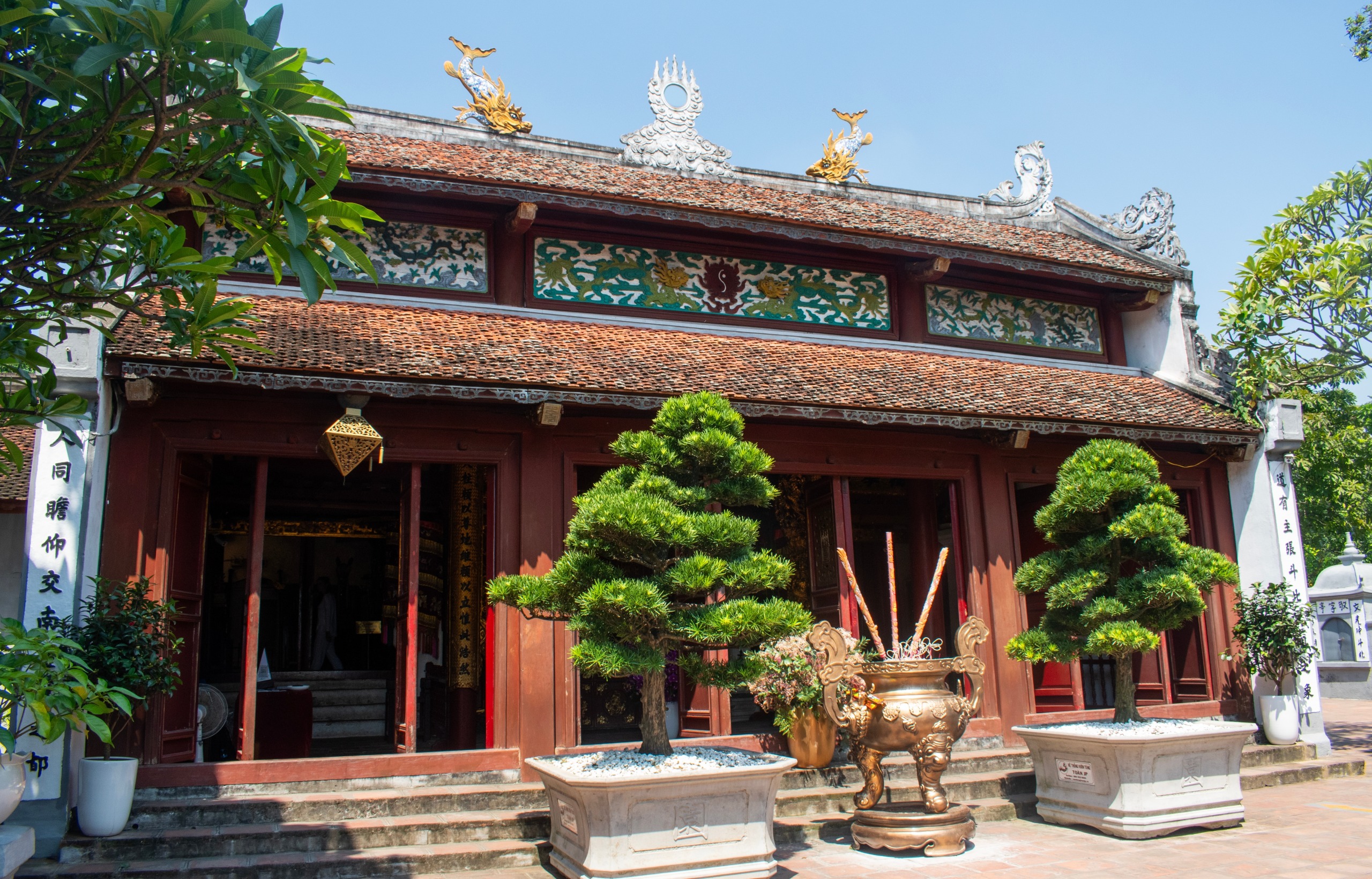
Thay Pagoda, also known as the "Pagoda of the Master," stands at the foot of Sai Son mountain, roughly thirty kilometers west of Hanoi. Built in the 11th century under King Ly Nhan Tong's reign, it ranks among the oldest Buddhist sanctuaries in the Red River delta. The site combines three tiered pagodas, a pond dedicated to water puppet performances and two covered bridges, set within a preserved rural landscape.
Why visit Thay Pagoda
Thay Pagoda offers an intimate glimpse of traditional Vietnamese spirituality, far from Hanoi's urban hustle. The site brings together several compelling attractions: ancient religious architecture spanning over a millennium, an exceptional collection of 76 statues carved from jackfruit wood, a pond historically used for water puppet performances (a folk art of the delta), and a natural setting framed by the limestone Sai Son mountain. It also stands as one of northern Vietnam's premier pilgrimage destinations, particularly animated during its annual festival.
History of the sanctuary
Thay Pagoda's origins trace back to the Ly dynasty, during the reign of Ly Nhan Tong (late 11th - early 12th century). The sanctuary is deeply connected to the venerable monk Tu Dao Hanh, a healer, spiritual master and innovator of water puppet theatre who lived in the 12th century. Vietnamese tradition regards him as a figure of spiritual reincarnation: King Ly Nhan Tong is believed to be Tu Dao Hanh reborn, explaining the presence of both their statues within the main sanctuary.
Over the centuries, the complex was enriched and restored repeatedly. The two covered bridges, Nhat Tien Kieu and Nguyet Tien Kieu, which frame the pond before the pagoda, date to the late 16th or early 17th century—a period when later Le rulers enhanced the site.
What to see
The three pagodas
The sanctuary comprises three buildings with distinct purposes, aligned in depth according to typical Vietnamese Buddhist architectural organization:
- Ha Pagoda (Lower Pagoda) serves for offerings and daily ceremonies.
- Trung Pagoda (Middle Pagoda) is dedicated to Buddha worship.
- Thuong Pagoda (Upper Pagoda) honors the memory of monk Tu Dao Hanh.
The statues
The complex is renowned for its 76 statues carved from jackfruit wood, a rare sculptural heritage in Vietnam. Within Thuong Pagoda, two statues face each other: on the left, that of monk Tu Dao Hanh, the "Master"; on the right, that of King Ly Nhan Tong, presented as the Master's reincarnation. Attentive visitors will also notice finely crafted statues of Arhats and protective deities.
Long Tri Pond and the bridges
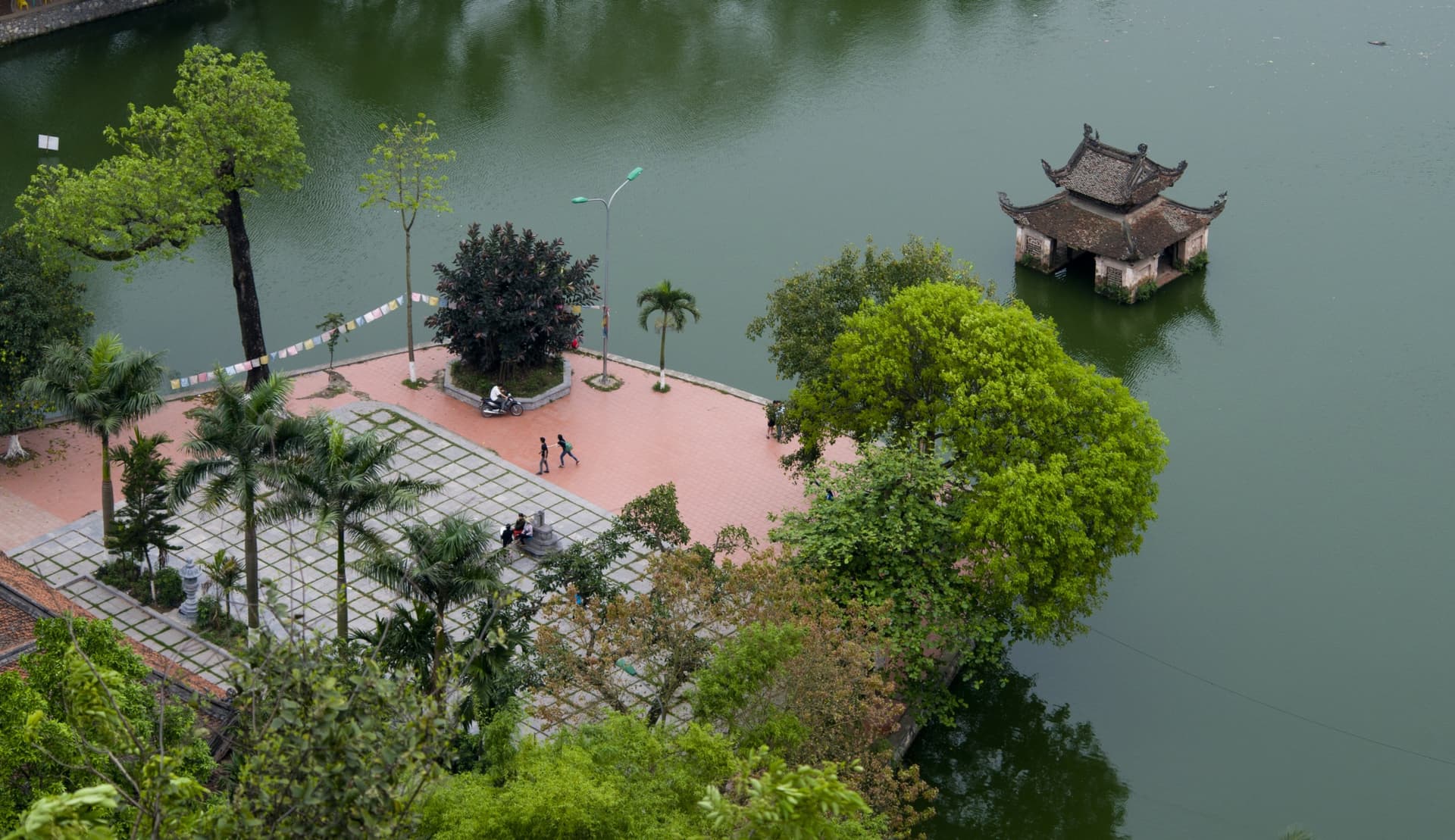
Below the sanctuary, Long Tri Pond ("Dragon Pond") features a pavilion at its center where water puppet performances take place. This art form, of which Tu Dao Hanh is considered a pioneering master, finds its fullest expression here. Two wooden covered bridges, Nhat Tien ("Sun Bridge") and Nguyet Tien ("Moon Bridge"), built around the 16th-17th century transition, frame the pond and lead to secondary sanctuaries on the mountain's slopes.
When to visit
Thay Pagoda welcomes visitors year-round, but the highlight is its annual festival, celebrated in the third lunar month (typically March-April in the Gregorian calendar). Over three days, processions, offerings and water puppet shows succeed one another, drawing pilgrims and villagers alike. Crowds can be substantial: plan an early morning visit if you wish to enjoy the site peacefully.
Outside festival season, spring and autumn offer the most pleasant conditions, with temperate weather and soft light across surrounding rice fields. Summer remains accessible but brings heat and humidity.
Practical information
- Duration: allow 1.5 to 2.5 hours to explore the three pagodas, bridges and climb to the mountain sanctuaries.
- Admission: modest entrance fee, payable in dong on-site.
- Dress code: shoulders and knees covered, as at all Buddhist places of worship throughout Vietnam.
- Good to know: wear sturdy shoes if ascending the stairs to caves and secondary pagodas on Sai Son.
How to get there
Thay Pagoda sits in Sai Son commune, Quoc Oai district, approximately 30 km west of central Hanoi. Several options are available:
- Private car or taxi: expect 45 minutes to 1 hour 15 minutes depending on traffic, via the Lang - Hoa Lac expressway.
- Organized tour: the pagoda is often combined with other sites in Hanoi's western outskirts on a half-day or full-day excursion.
- Motorbike: a popular option for independent travelers seeking to traverse the delta's rural landscapes.
What to combine in the region
A visit to Thay Pagoda naturally extends to other destinations in northern Vietnam. To reach the sea and karst landscapes, Cat Ba island makes a logical next stop a few hours' drive away. Those heading south might then explore sites such as the Cham Sculpture Museum in Da Nang or, further south, the Cai Rang floating market in the Mekong delta.
Frequently asked questions
Frequently asked questions
Allow 1.5 to 2.5 hours on-site to walk through the three pagodas, covered bridges and pond. If you climb to the mountain sanctuaries of Sai Son, add approximately 1 hour.
The festival occurs in the third lunar month, typically March or April in the Gregorian calendar. It runs for three days and includes processions, ceremonies and water puppet performances.
Yes. With a car, a round trip from central Hanoi fits comfortably into a half-day. It's one of the most popular short excursions on the capital's outskirts.
Long Tri Pond houses a pavilion historically dedicated to this art, of which monk Tu Dao Hanh is considered a pioneering master. Performances are organized during the annual festival and special events.
Extend your experience
Thay Pagoda fits into a broader circuit around the capital and northern regions. To plan a custom itinerary blending heritage, mountains and delta landscapes, browse our suggestions for Vietnam journeys.
Nearby
Interested in this visit?
We can include it in your personalised itinerary.