The Most Beautiful Hiking Trails in Sapa, Vietnam
In northern Vietnam, where mountains fold into a succession of blue-tinged ridges, Sapa unfolds some of the most striking landscapes in Southeast Asia.
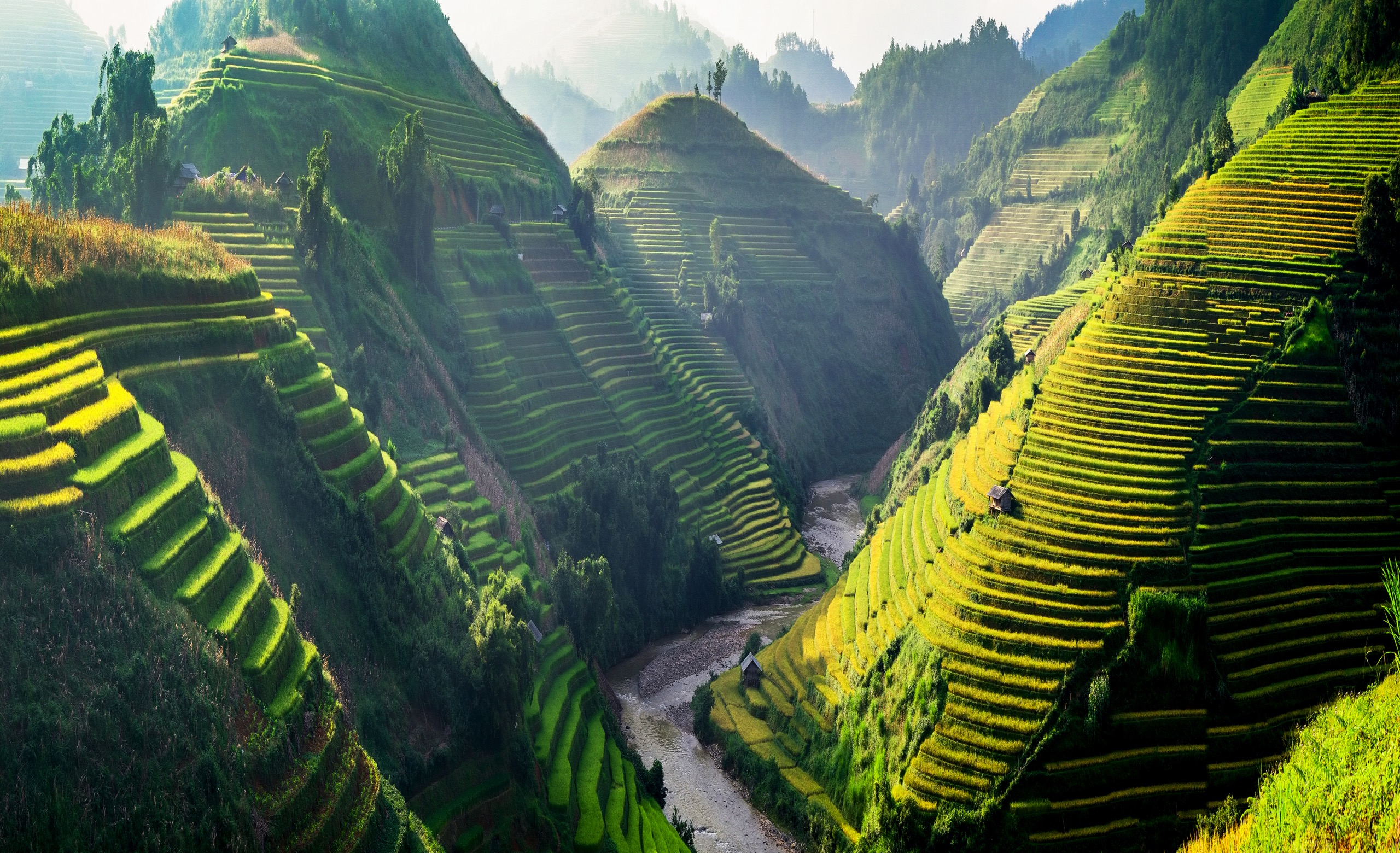
In northern Vietnam, where mountains fold into a succession of blue-tinged ridges, Sapa unfolds some of the most striking landscapes in Southeast Asia. Terraced rice fields sculpted into mountainsides, villages of ethnic minorities still deeply rooted in their traditions, high-altitude forests wrapped in mist... In Sapa, every step tells an ancient story of the relationship between humankind and the mountain. Discover the best hiking trails in Sapa to experience all the beauty the region has to offer...
Why you absolutely must visit Sapa on a trip to Vietnam
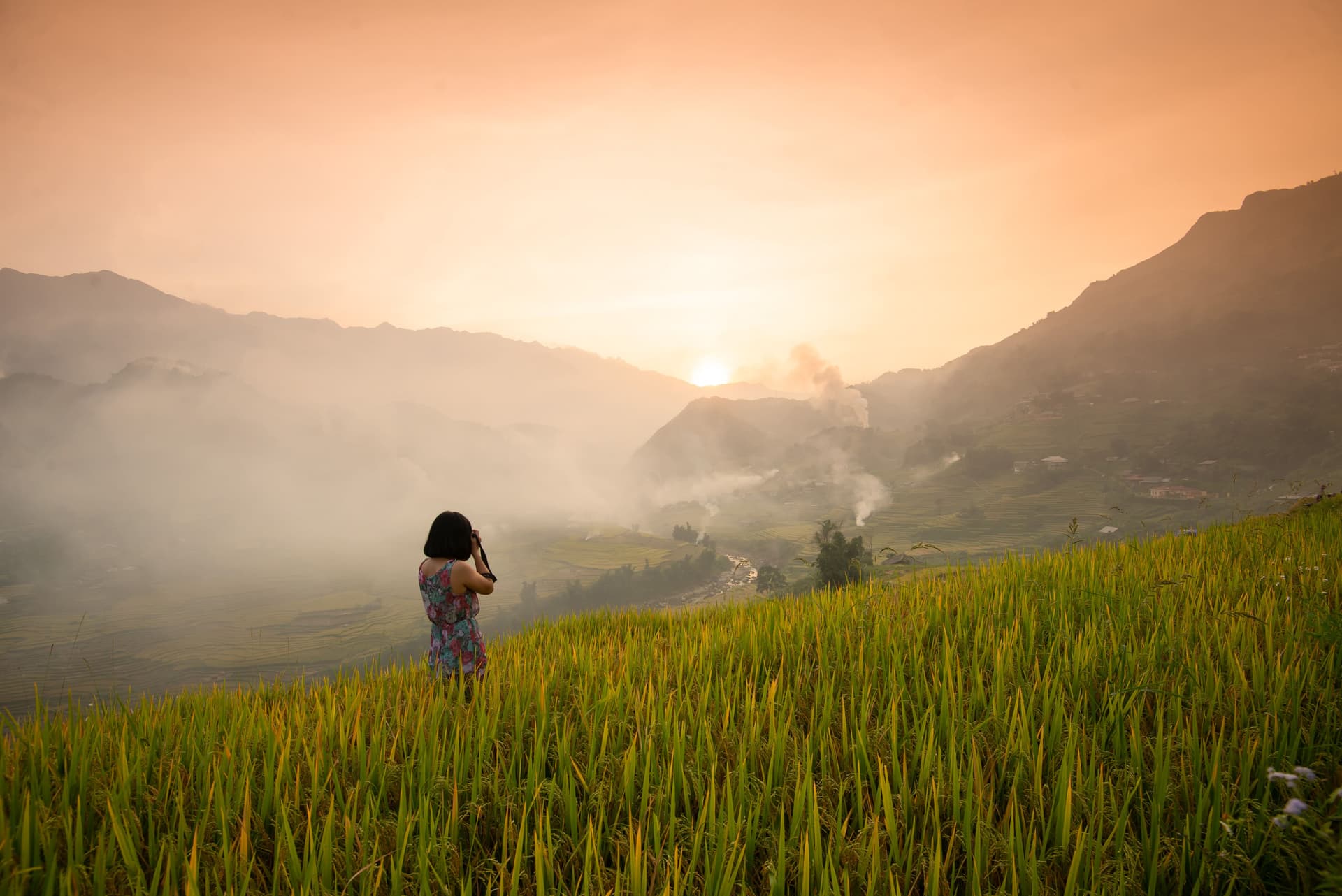
Perched at more than 1,500 meters altitude in the Hoàng Liên Sơn range, Sapa stands out as one of the finest hiking destinations in Vietnam, and arguably in Southeast Asia. Here, the mountain shapes everything: the terrain, the climate, agricultural practices and even the rhythm of life of the communities that inhabit it. Deep valleys shrouded in mist at daybreak, subtropical forests clinging to steep slopes, open ridges overlooking the horizon and terraced rice fields undulating as far as the eye can see create a landscape of remarkable intensity, shifting with the seasons and the light.
But what makes Sapa truly singular is more than just its landscapes. For generations, the ethnic minorities of northern Vietnam, such as the Hmong, Dao, Tày and Giáy peoples, have patiently carved these steep slopes to cultivate rice. The terraced rice fields—sometimes called the "steps to heaven"—tell the story of this alliance between human expertise and mountain.
Ultimately, hiking in Sapa is never merely contemplative: it crosses cultivated territories, inhabited hamlets, landscapes shaped generation after generation. For those seeking a Vietnam that is at once grandiose, vibrant and deeply authentic, Sapa is not simply a stopover: it is often one of the most powerful memories of the journey.
Good to know
Some of the terraced rice fields around Sapa rank among the most spectacular mountain agricultural landscapes in Southeast Asia, comparable to those of Banaue in the Philippines.
What are the best hiking trails in Sapa?
In Sapa, every valley, every ridge line and every village opens the door to a different walking experience. Here are the most iconic trails, those we regularly recommend to travelers for the richness of their landscapes as much as for the quality of the on-the-ground experience.
Muong Hoa Valley, the trail of iconic rice fields

Practical Info
Difficulty level: easy to moderate
Hiking time: approximately 1 day of walking.
It's impossible to discuss hiking in Sapa without mentioning Muong Hoa Valley, the true signature landscape of the region. And for good reason, it unfolds one of the most spectacular rice terrace landscapes in Vietnam, drawing wide vegetated curves that follow the mountainsides. Depending on the season, the scenery shifts from the deep green of young shoots to the golden hues of harvest, with misty ridges in the background.
The trail winds between rice paddies, tranquil rivers and hamlets inhabited mainly by Black Hmong and Giáy communities. The walk is progressive, marked by open viewpoints and numerous scenes of agricultural life. Accessible to most travelers, this is the ideal itinerary for your first hike in Sapa.
The trail to Fansipan Mountain, the altitude challenge

Practical Info
Difficulty level: demanding to difficult
Hiking time: 1 to 2 days depending on the itinerary
At 3,143 meters altitude, Fansipan Mountain is Vietnam's highest peak and the tallest summit in Indochina (Cambodia, Laos, Vietnam), earning it the nickname "Roof of Indochina". It embodies the other face of Sapa: that of high mountain terrain. The trek typically begins in dense tropical forest before gradually gaining altitude: bamboo groves, lower vegetation, then rocky terrain as you approach the summit.
The walk demands genuine endurance. The elevation gain is sustained, certain passages can become slippery depending on weather, and altitude is felt over the duration. But the effort finds its reward at the summit, when clouds part to reveal the vastness of the Hoàng Liên Sơn range. On clear days, the sensation of standing above the mountains of Northern Vietnam is striking. This hike is best suited to experienced walkers or those in excellent physical condition, seeking both a sporting challenge and a high-mountain experience in Vietnam.
Trails between Hmong and Dao villages, cultural immersion

Practical Info
Difficulty level : moderate
Hiking time: 1 to 2 days depending on the route chosen
In Sapa, some of the most memorable hikes are measured not by the altitude reached, but by the quality of the encounters they make possible. Trails linking several Hmong and Dao villages—notably around the villages of Ma Tra, Ta Phin and Nam Cang—traverse a more understated landscape of cultivated hills, forest edges and dirt paths winding between traditional houses.
The main appeal lies in the human dimension: you observe daily gestures in the rice paddies, colorful fabrics drying in the sun, the meticulous work of embroidery, or medicinal plants harvested from the forest. The experience is more intimate, often quieter too, far from the most photographed vistas but closest to mountain life.
The walk requires a few hours of endurance but remains technically accessible, making it an ideal option for travelers who prioritize cultural immersion without excessive difficulty. It's often in these inhabited valleys that Sapa's most authentic dimension reveals itself, the kind of memory that lingers long after the journey ends.
The trail from Lao Chai to Ta Van, gentle immersion in the rice fields

Practical Info
Difficulty level : easy to moderate.
Hiking time: a half-day or full day
This itinerary is one of the most beautiful accessible crossings around Sapa. From the heights of Lao Chai, the path descends gradually toward Ta Van alongside the rice terraces and the Muong Hoa River, offering nearly continuous unobstructed views of the rice terraces and surrounding mountains. In spring, the terraces shimmer with fresh water; in summer, they turn a deep green; in autumn, they turn golden before harvest.
The atmosphere is particularly peaceful here, ideal for taking time to observe the landscapes and local life. With no major technical difficulty and moderate elevation change, this itinerary suits a wide audience, including travelers seeking their first hiking experience in Sapa. This is often the trail that wins everyone over: spectacular enough to amaze, accessible enough to be fully savored.
Silver Waterfall and Love Waterfall, forest hiking to waterfalls

Practical Info
Difficulty level: easy to moderate.
Hiking time: 2 to 4 hours of walking
Heading toward Tram Ton Pass (Vietnam's highest pass), the trails leading to Thác Bạc (Silver Waterfall) and Thác Tình Yêu (Love Waterfall) reveal a radically different atmosphere from the cultivated valleys. Here, the mountain becomes wilder: dense forests, cooler air, lush vegetation nourished by constant humidity.
The hiking trail alternates between stone steps, shaded paths and passages along clear streams and stream crossings, until reaching the waterfalls that cascade down the mountain. The approach to the waterfalls is the high point of the hike, with the Hoàng Liên Sơn peaks in the background when skies clear. Less focused on village life, this hike appeals more for its natural dimension and the diversity of its landscapes.
Hiking in Sapa: which trail to choose based on your level and interests?
Choosing your hike in Sapa depends above all on what you're seeking: iconic panorama, cultural immersion, sporting challenge or accessible walking. Here's our summary table to help you decide:
Trail | Level | Hiking duration | Type of experience | For whom? |
Muong Hoa Valley | Easy to moderate | 1 day | Iconic rice fields & villages | First-time discovery of the Sapa region |
Lao Chai → Ta Van | Easy to moderate | Half-day to full day | Open landscapes & peaceful atmosphere | Contemplative, accessible walking |
Hmong & Dao villages | Moderate | 1 to 2 days | Cultural immersion & encounters with mountain minorities | Travelers seeking authenticity and human connection |
Silver & Love Waterfall | Easy to moderate | 2 to 4 hours | Mountain forest & waterfalls | Short hike to enjoy nature |
Fansipan Mountain | Difficult | 1 to 2 days | Altitude challenge & high mountain panorama | Experienced hikers and climbing enthusiasts |
Practical information for hiking in Sapa
Preparing a hike in Sapa requires some advance planning. Between mountain climate, sometimes muddy trails and rapid weather changes, a few simple guidelines allow you to fully enjoy the experience, safely and in the best conditions.
What is the best time to hike in Sapa?

You're wondering when to see the rice fields in Sapa? In Sapa, the seasons profoundly transform the landscapes and the hiking experience. Understanding this rhythm is essential to choosing the right time.
Generally speaking, Sapa has a mountain climate distinctly cooler than the rest of northern Vietnam, with very pronounced seasons:
March to May: one of the most pleasant periods for walking. Temperatures are mild, vegetation comes back to life and landscapes become increasingly verdant. As for rice fields, this is the planting season: they are freshly flooded and reflect the sky, creating very photogenic shimmering landscapes.
June to August : this is the warm and humid season, with frequent rains that can make trails muddy. But the vegetation is spectacular: rice fields reach their most intense green! This season suits travelers well-equipped and accompanied, who accept more changeable weather.
September to early October : this is the most favored period for travelers visiting Sapa. The rice fields turn golden tones just before harvest, offering some of Vietnam's most spectacular panoramas. Hiking conditions are generally good, though visitor numbers are higher.
November to February : this period corresponds to mountain winter. Temperatures are cool and can drop significantly at night. The rice fields are harvested, but the mountains offer a more mineral and quiet atmosphere. This season appeals to lovers of mountain ambiance, provided you dress warmly.
Good to know
For optimal balance between hiking, landscapes, weather and tranquility, favor April-May or September to discover the Sapa region.
How to equip yourself for hiking in Sapa?

Among the essentials to bring for hiking in Sapa, we recommend:
Good closed hiking boots with strong grip (muddy trails are frequent);
A lightweight waterproof jacket or poncho, usable year-round;
Breathable clothing in layers, including a warm layer for cool mornings;
Warm clothing for a winter stay (November to February);
Sun protection: hat, sunglasses, sunscreen (sun can be strong at altitude);
A small water supply and energy snacks, especially for day treks.
A comfortable backpack with waterproof cover;
Mosquito repellent.
For multi-day treks and Fansipan climbing, it's also recommended to bring a change of clothes, a headlamp, warm clothing and a small first aid kit.
Hiring a guide for hiking in Sapa: why it makes all the difference?
In Sapa, hiking amounts to more than just following a trail on a map. Complex terrain, changing weather and the tangle of paths connecting villages make navigation sometimes uncertain, even on supposedly accessible routes.
Walking alongside a guide also gives meaning to the landscape. Behind every rice terrace lies an irrigation technique, behind every house an family organization, behind every traditional outfit a specific cultural identity. So many keys to reading invisible without local mediation.
It's also the guarantee of a smoother and more respectful experience. A guide adapts the pace to the group's level, chooses less-traveled trails according to season, anticipates weather conditions and facilitates exchanges with locals. In a region where tourism economy remains closely tied to mountain communities, this accompaniment directly contributes to a more equitable journey.
Finally, some of Sapa's most beautiful experiences (such as a night with locals, a shared meal or access to more confidential valleys) fully reveal themselves only through this bond of local trust. You understand: in Sapa, hiring a guide doesn't just change the way you walk. It profoundly changes how you understand and feel the journey.
Warning
Rules to respect when hiking in Sapa:
Stay on marked trails to preserve terraced crops and avoid unstable areas;
Ask permission before photographing residents, out of respect for local communities;
Take all trash with you, even biodegradable;
Take nothing from nature: no stones, no feathers...
Adapt your pace to weather conditions: rain can make certain passages slippery;
Avoid handing out objects or money to children, which weakens local balance;
Prioritize local accompaniment for a safer, more respectful experience of the territory.
These simple gestures help preserve what makes Sapa rich: a living, inhabited and shared territory.
Discover the treasures of Sapa with Nomadays
Because every hiker is different, choosing the right itinerary, the right season and the right accompaniment makes all the difference. As travel experts, Nomadays and its local partner agency in Vietnam, Terra Indochina, design custom-made hikes led by terrain experts and conceived with respect for communities and landscapes.
Interested in discovering Sapa differently? Contact us to imagine your adventure in Sapa.
Need inspiration? Discover all our Vietnam travel itineraries and let us imagine with you a journey that's uniquely yours.
Frequently asked questions
Most travelers devote 2 to 4 days to hiking in Sapa, allowing for a combination of rice field walks, nights with locals and exploration of several villages. More sporting treks,
Some short trails are accessible independently, but most hikes benefit from being done with a local guide. This facilitates navigation, enriches cultural understanding and guarantees a safer experience, especially during the wet season.
Two periods are particularly spectacular:
April-May, when flooded rice fields reflect the sky;
September, just before harvest, when terraces turn golden.