Where to Discover the Most Beautiful Terraced Rice Fields in Northern Vietnam?
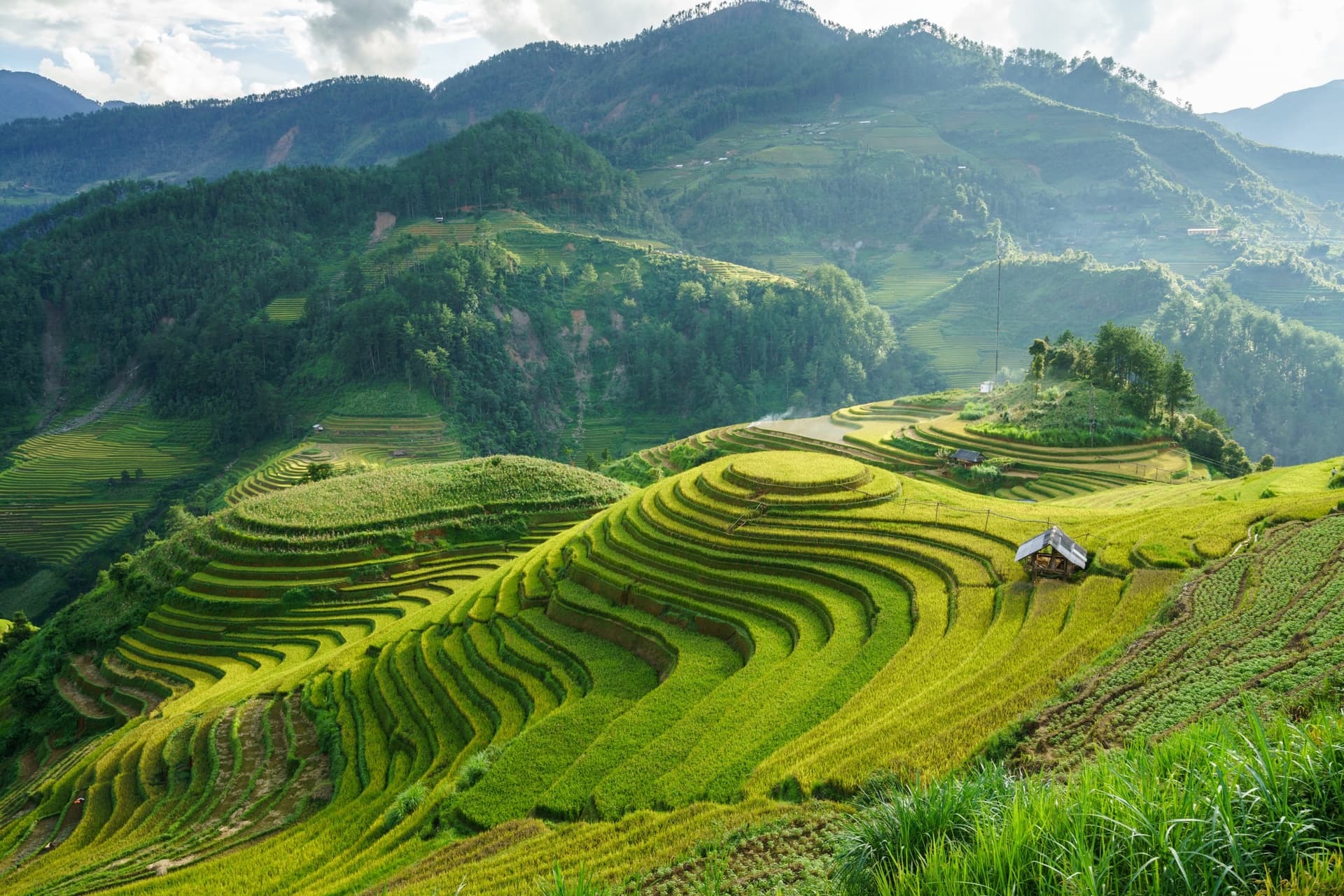
It's impossible to imagine a journey through northern Vietnam without venturing into the mountainous regions to admire the sublime terraced rice fields. Conceived and cultivated largely by ethnic minorities present on the territory for generations, the rice fields of northern Vietnam sometimes resemble works of art, so impressive are they.
It's impossible to imagine a journey through northern Vietnam without venturing into the mountainous regions to admire the sublime terraced rice fields. Conceived and cultivated largely by ethnic minorities present on the territory for generations, the rice fields of northern Vietnam sometimes resemble works of art, so impressive are they. We reveal the most beautiful terraced rice fields to discover during a trip to northern Vietnam.
Sapa
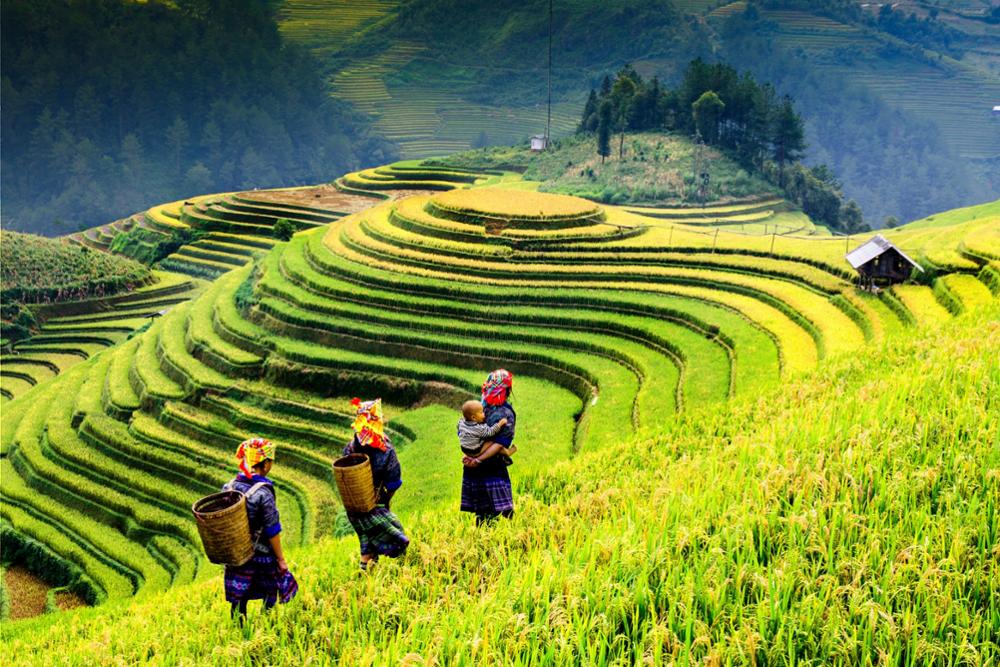
Located in the Lào Cai province, at the far north of the country, Sapa is known as Vietnam's highest mountain town. It lies at the foot of Mount Phan Xi Păng, which reaches 3,143 metres in altitude. While this picturesque town attracts many visitors, it's also for all the terraced rice fields found in the surrounding areas! Inhabited by ethnic minorities for centuries, such as the Hmong, Tay, and Dao peoples, this mountainous zone indeed boasts a privileged climate for rice cultivation. To discover these rice fields, authentic villages, and the culture of different ethnic tribes, nothing beats a guided hike!
Good to know: renowned for often being shrouded in mist, Sapa enjoys rather unpredictable weather. To avoid being drenched, we recommend planning your trip to Sapa between August and October.
Pu Luong
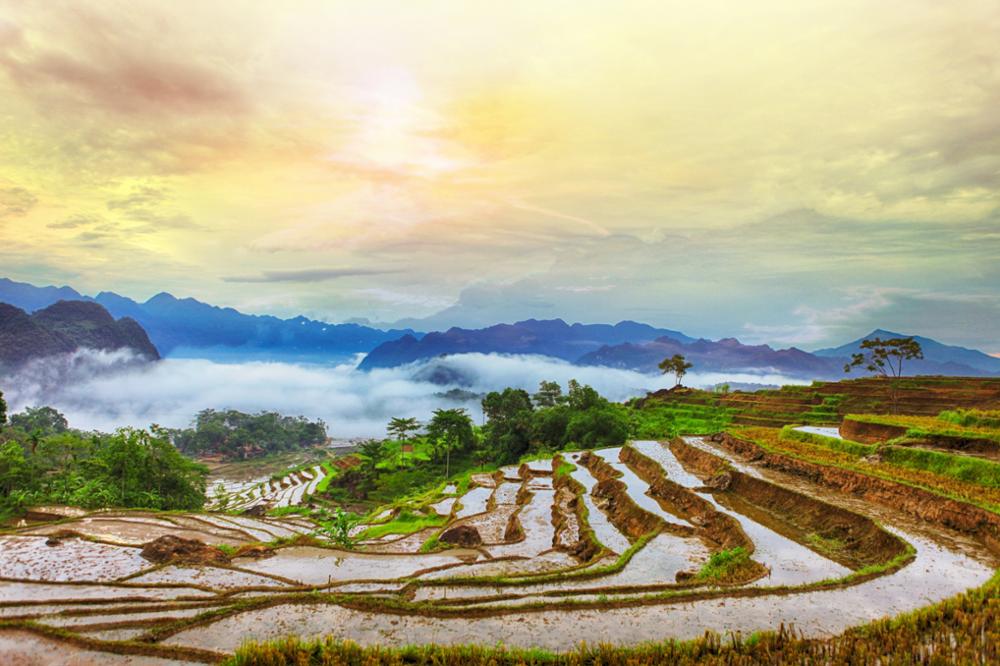
Head to Thanh Hoa province, 150 km from Hanoi, to discover the Pu Luong nature reserve and its famous terraced rice fields. Situated between two mountain ranges and inhabited by ethnic groups established for generations, you'll find vast expanses of agricultural fields. The terraced rice fields are particularly appreciated here for their sublime golden-yellow hue. Beyond the rice fields, the reserve harbours exceptional biodiversity: lush vegetation, limestone karsts, rivers, and waterfalls… enough to enchant all nature lovers!
To visit the Pu Luong reserve under the best conditions and see the rice fields dressed in their finest yellow tones, we recommend September and October!
Mu Cang Chai
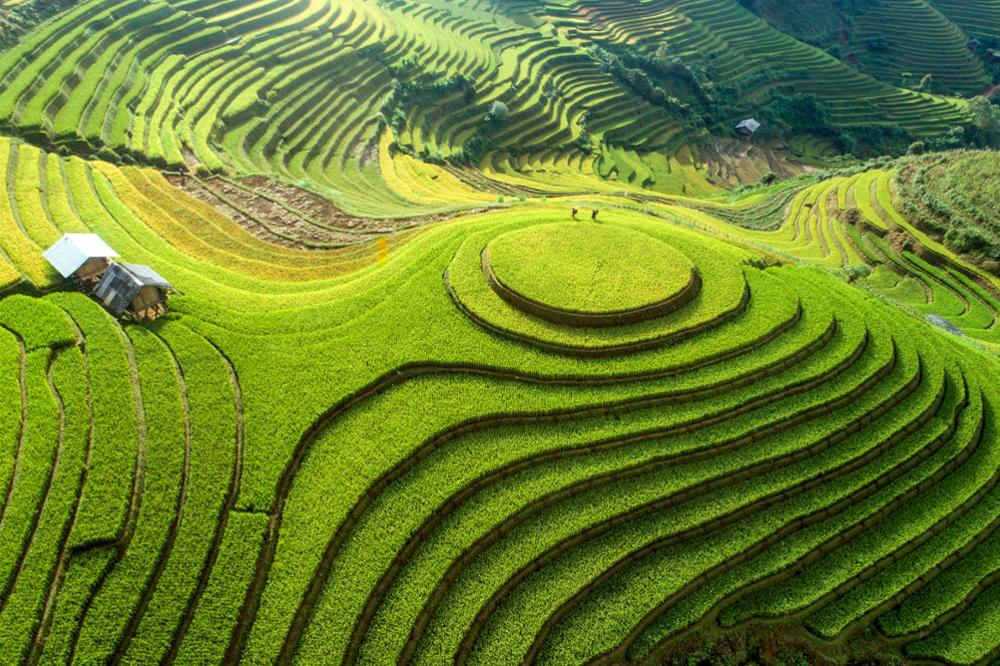
Located in Yen Bai district, approximately 200 km from Hanoi, Mu Cang Chai is home to some of Vietnam's most beautiful terraced rice fields. Stretching over more than 2,200 hectares, sometimes even on mountainsides, Mu Cang Chai's rice fields seem infinite. The most renowned rice fields are those found between the communes of La Pan Tan, Che Cu Nha, and Dế Xu Phình. For the best viewing conditions, we recommend visiting in April/May or October/November.
Note: The road linking Nghia Lo and Mu Cang Chai is itself a spectacle. Indeed, over 100 km, you can admire the famous terraced rice fields and discover breathtaking vistas. In fact, this road is nicknamed "the photographer's road" for good reason…
Hoang Su Phi
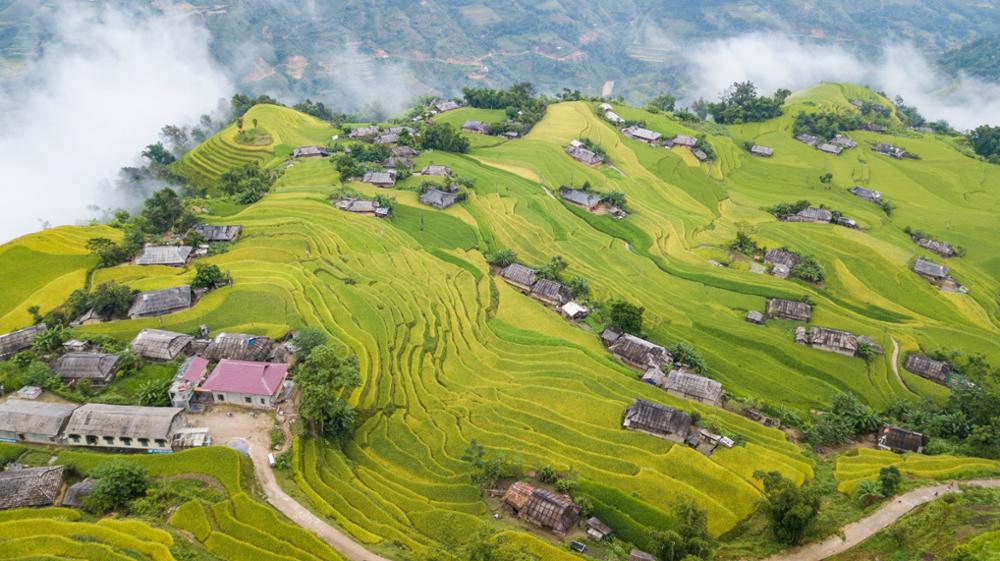
We round off our tour of northern Vietnam's most beautiful terraced rice fields with a visit to Hoang Su Phi. Used for over three centuries by ethnic minorities (such as Hmong, Nung, and Dao peoples…), this mountainous region impresses with its landscapes. Indeed, the various ethnic groups have shown remarkable ingenuity in adapting to mountainous conditions and exploiting the terrain to cultivate rice on mountainsides. To miss nothing, we recommend visiting the villages of Ban Luoc, Nam Ty, Thong Nguyen, Luoc, San Sa, Ho, Phung, Ho Thau, and especially the commune of Ban Phung!
As with the other rice fields of Northern Vietnam, the Hoang Su Phi region is visited mainly from September to October.
Florine Dergelet