Visiting Huế to Discover Vietnam's Imperial Past
Located in the heart of Vietnam, the city of Huế is the ideal destination to discover Vietnam's imperial past. And for good reason: it contains a remarkable collection of monuments and vestiges that were inscribed on the UNESCO World Heritage list
Located in the heart of Vietnam, the city of Huế is the ideal destination to discover Vietnam's imperial past. And for good reason, it contains a remarkable collection of monuments and vestiges that were inscribed on the UNESCO World Heritage list in 1993. From the Citadel to the royal tombs, passing through the Perfume River, we explore the must-see attractions to visit during a stay in Huế.
1. The Citadel of Huế
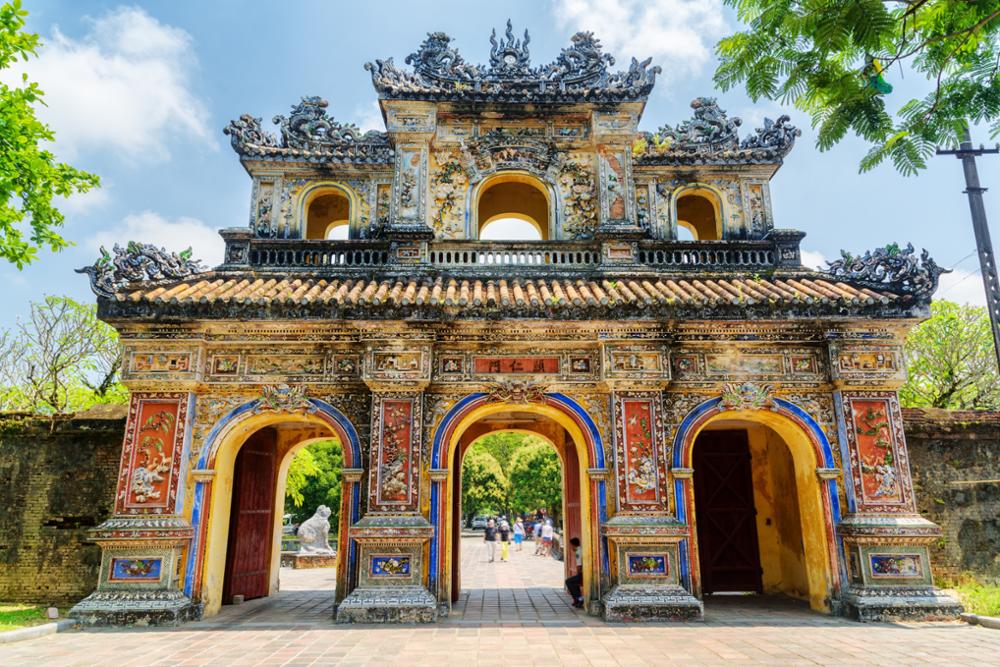
Built during the reign of Emperor Gia Long in 1805 until that of Emperor Minh Mang in 1945, the imperial city was the center of activity for the imperial family of the Nguyen dynasty. The imperial city spans over 500 hectares and draws inspiration from the architecture of the imperial city of Beijing. In other words, it consists of a series of fortified walls within a larger citadel. Unfortunately, many buildings were destroyed or damaged during bombing campaigns from various wars (notably during the Vietnam War). Nevertheless, the Citadel of Huế remains a prime location to discover Vietnam's imperial past, and the country is working hard to restore the site. Among the buildings you can still admire are:
- The Gate of the South: it is also the main entrance to the citadel, you cannot miss it!
- The Throne Palace: it is one of the rare buildings that was not touched by the bombardments.
- The Queen Mother's Palace and its beautiful gardens.
- The Temple for the Veneration of the Nguyen Emperors magnificently restored.
- The Nine Dynastic Urns: these bronze urns are the largest in Vietnam.
- The Pavilion of Splendor and its triple-tiered roof.
- The Ngo Mon Gate: it is considered one of the most beautiful gates of the citadel.
- The Forbidden City: at the very center of the imperial city lies the Forbidden City, the residence of the emperor and his close ones. At that time, there were over 50 buildings including the king's palace, those of mandarins, the queen, the princess… It was the most heavily guarded place in the country.
2. The Perfume River
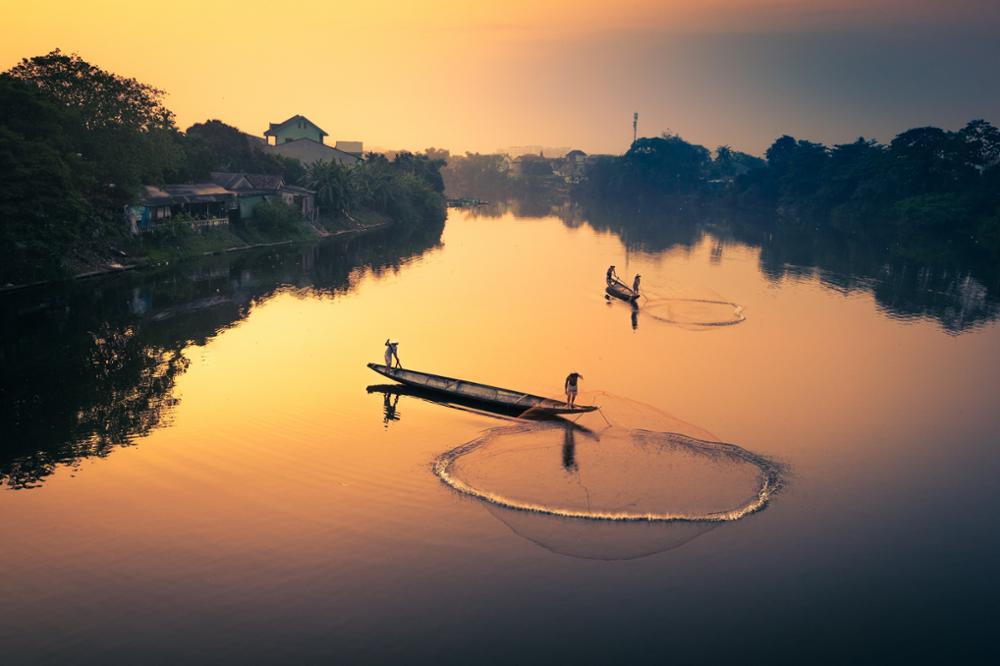
Continue your visit near the Perfume River which flows through the city of Huế from north to south. It owes its name to the many fragrant plants that grew along its banks. These were furthermore used for medicinal purposes! One thing is certain: the river was an important trading route between the city of Huế and surrounding villages.
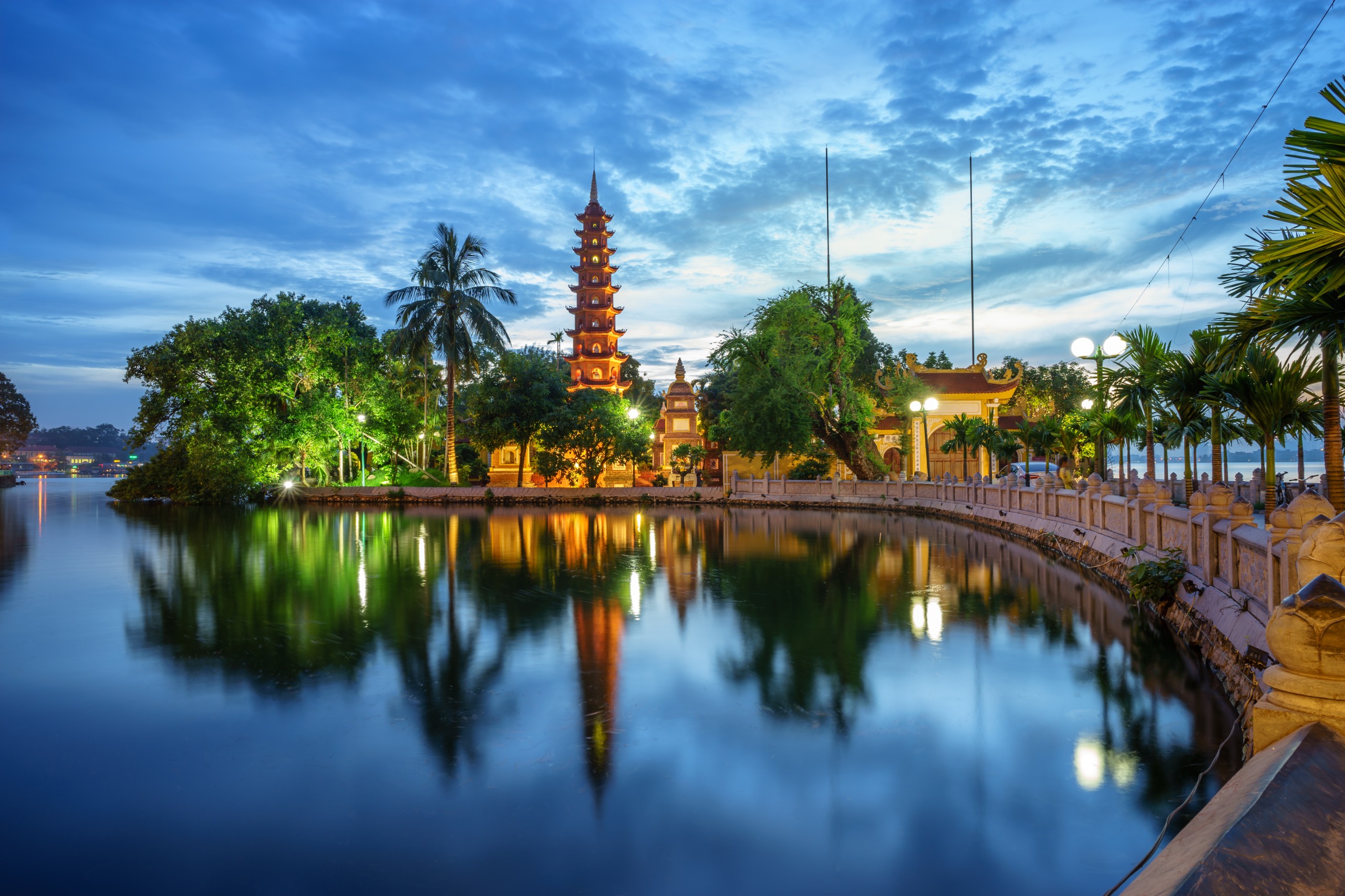
As you stroll along the Perfume River, you will discover some important buildings such as the Pagoda of the Celestial Lady built in 1601 and standing 21 meters high, whose 7 floors each represent a reincarnation of Buddha. Do not miss the Trang Tien Bridge built by the famous Gustave Eiffel at the beginning of the 20th century. For those who want to save time, you can take a boat to navigate and discover the different sites along the Perfume River.
3. The Royal Tombs
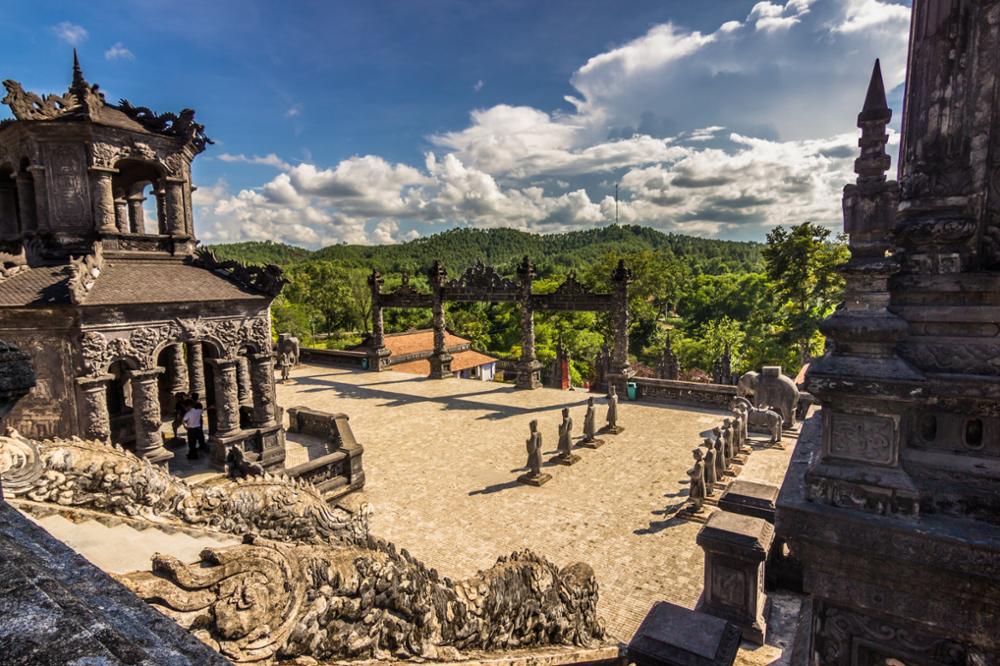
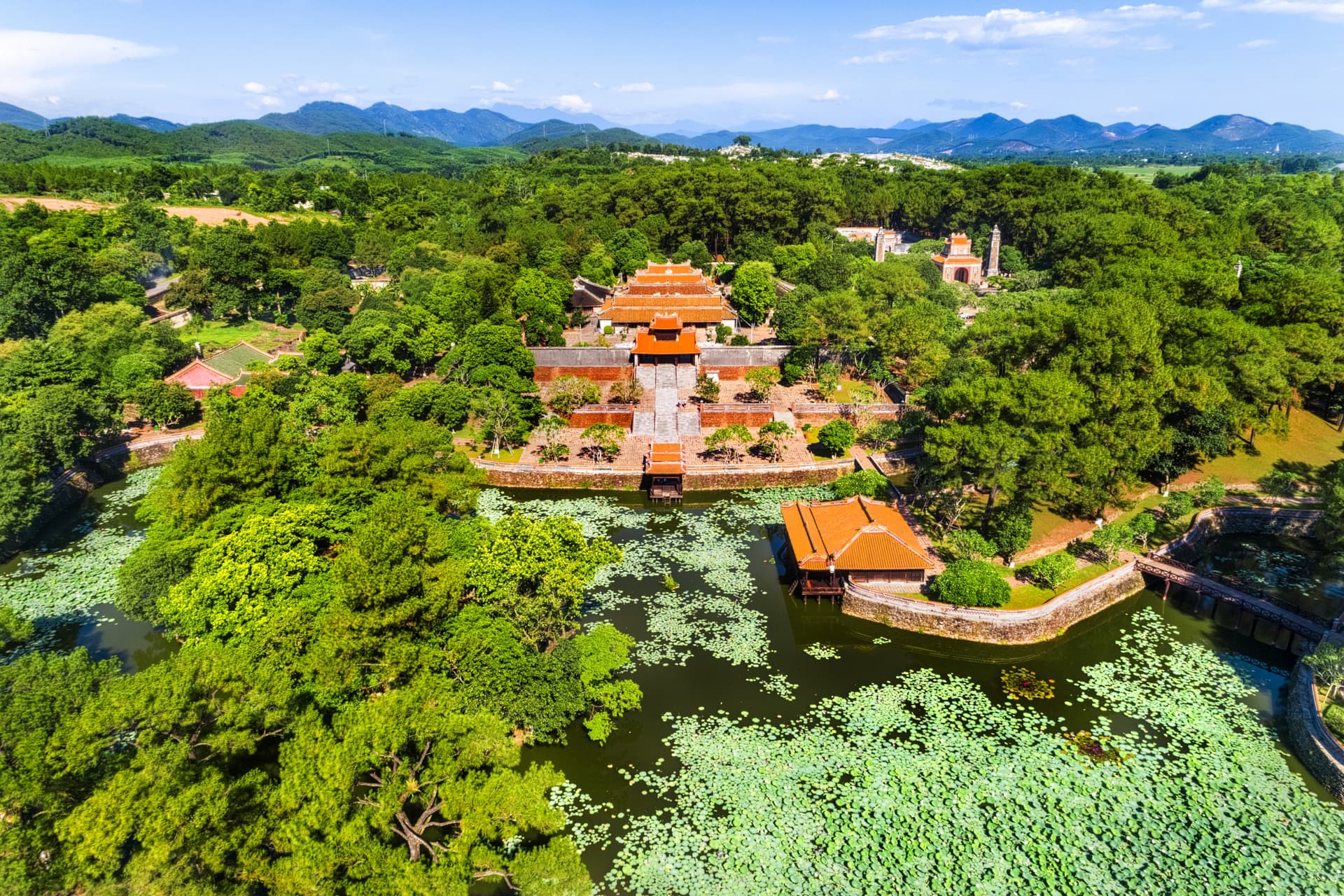
If the imperial city of Huế brings together the main imperial vestiges of Vietnam, complete your imperial exploration in the surroundings of the city by discovering remarkable historical sites: the royal tombs! Located south of the city, 7km away for the closest and 16km for the furthest, these imperial tombs rest within mausoleums. Statues, esplanades, palaces, gardens… The décor is such that they resemble true imperial residences.
If you must choose only a few, we recommend the mausoleum of Emperor Minh Mang and its immense structures (pagodas, artificial lake covered with lotus flowers…), the tomb of Emperor Khai Dinh renowned for its incredible architectural fusion, or the imperial tomb of Dong Khanh with its sublime ceramic decorations. Finally, do not miss the mysterious tomb of Emperor Tuc Duc which he reportedly built himself before asking to be buried in an unknown location. To this day, the mystery remains…
Florine Dergelet